Caterpillar vs Komatsu: Which Heavy Equipment Giant is Actually Bigger?
Equipment Brand Matcher
Find the right giant for your project needs
Select the priorities that best describe your project:
Versatility & Support
I need a wide range of machines, high resale value, and a technician nearby.
Tech & Mining Precision
I need high-capacity mining tech, autonomous hauling, and extreme efficiency.
Our Recommendation
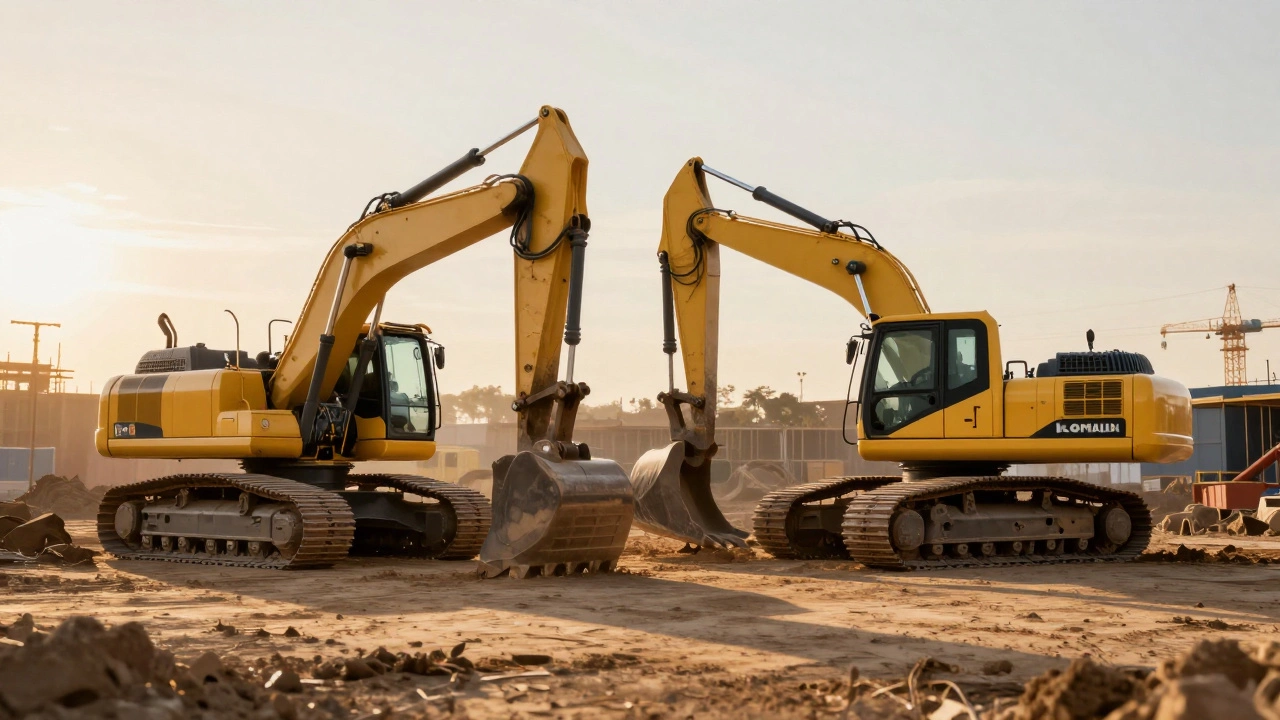
If you've ever walked past a major construction site or a deep-pit mine, you've probably seen a sea of yellow. But if you look closer, that yellow isn't all the same. You'll spot the rugged, bold look of a Cat machine and the sleek, disciplined lines of a Komatsu. For decades, these two have been locked in a global tug-of-war. People always ask who is "bigger," but the answer depends entirely on whether you're looking at a balance sheet, a parking lot in Texas, or a mining project in India.
Key Takeaways: The Heavyweight Face-off
- Revenue: Caterpillar generally leads in total annual sales and global financial scale.
- Market Presence: Cat dominates North America; Komatsu has a massive stronghold in Asia and Japan.
- Product Focus: Cat is the king of versatile earthmoving; Komatsu excels in high-tech mining and precision forestry.
- India Context: Both are aggressively expanding in India, focusing on infrastructure and smart cities.
Measuring Size by the Numbers
When we talk about "size" in the corporate world, revenue is the first thing people point to. Caterpillar is an American corporation that designs, manufactures, and sells construction and mining equipment, diesel and natural gas engines, industrial gas turbines, and diesel-electric locomotives. In terms of raw dollars, Caterpillar usually dwarfs almost everyone in the industry. Their annual revenue often clears the $60 billion mark, fueled by a massive dealer network that makes them the default choice for many contractors globally.
On the other side, Komatsu is a Japanese multinational corporation that manufactures construction, mining, forestry, and industrial equipment. While their revenue is typically lower than Cat's, they aren't exactly "small." Komatsu operates with an incredible level of efficiency and has a deep grip on the Asian markets. If you measure size by the number of machines delivered in specific regions like Southeast Asia, the gap shrinks significantly.
| Feature | Caterpillar (Cat) | Komatsu |
|---|---|---|
| Home Base | USA | Japan |
| Primary Strength | Dealer Network & Versatility | Tech Integration & Mining Efficiency |
| Market Dominance | North & South America | Asia-Pacific |
| Revenue Scale | Generally Higher | Moderate to High |
The Battle for the Indian Market
Now, let's talk about machinery manufacturers India. India is currently one of the fastest-growing markets for heavy machinery due to the massive push in highway construction and urban metro projects. For a buyer in India, "bigger" doesn't mean who has the most money in the US or Japan; it means who has the best service center in their state.
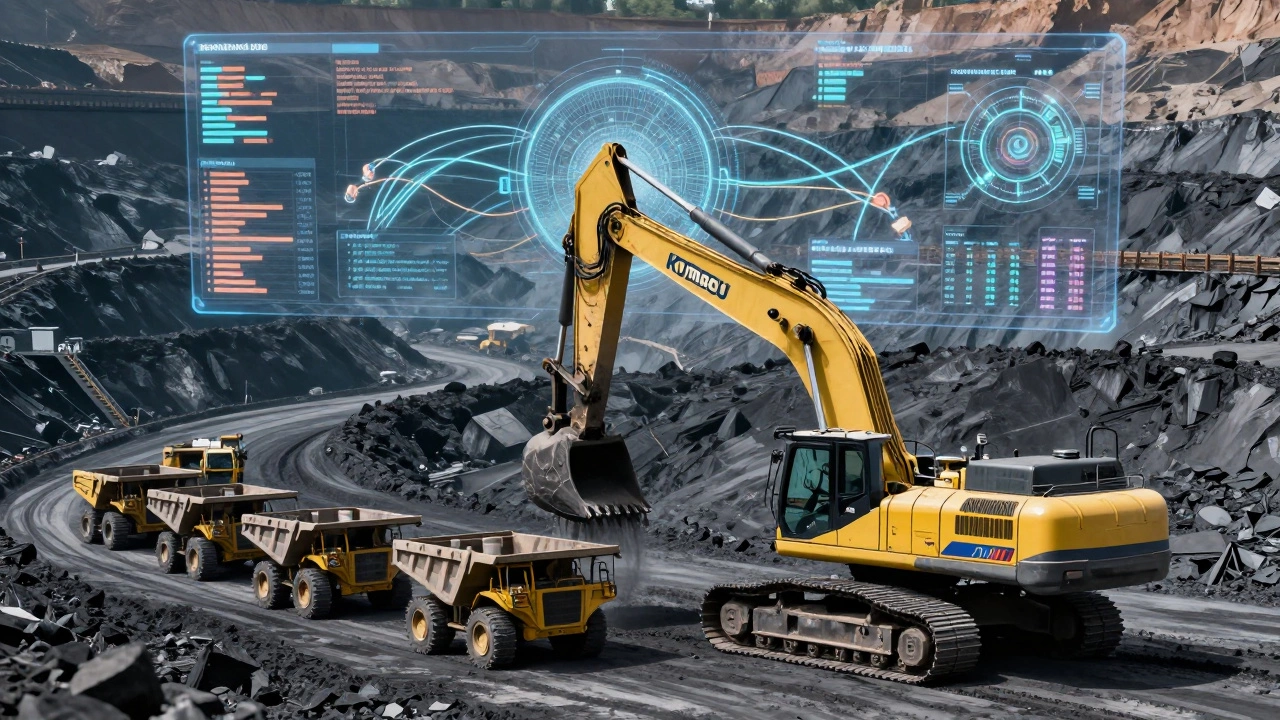
Caterpillar has spent years building a robust ecosystem in India. They don't just sell machines; they sell the promise that a part can be delivered to a remote site in Madhya Pradesh within 24 hours. This dealer-centric model is their biggest weapon. However, Komatsu has played a clever game by focusing on specialized high-capacity mining equipment. If you're running a massive coal mine in Jharkhand, a Komatsu giant-scale excavator might be the "bigger" and more relevant tool for the job.
The competition in India is shifting toward "smart" machinery. We are seeing a move toward Telematics, which is the branch of information technology which deals with the long-distance transmission of computerized information. Both companies are fighting to see whose software can better track fuel consumption and machine health in the harsh Indian climate.
Technology and Innovation: The Invisible Size
Size isn't just about physical dimensions or money; it's about intellectual property. Komatsu has long been seen as the pioneer in autonomous hauling. They were some of the first to successfully implement driverless trucks in large-scale mining operations. This gives them a "technological size" that allows them to compete with Cat even when they have fewer total units in the field.
Caterpillar, meanwhile, has doubled down on integration. Their focus is on the entire lifecycle of the machine. From the Internal Combustion Engine that powers the beast to the financial services that help a small contractor afford the lease, Cat provides a full-stack solution. This vertical integration makes them a more formidable entity in the eyes of global investors.
Which One Should You Choose?
If you are deciding between these two, the "bigger" company isn't always the better one. It comes down to your specific use case. If you need a versatile fleet of excavators and loaders with an unbeatable support network, Cat is usually the winner. Their resale value is famously high, meaning you get more of your money back when it's time to upgrade.
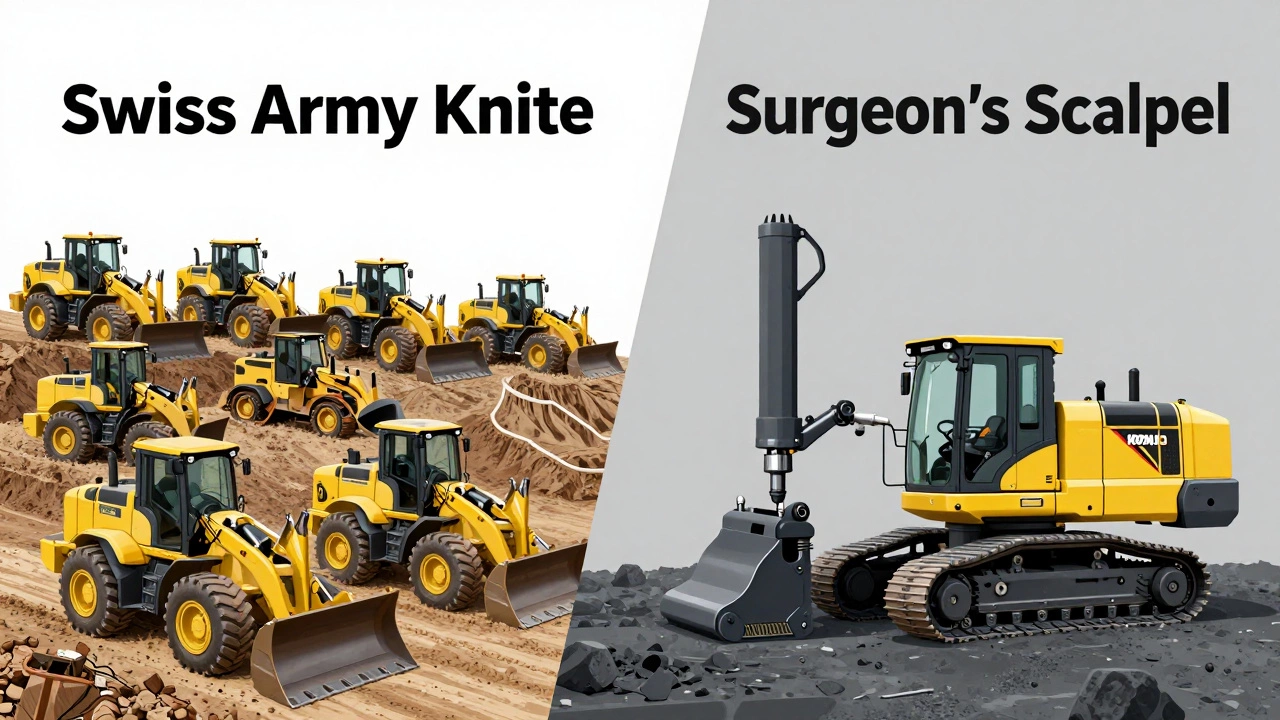
But if you are looking for cutting-edge precision and high-efficiency mining tech, Komatsu often takes the lead. They tend to be very focused on the engineering side of things, offering machines that are designed for maximum uptime in the most grueling environments. In many ways, Komatsu is the "surgeon's scalpel" while Caterpillar is the "Swiss Army knife" of the heavy equipment world.
Common Pitfalls When Comparing Giants
One big mistake people make is looking at a single year's revenue. Heavy equipment cycles are wild. One year, a mining boom in Australia might make Komatsu look like the king. The next year, a massive infrastructure bill in the US makes Caterpillar's numbers skyrocket. You have to look at the 10-year trend to see who is actually winning.
Another trap is ignoring the "Tier 2" players. While we focus on Cat and Komatsu, brands like Sany and JCB are eating into the market share, especially in India. These companies often offer lower price points, forcing the two giants to innovate faster or lower their costs.
Is Caterpillar more reliable than Komatsu?
Reliability is subjective and depends on maintenance. Caterpillar is often praised for its longevity and the ease of finding replacement parts. Komatsu is highly regarded for its precision engineering and reliability in specialized mining applications. Both are top-tier, but Cat's massive dealer network usually makes it easier to keep a machine running over twenty years.
Who has a better resale value?
Generally, Caterpillar machines hold their value better on the secondary market. Because so many people trust the brand and the parts are widely available, there is always a buyer for a used Cat excavator, regardless of the region.
Which company is more dominant in India?
Caterpillar has a very strong presence through a wide network of dealerships and a variety of construction equipment. However, Komatsu is a powerhouse in the large-scale mining sector. It's a split: Cat wins on breadth and service, Komatsu wins on specialized heavy-duty mining scale.
Do they make the same types of machines?
Yes, both produce the core "yellow iron": excavators, dozers, graders, and wheel loaders. The difference lies in the specific engineering philosophy and the software integration they use to manage those machines.
Are Komatsu machines cheaper than Caterpillar?
Often, yes. Komatsu's pricing can be more competitive depending on the region. However, the "cheaper" initial price doesn't always mean lower cost of ownership. You have to factor in fuel efficiency, maintenance costs, and the eventual resale value.
Next Steps for Equipment Buyers
If you're in the market for heavy machinery, don't just look at the brand name. Start by mapping your service needs. If you're working in a remote area, find out which brand has a technician within a two-hour drive of your site. A "big" company is useless if they can't get a mechanic to your project during a critical breakdown.
Next, run a total cost of ownership (TCO) analysis. Compare the initial purchase price against the expected fuel burn and the projected resale value after five years. You'll find that the "bigger" brand might cost more upfront but save you thousands in the long run through efficiency and value retention.

Recent Posts
-
India's Rank in Global Textile Manufacturing: Current Standing and Future Outlook
-
Where is Plastic Manufactured in the US? Top States and Companies
-
Why Local Manufacturing Matters: Benefits, Government Schemes & Economic Impact
-
Top Chemicals Imported into India: Key Sectors and Trends for 2026
-
Top 3 Furniture Manufacturing Countries: China, Vietnam, and the USA