MES vs MOM: Key Differences Explained for Modern Manufacturing
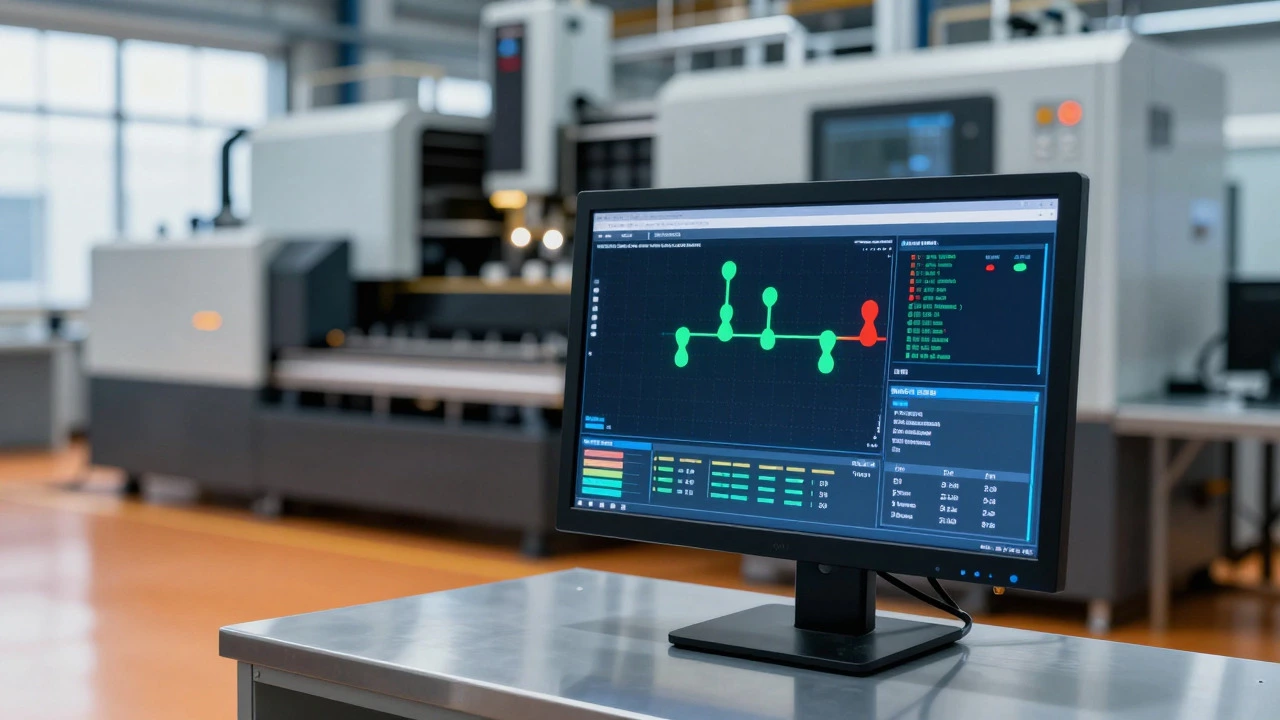
MES vs MOM Decision Assistant
Answer the questions below to identify which system best addresses your current plant challenges. This tool analyzes your needs against core MES and MOM capabilities.
Recommendation
Select options on the left
to see your personalized recommendation.
You are staring at two acronyms that look identical but act completely differently. MES is a Manufacturing Execution System that tracks real-time shop floor data to optimize production flow. On the other hand, MOM is Manufacturing Operations Management, a broader framework that oversees the entire lifecycle from order entry to shipment. Confusing these two can lead to buying the wrong software or missing critical operational gaps. If you run a plant in Sydney or anywhere else, understanding this distinction saves money and headaches.
The Core Distinction: Scope and Function
Think of MES as the eyes and ears on the factory floor. It captures data from machines, operators, and sensors in milliseconds. Its primary job is to ensure that what is planned actually happens. For example, if a CNC machine runs slow, an MES flags it immediately so supervisors can adjust schedules before delays cascade. This granularity is why discrete manufacturers often prioritize MES for detailed traceability.
MOM, however, zooms out. It integrates planning, quality, maintenance, and performance into one unified view. While MES focuses on *how* to produce, MOM asks *what* should be produced and *why*. It connects the dots between your ERP (Enterprise Resource Planning) systems and the physical shop floor. In practice, MOM provides the strategic context that raw production data lacks. You use MOM to balance inventory levels against demand forecasts, not just to track which bolt was installed when.
Key Functional Differences
To make this concrete, let’s break down the specific modules where these systems diverge. The table below highlights the core differences in functionality, user base, and integration points.
| Feature | MES (Manufacturing Execution System) | MOM (Manufacturing Operations Management) |
|---|---|---|
| Primary Focus | Real-time shop floor control and tracking | End-to-end operational oversight and optimization |
| Data Granularity | High (machine-level, second-by-second) | Medium (aggregated operational metrics) |
| Quality Management | In-process inspection and defect logging | Comprehensive quality strategy and supplier audits |
| Maintenance Integration | Basic downtime alerts | Predictive maintenance and asset lifecycle management |
| User Interface | Operator-focused dashboards and HMI screens | Managerial analytics and KPI reporting tools |
| Integration Layer | Connects directly to PLCs and SCADA | Bridges ERP and MES with advanced analytics |
Notice how MES deals with the "now." It answers questions like: Is Line 3 running? What is the current OEE (Overall Equipment Effectiveness)? Meanwhile, MOM deals with the "next." It answers: Should we shift resources to Line 4 next week? This difference matters because your IT team might build an MES solution for immediate efficiency gains, while your operations director needs MOM for long-term strategic alignment.

Why the Confusion Exists
Honestly, the lines have blurred over the last decade. Modern software vendors often bundle features. A robust MES might now include basic quality management modules that used to be exclusive to MOM suites. Conversely, lightweight MOM platforms sometimes integrate direct machine connectivity, mimicking MES capabilities. This overlap confuses buyers who see similar feature lists in brochures.
The root cause lies in industry standards. The ISA-95 standard defines the hierarchy of enterprise control systems. It places MES at Level 3 (Supervisory Control) and MOM concepts across Levels 2 and 3. However, many companies don’t strictly follow ISA-95. They implement hybrid solutions that mix both approaches. If you are evaluating vendors, ask specifically about their compliance with ISA-95 levels. This tells you exactly where their strength lies-execution or management.
Choosing the Right System for Your Plant
So, which one do you need? It depends on your pain points. If your biggest issue is visibility into production status and reducing manual data entry, start with MES. It gives you quick wins by digitizing paper logs and providing instant feedback to operators. This is common in automotive parts manufacturing where traceability is legally required.
If your challenge is balancing capacity, managing complex supply chains, or improving overall plant profitability, lean toward MOM. It offers the analytical depth to make better decisions. For instance, a food processing plant in New South Wales might use MOM to correlate energy consumption with batch yields, identifying inefficiencies that a pure MES would miss.
Here is a simple decision tree:
- Need real-time machine monitoring? Choose MES.
- Need cross-departmental performance analysis? Choose MOM.
- Need both? Look for integrated platforms that offer modular licensing. Many modern solutions allow you to start with MES modules and expand to MOM features later without changing vendors.
Integration Challenges and Best Practices
Whether you pick MES or MOM, integration is where projects fail. These systems must talk to your ERP, SCADA, and IoT devices. A disconnected MES becomes a silo of data that nobody trusts. Ensure your chosen solution supports open APIs and standard protocols like OPC UA. This allows seamless data exchange with existing infrastructure. Consider the human element too. Operators resist tools that add complexity. An effective MES interface should be intuitive, requiring minimal training. For MOM, managers need customizable dashboards that highlight key performance indicators (KPIs) relevant to their role. Involve end-users early in the selection process. Their buy-in determines whether the system delivers value or sits unused on a server.
Future Trends: Convergence of MES and MOM
Looking ahead, the boundary between MES and MOM is dissolving. Industry 4.0 initiatives push for fully digital twins of factories. In this environment, real-time execution data feeds directly into predictive analytics. AI algorithms suggest optimal production schedules based on live machine health and material availability. This fusion means future systems will likely be labeled as "Integrated Operational Systems" rather than distinct MES or MOM products. For now, though, the distinction remains vital for budgeting and implementation. Understanding that MES drives the floor and MOM guides the strategy helps you allocate resources wisely. Don’t let vendor marketing blur these roles. Ask hard questions about scope, integration, and scalability. Your bottom line depends on getting this right.
Can I use MES without an ERP system?
Yes, you can. MES operates independently on the shop floor. However, without ERP integration, you lose visibility into inventory and financial impacts. Many small manufacturers start with standalone MES and add ERP later as they scale.
Is MOM more expensive than MES?
Generally, yes. MOM covers a wider range of functions including quality, maintenance, and performance management. This broader scope requires more modules and higher licensing costs. However, the ROI comes from improved overall operational efficiency rather than just production speed.
Which industries benefit most from MOM?
Process industries like pharmaceuticals, chemicals, and food & beverage benefit significantly from MOM. These sectors require strict compliance, batch traceability, and complex recipe management, which MOM handles better than basic MES solutions.
How long does it take to implement an MES system?
A typical MES implementation takes 3 to 6 months for a single line. Full plant rollouts can take 12 to 18 months. Factors affecting timeline include legacy hardware compatibility, data migration complexity, and staff training requirements.
What is the main difference between SCADA and MES?
SCADA focuses on monitoring and controlling industrial processes via sensors and actuators. MES uses SCADA data but adds business logic, scheduling, and workflow management. SCADA is technical; MES is operational.