Top Textile Producing Countries: Global Rankings and What They Mean for You
When talking about top textile producing countries, the nations that generate the highest volume of fabric, yarn, and finished cloth each year. Also known as leading textile exporters, this group drives a massive share of worldwide apparel, home goods, and industrial fabrics. Adjacent to this core are the textile industry, a complex network of mills, designers, and distributors, which transforms raw fibers into market‑ready products, the cotton production sector, the natural fiber backbone for many garments, and the synthetic fibers segment, which adds strength, stretch, and affordability to modern textiles. Together they shape the global garment market, influencing everything from fashion trends to price points.
So, which nations actually sit at the top of the list? In 2024, China still claims the crown with roughly 30% of global textile output, thanks to its massive labor force and deep integration of cotton and synthetic production. India follows closely, leveraging its status as the second‑largest cotton grower and an expanding synthetic capacity. Bangladesh, though smaller in raw volume, punches above its weight in garment exports due to a highly efficient manufacturing ecosystem. Vietnam and Turkey round out the top five, each excelling in a mix of natural and engineered fibers that feed Western retailers. The pattern shows that sheer scale, diversified fiber sources, and strategic trade policies are the key ingredients for ranking high.
Why Fiber Mix Matters
The textile industry doesn’t rely on a single material; it thrives on a blend of cotton, polyester, viscose, and emerging bio‑fibers. Cotton production offers breathability and comfort, qualities that keep it in demand for casual wear and high‑end linens. Synthetic fibers, especially polyester, dominate because they’re cheap, durable, and easy to recycle. Countries that can produce both types internally—like India and China—enjoy lower import costs and faster turnaround times. This dual capability directly influences a nation's rank in the top textile producing countries list, because exporters can fulfill a broader set of buyer specifications without waiting on external suppliers.
Supply chain efficiency is another decisive factor. Nations that have invested in modern loom technology, automated finishing lines, and integrated logistics see higher output per worker. For example, Vietnam’s recent upgrades to its spinning mills have cut lead times by 20%, allowing it to climb the rankings despite a smaller raw cotton base. Meanwhile, Turkey’s proximity to European fashion hubs reduces shipping delays, making its textile output more attractive to premium brand buyers. These logistical advantages illustrate the semantic triple: Efficient supply chains enable higher textile production, which boosts a country’s ranking.
Sustainability trends are reshaping the landscape, too. Eco‑friendly cotton (organic or Better Cotton Initiative certified) and recycled polyester are becoming non‑negotiable for many brands. Countries that support green certification programs—such as India’s growing organic cotton sector—gain a competitive edge. This creates another triple: Adoption of sustainable fibers influences global garment market demand, which in turn affects the standing of top textile producing countries. Investors and manufacturers who watch these shifts can anticipate which markets will expand next.
Beyond raw production numbers, the economic impact ripples through employment, export earnings, and regional development. In Bangladesh, textile factories employ over 4 million workers, predominantly women, fueling social change alongside economic growth. In China, the sector contributes roughly $300 billion to GDP, underscoring how pivotal textiles remain for national economies. Understanding these broader effects helps readers see why the rankings matter beyond mere statistics—they reflect real‑world livelihoods and investment opportunities.
Now that you’ve got a clear picture of who leads the pack, how fiber diversity shapes output, and why supply chains and sustainability matter, you’re ready to dive deeper. Below you’ll find a curated set of articles that break down each country’s strengths, compare cotton versus synthetic strategies, and offer actionable tips for businesses looking to source responsibly from the world’s top textile producers.
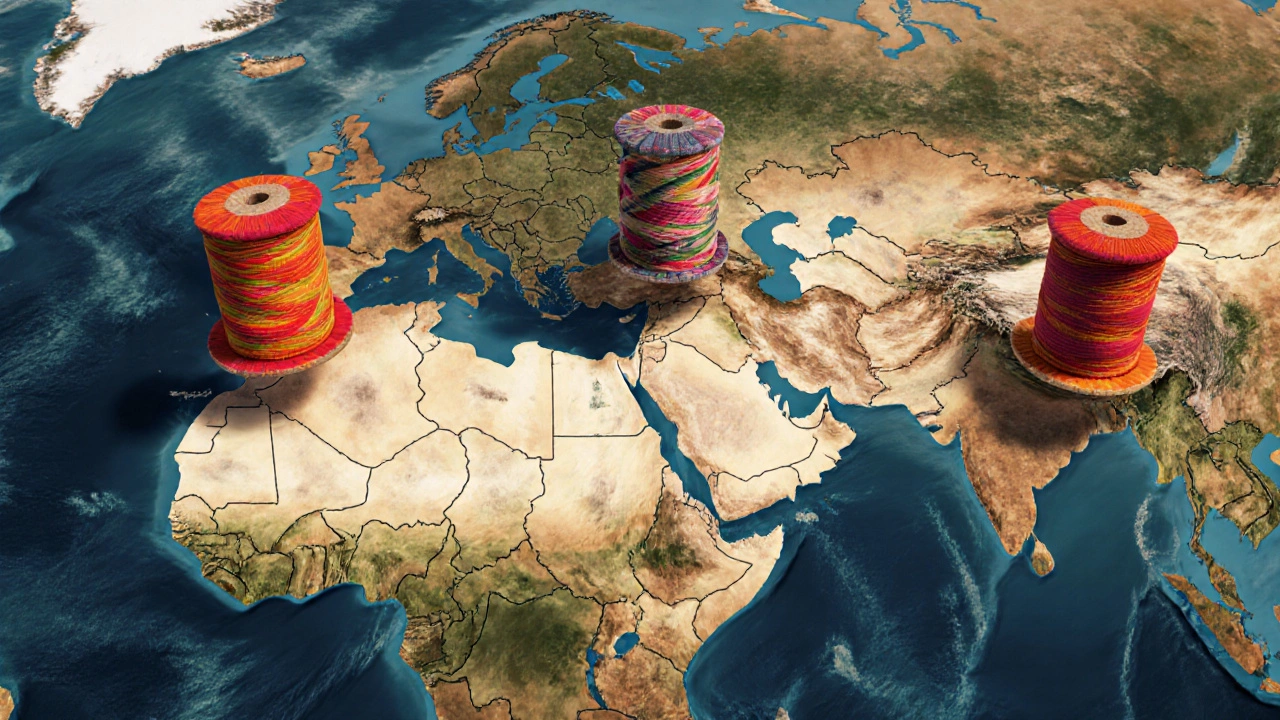
India's Rank in Global Textile Production - 2025 Insights
India holds the 3rd spot in global textile production, delivering about 115 million metric tons in 2024‑25. Learn the factors behind the rank, regional strengths, export performance, challenges, and future outlook.
Read More