Is a Textile Mill Profitable in India? Costs, Margins & ROI Guide (2026)
Textile Mill Profitability Calculator (India 2026)
Estimate the monthly financial performance of a mid-sized integrated textile mill producing grey and dyed fabric based on current market rates in hubs like Tamil Nadu and Gujarat.
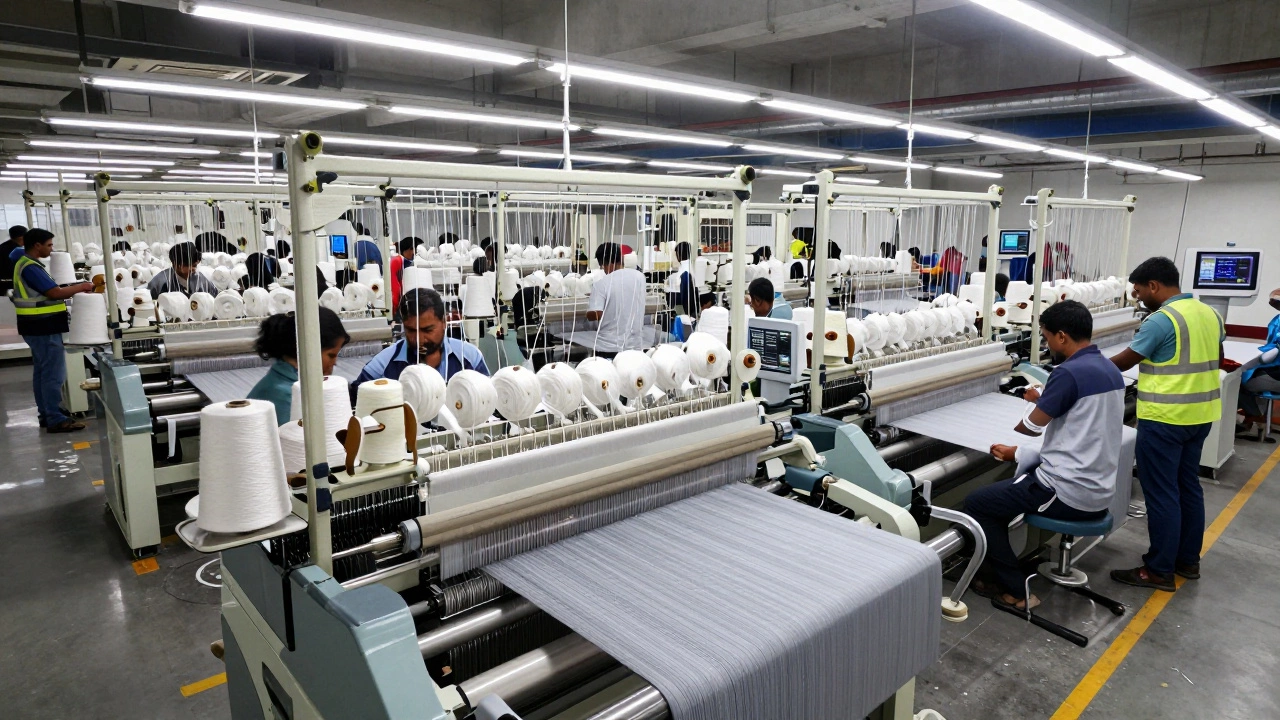
India is often called the land of textiles. From the intricate weaves of Kanchipuram to the industrial hubs of Tirupur and Surat, fabric is woven into the country’s economic DNA. But here is the hard truth: starting a textile mill is a capital-intensive manufacturing unit that converts raw fibers like cotton or synthetic polymers into yarn, fabric, or finished garments through processes like spinning, weaving, knitting, and dyeing is not a get-rich-quick scheme. It is a game of margins, volume, and operational efficiency.
In 2026, the question isn't just "is it profitable?" The real question is "under what conditions does it become profitable?" The short answer is yes, but only if you treat it as an engineering problem, not just a traditional trade. With global supply chains shifting away from China due to geopolitical tensions and rising labor costs there, India has stepped into the spotlight. However, local challenges like power fluctuations, skilled labor shortages, and environmental compliance can eat your profits faster than you can spin yarn.
The Real Numbers: Revenue vs. Reality
To understand profitability, you need to look at the unit economics. Let's break down a standard mid-sized integrated textile mill producing grey fabric (undyed cloth) and dyed fabric. These numbers are estimates based on current market rates in major hubs like Tamil Nadu and Gujarat.
| Parameter | Metric | Value (INR) |
|---|---|---|
| Raw Material Cost (Cotton Yarn) | Per Kg | ₹180 - ₹220 |
| Selling Price (Grey Fabric) | Per Meter | ₹45 - ₹60 |
| Gross Margin | Percentage | 15% - 25% |
| Net Profit Margin | Percentage | 5% - 12% |
| Break-even Point | Capacity Utilization | 60% - 70% |
Notice the net profit margin. It is thin. If your capacity utilization drops below 60%, you are likely operating at a loss because fixed costs like rent, salaries, and loan EMIs remain constant. This is why many small mills fail-they don't have enough orders to keep the machines running 24/7.
Key Factors Driving Profitability in 2026
Several macro and micro factors determine whether your mill makes money or burns cash. Understanding these is critical before you invest a single rupee.
- Raw Material Volatility: Cotton prices fluctuate wildly based on weather conditions in states like Maharashtra and Telangana. A bad monsoon means higher input costs. If you cannot pass this cost increase to your buyers immediately, your margin shrinks.
- Power Costs: Textile mills are energy hogs. In states with high industrial electricity tariffs, power can account for 15-20% of your total production cost. Mills in Gujarat or Tamil Nadu often benefit from more stable grids and competitive tariffs compared to other regions.
- Labor Efficiency: You need skilled loom operators and maintenance technicians. Labor turnover in the textile sector is high. Training new staff takes time and reduces output. Automation helps, but it requires upfront investment.
- Export Demand: A significant portion of Indian textile revenue comes from exports to the US, EU, and Middle East. Currency fluctuations (Rupee vs. Dollar) directly impact your bottom line. A weaker Rupee boosts export earnings, while a strong Rupee squeezes them.
Setup Costs: What Are You Actually Spending?
Many entrepreneurs underestimate the initial capital required. Here is a realistic breakdown for setting up a small-to-medium scale weaving and processing unit.
- Land and Building: You need ample space for machinery, raw material storage, and finished goods. In industrial clusters, leasing is common initially. Expect ₹50-100 per sq. ft. per month depending on location.
- Machinery: Modern air-jet looms are efficient but expensive. A single high-speed loom can cost between ₹3-5 lakhs. For a 50-loom unit, that’s ₹1.5-2.5 crores just for weaving equipment. Add spinning frames, knitting machines, and processing plants (dyeing, printing), and the figure skyrockets.
- Utilities Infrastructure: You will need heavy-duty electrical connections (often 3-phase), water treatment plants (ETP) for wastewater management, and boilers for steam generation. ETP compliance is non-negotiable in 2026; penalties for environmental violations are severe.
- Working Capital: This is often overlooked. You need cash to buy raw materials, pay salaries, and cover bills while waiting for clients to pay their invoices (which can take 30-90 days).
Total startup capital for a viable small-scale unit typically ranges from ₹2 crore to ₹10 crore, depending on automation levels and vertical integration.

Government Schemes and Incentives
The Indian government recognizes the strategic importance of textiles. Several schemes can significantly improve your ROI by reducing initial costs or providing subsidies.
The Production Linked Incentive (PLI) Scheme for the textile sector provides financial incentives based on incremental sales of eligible products, aiming to boost domestic manufacturing and exports is a major driver. Under this scheme, manufacturers can receive incentives ranging from 2% to 5% on incremental sales. This directly boosts your net profit margin.
Additionally, state-specific policies offer subsidies on:
- Installation of modern machinery (up to 25% subsidy in some states).
- Interest subvention on loans for textile units.
- Subsidies for solar panel installation to reduce power costs.
Always consult with a chartered accountant or industry expert to ensure you meet all eligibility criteria and documentation requirements for these schemes.
Challenges That Can Kill Your Business
Profitability isn't just about making sales; it's about avoiding pitfalls. Here are the most common reasons textile mills fail in India:
- Credit Risk: Many buyers, especially smaller retailers, delay payments. If your working capital gets stuck in unpaid invoices, you cannot buy new raw materials, leading to production stoppages.
- Environmental Compliance: Dyeing and printing processes generate toxic wastewater. Failing to install and maintain proper Effluent Treatment Plants (ETPs) can lead to shutdowns by pollution control boards. The cost of compliance is high, but the cost of non-compliance is existential.
- Technological Obsolescence: Using old shuttle looms instead of modern air-jet or rapier looms means lower speed, higher waste, and inferior quality. Buyers demand consistency, which only modern machines can provide.
- Market Competition: The market is saturated with small players who undercut prices. Competing solely on price is a race to the bottom. Differentiate through quality, niche fabrics (like organic cotton or technical textiles), or faster delivery times.

Strategies to Maximize Profits
If you want your textile mill to be truly profitable, you need to adopt smart strategies beyond just buying machines.
- Vertical Integration: Instead of just weaving, consider adding dyeing and finishing capabilities. This allows you to capture value at multiple stages of the supply chain. Integrated mills have higher margins than those that only produce grey fabric.
- Niche Specialization: Don't try to make everything. Focus on high-demand niches like denim, home textiles, or technical textiles (used in automotive, medical, or construction industries). Technical textiles, in particular, have higher margins and less competition.
- Automation and IoT: Implement Internet of Things (IoT) sensors in your machinery to monitor performance in real-time. Predictive maintenance reduces downtime. Automated cutting and sewing lines reduce labor dependency and errors.
- Direct Export Channels: Bypass middlemen by connecting directly with international buyers through platforms like IndiaMART, Alibaba, or trade fairs. Exporting brings in foreign currency and often involves larger order volumes with better payment terms.
- Sustainable Practices: Global brands are increasingly demanding sustainable sourcing. Using organic cotton, recycling water, and obtaining certifications like GOTS (Global Organic Textile Standard) or OEKO-TEX can open doors to premium markets with higher price points.
Conclusion: Is It Worth It?
Starting a textile mill in India in 2026 is profitable if you approach it with a modern mindset. It is no longer about owning a few old looms and relying on local contacts. It is about building a tech-enabled, compliant, and efficient manufacturing unit that can compete globally.
The key to success lies in careful planning, securing adequate working capital, leveraging government incentives, and focusing on niche markets with higher margins. If you can manage costs, maintain high capacity utilization, and navigate regulatory hurdles, the textile industry offers stable, long-term returns. However, if you enter without a solid business plan or sufficient capital, the thin margins and high fixed costs will quickly drain your resources.
What is the average profit margin for a textile mill in India?
The average net profit margin for a textile mill in India ranges from 5% to 12%. This varies significantly based on the type of fabric produced, level of automation, capacity utilization, and whether the mill is vertically integrated. Grey fabric producers typically see lower margins (5-8%), while specialized technical textile manufacturers can achieve higher margins (15-20%).
How much capital is needed to start a small textile mill?
For a small-scale weaving unit with 50-100 looms, you should expect to invest between ₹2 crore to ₹5 crore. This includes machinery, land/lease, utility infrastructure, and initial working capital. If you plan to include dyeing and finishing facilities, the investment can rise to ₹10 crore or more due to the cost of effluent treatment plants and chemical handling systems.
Are there government subsidies for textile mills in India?
Yes, the Indian government offers several incentives. The Production Linked Incentive (PLI) scheme provides financial benefits based on incremental sales. Additionally, various state governments offer subsidies on machinery installation (up to 25%), interest subvention on loans, and support for renewable energy adoption. Check with your state's textile department for specific eligibility criteria.
What are the biggest risks in the textile manufacturing business?
Major risks include volatility in raw material prices (especially cotton), delayed payments from buyers affecting working capital, stringent environmental regulations regarding wastewater disposal, and intense competition from low-cost producers. Operational inefficiencies and machine downtime also significantly impact profitability.
Which type of textile business is most profitable in India?
Technical textiles and organic/sustainable fabrics currently offer the highest profit margins. Technical textiles used in automotive, medical, and construction sectors have less competition and higher value addition. Similarly, mills producing certified organic cotton or recycled polyester cater to premium global markets willing to pay higher prices for sustainable products.

Recent Posts
-
Who is the Largest Steel Fabricator in the United States?
-

India's Oldest Pharma Company: A Look at Bengal Chemicals & Pharmaceuticals
-

Which Indian Wood is Strongest? A Guide for Furniture Makers
-

Why Did Chevrolet Leave India? The GM Exit Explained
-

What is the Biggest Steel Mill in the United States? US Steel Gary Works