Steel Manufacturing Countries: Production Leaders and Trends
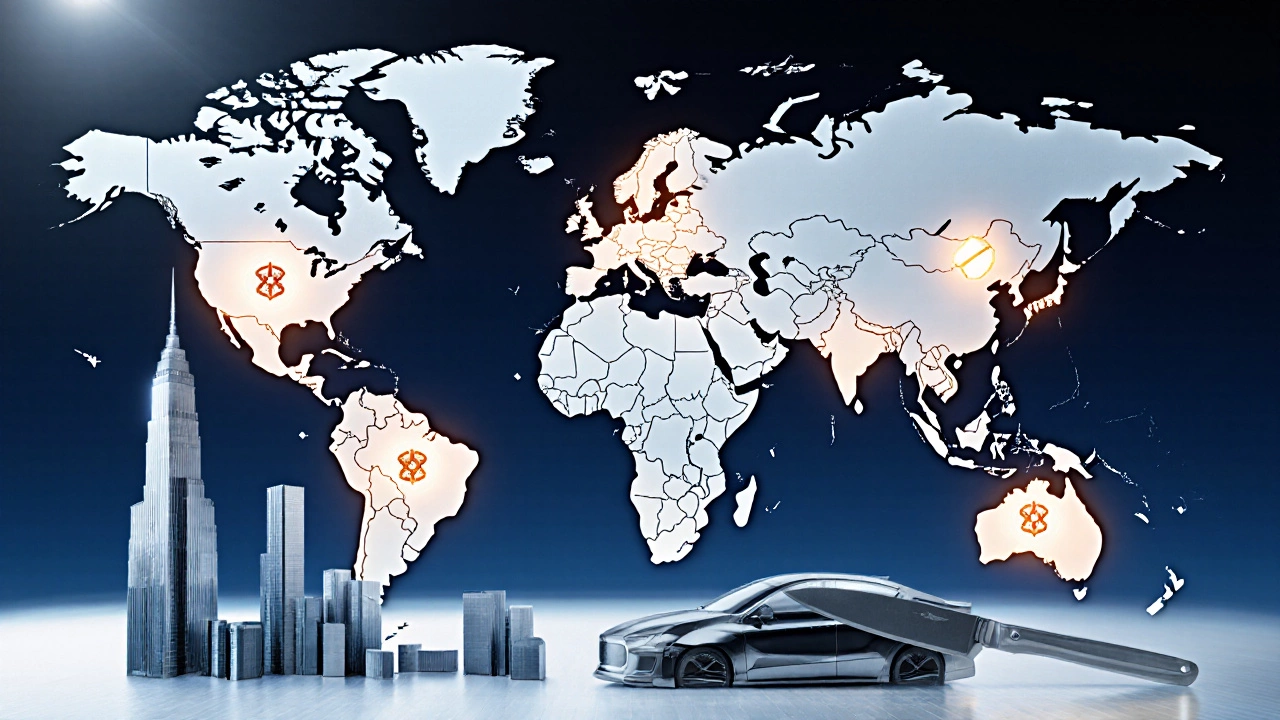
When exploring steel manufacturing countries, nations that generate large volumes of steel for domestic use and export. Also known as steel‑producing nations, they shape the global industrial landscape. These nations drive the steel production, the conversion of iron ore into various steel grades for construction, automotive, and energy sectors. Understanding the major steel‑producing nations, countries like China, India, the United States, Japan and Russia that top the output charts reveals why the steel market looks the way it does today.
One key attribute of these countries is sheer output volume. In 2024 China alone produced over 1 billion metric tons, accounting for roughly 55% of worldwide steel. India follows with about 120 million tons, while the United States contributes around 80 million. These figures matter because they set the baseline for global supply, price stability, and the capacity to meet infrastructure demand. When a country’s production climbs, you often see downstream effects: lower material costs for builders, faster rollout of renewable energy projects, and more competitive automotive pricing.
Behind the numbers lie three critical resources: iron ore availability, energy cost, and advanced rolling technology. Nations sitting on rich ore deposits—like Australia, Brazil and the United States—can keep raw material expenses low. Energy, especially electricity and coal, remains a major cost driver; countries with cheap power, such as Russia and China, enjoy a competitive edge. Finally, investments in modern blast furnaces, electric‑arc furnaces, and continuous casting lines boost efficiency and product quality, allowing manufacturers to meet tight tolerances required by high‑tech industries.
Geography also creates concentrated industrial steel hubs, clusters of steel plants, suppliers and logistics networks that amplify production capacity. Classic examples include Pittsburgh in the United States, Shanghai in China, and Dortmund in Germany. These hubs benefit from dense transport links—rivers, railways, ports—that streamline raw material intake and product shipment. They also foster skilled labor pools and innovation ecosystems, making it easier for firms to adopt new steel grades or greener production methods.
The performance of steel manufacturing countries directly fuels the global steel market, the worldwide trade network that balances supply, demand, and pricing of steel products. When output from China surges, global prices usually dip, prompting buyers in Europe or North America to negotiate better terms. Conversely, production cuts in major exporters like Brazil can tighten supply, pushing prices up and incentivizing imports from alternative sources. Understanding these dynamics helps investors, policymakers, and engineers anticipate market shifts and plan accordingly.
Beyond the traditional powerhouses, emerging economies are rapidly climbing the steel ladder. Vietnam, Indonesia and Ethiopia have launched ambitious capacity‑building programs, leveraging lower labor costs and growing domestic demand for infrastructure. While they still lag behind the top five in absolute tonnage, their growth rates often exceed 10% annually, hinting at a future reshaping of the steel map. Monitoring these newcomers offers a glimpse into where new industrial steel hubs might form in the next decade.
Sustainability is another game‑changer. Many steel manufacturing countries are adopting green technologies—hydrogen‑based direct reduction, carbon capture and storage, and increased recycling rates—to meet stricter emissions targets. Countries with strong environmental policies, such as Sweden and Canada, are already producing low‑carbon steel for automotive and construction sectors. These shifts not only reduce the carbon footprint but also open premium market segments for eco‑friendly steel, influencing trade flows and investment decisions.
Below, you’ll find a curated collection of articles that dive deeper into each of these themes—country‑specific production data, hub‑level analyses, cost comparisons, and sustainability roadmaps. Browse the list to get actionable insights and stay ahead of the ever‑evolving steel manufacturing landscape.
Which Country Produces the Highest‑Quality Steel?
Explore which countries deliver the highest‑quality steel, learn key quality metrics, compare top producers, and get a practical checklist for choosing the right steel supplier.
Read More