What Business Makes the Most Money from Home? Top Home-Based Manufacturing Ideas That Actually Pay
Home Business Profit Calculator
Calculate Your Home Business Profit
Enter your business details to see potential monthly profits based on the manufacturing models described in the article.
Forget the 9-to-5. More people are making serious money from their garages, basements, and spare rooms-not by selling stuff on eBay, but by manufacturing real products right at home. You don’t need a factory floor. You don’t need investors. You just need the right idea, a few tools, and the willingness to start small and scale smart.
Let’s cut through the noise. Most "make money from home" guides push dropshipping, print-on-demand, or affiliate marketing. Those can work, but they’re thin-margin, high-competition, and you’re always at the mercy of someone else’s platform. The real money? It’s in making something tangible. Something people need. Something you control from start to finish.
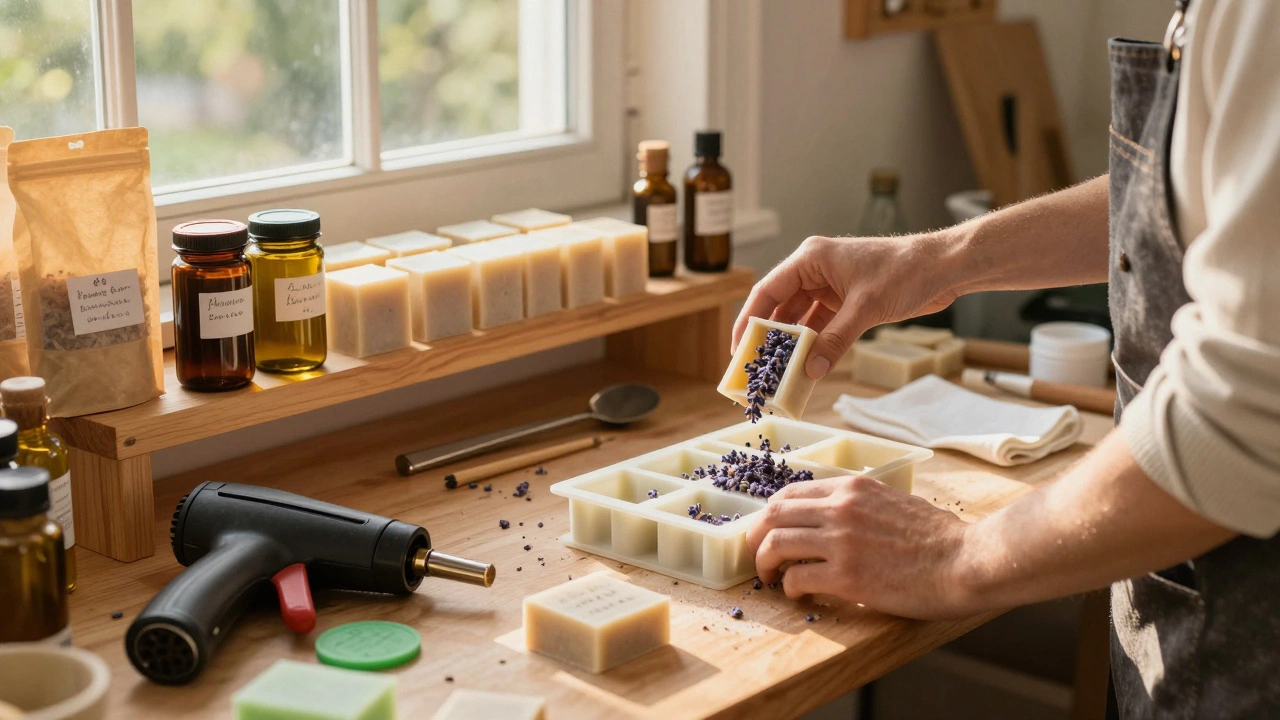
Handmade Soap and Bath Bombs
It sounds simple. You mix oils, lye, and scent. But the profit margins? They’re brutal-in the best way. A single bar of handmade soap costs under $1 to make. You sell it for $8 to $12. A pack of 5 bath bombs? $1.50 in ingredients. Sold for $25. That’s a 500% to 800% markup.
People aren’t just buying soap. They’re buying self-care, clean ingredients, and local craftsmanship. No big brands can match that personal touch. You can start with a $200 kit, learn the chemistry from YouTube, and test recipes on friends. Once you have a signature scent or texture-say, lavender with activated charcoal or coconut oil with exfoliating oatmeal-you can build a brand. Etsy, Instagram, and local farmers markets are your sales channels. One woman in Adelaide turned her kitchen into a $90,000/year soap business in 18 months. No employees. Just her, a mixer, and a heat gun.
Custom Pet Food and Treats
Over 60% of Australian households own a pet. And pet owners will spend more on their dog or cat than they will on their own groceries. That’s the gap you fill with homemade pet food and treats.
You don’t need a medical degree. But you do need to follow safe recipes. Stick to simple, vet-approved formulas: chicken and sweet potato for dogs, tuna and pumpkin for cats. Cook in small batches, freeze in portioned containers, and label everything clearly. Add a QR code that links to a short video of you making the batch-it builds trust fast.
Start with treats. They’re easier. A bag of 20 chicken jerky strips costs $2 to make. Sell for $15. Do 50 bags a week? That’s $750. Scale to three flavors, add subscription boxes, and you’re hitting $3,000 a month. The best part? You can operate from your kitchen. No commercial kitchen license needed if you’re selling directly to customers locally. Just check your state’s home-based food rules-NSW and Victoria allow it under strict labeling guidelines.
Printed Apparel and Custom Embroidery
Think T-shirts. Think hoodies. Think local pride. You don’t need to be a designer. You need a heat press and a printer. Or better yet-a direct-to-garment (DTG) printer. A basic DTG machine costs $3,000-$5,000. It prints full-color designs directly onto fabric. No screens. No setup fees. Just upload, press, and ship.
Who’s buying? Local sports teams. Small businesses wanting branded merch. Couples looking for matching anniversary shirts. You can target hyper-local niches: "Sydney Harbour Bridge Fans," "Melbourne Cup Supporters," "Brisbane Rainforest Hikers." These aren’t mass-market designs. They’re community-driven. And people pay $30-$50 for them.
One couple in Perth started with a $1,200 heat press and a second-hand printer. They made custom dog bandanas for local vets. Within a year, they were doing 200 orders a month. They now have a 10m² studio in their garage. No warehouse. No staff. Just two people and a machine that runs on electricity.
Small-Batch Coffee Roasting
Most people buy coffee from supermarkets. They don’t know the difference between a light roast and a dark roast. But the ones who do? They’ll pay $35 for a 250g bag of beans roasted in their neighborhood.
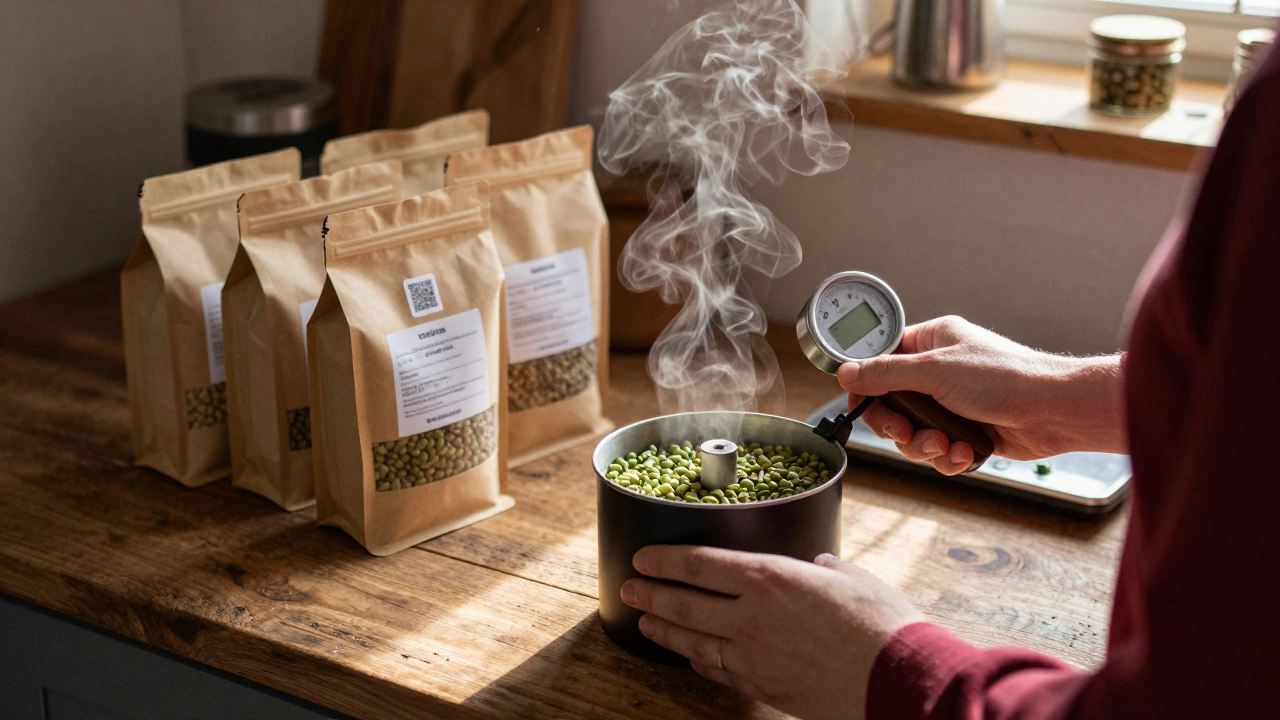
Home coffee roasting is one of the most profitable niche manufacturing businesses. You buy green coffee beans in bulk-$12-$18 per kg. Roast them in a small drum roaster (under $1,000). Package in kraft bags with a one-way valve. Add a roast date and tasting notes: "floral, citrus, honey finish."
It takes practice. The first five batches might taste burnt or sour. But after 20 tries, you’ll nail your profile. Sell to local cafes, farmers markets, or through your own website. Subscription models work great here-customers pay $40 a month for two bags delivered every two weeks. One roaster in Brisbane started with a $500 popcorn popper and a $200 thermometer. Now he sells 1,200kg a year. Profit? Over $100,000.
Custom Wooden Signs and Home Decor
People love things that feel personal. A wooden sign with their street name. A plaque with their wedding date. A shelf shaped like a kangaroo for their kid’s room.
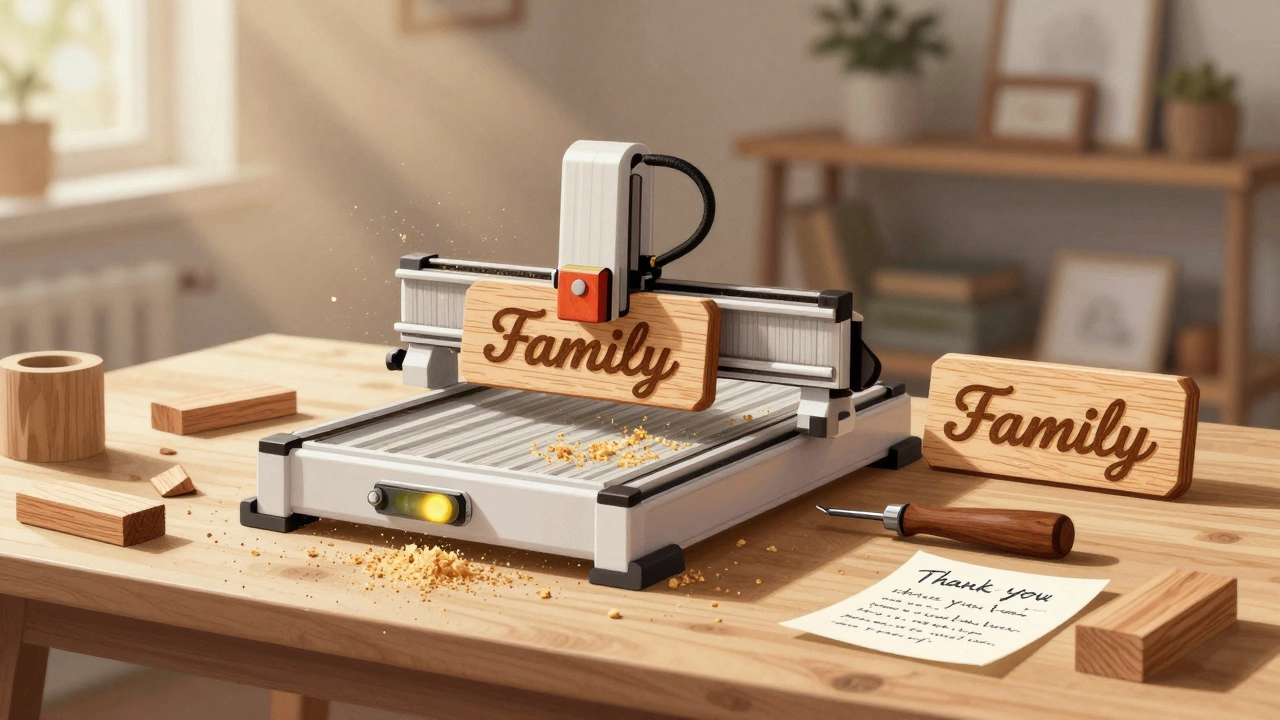
You don’t need to be a master carpenter. A basic CNC router (around $2,500) lets you carve precise designs into plywood or reclaimed timber. You can buy pre-cut blanks online to save time. Paint with non-toxic, water-based stains. Seal with beeswax. Package with a handwritten note.
Target Etsy, Facebook Marketplace, and local interior designers. A 12x18" custom sign with a family name costs $30 to make. Sell for $120. Do 15 a week? That’s $1,800. Add seasonal designs-Christmas, Easter, ANZAC Day-and you can double your sales. One maker in the Blue Mountains uses fallen eucalyptus branches from her backyard. She sands them, burns the text with a wood-burning tool, and sells them as "forest-to-home" decor. She’s sold over 2,000 pieces in two years.
Why These Work When Other Home Businesses Don’t
These aren’t side hustles. They’re manufacturing businesses. You’re not reselling. You’re not curating. You’re creating value from raw materials. That’s why the margins are high and the competition is low.
Dropshipping? You’re competing with 10,000 other sellers offering the same phone case. Handmade soap? You’re competing with 50 others in your city. Big difference.
Also, these businesses scale naturally. Start with one product. Master it. Then add a variation. Then a subscription. Then wholesale. You control the supply chain. You own the customer relationship. You don’t pay platform fees every time you make a sale.
And here’s the kicker: you don’t need to quit your job to start. Most of these businesses can be run 10-15 hours a week. You build momentum slowly. Then, when you’re ready, you hire a part-time helper to pack orders or drive to markets.
What You Need to Get Started
- Space: A garage, shed, or even a corner of your kitchen. Ventilation matters for soap, coffee, and paint.
- Tools: Start cheap. A heat press, a small oven, a hand drill, or a basic CNC router. Buy used on Gumtree or Facebook Marketplace.
- Materials: Buy in bulk. A 20kg bag of green coffee beans lasts months. A 5L drum of soy wax makes 100+ bars of soap.
- Legal: Register your business name. Get a tax file number. Check local council rules for home-based manufacturing. Most Australian councils allow it if you’re not causing noise, traffic, or pollution.
- Sales: Start local. Instagram, Facebook Groups, community boards. Build trust before you go big.
Common Mistakes to Avoid
- Buying expensive gear too soon. Test your product with low-cost tools first. Don’t spend $10,000 on a roaster before you know if people will buy your coffee.
- Ignoring packaging. A $10 product looks like a $30 product in a nice bag with a label. Don’t skimp here.
- Trying to sell everywhere at once. Focus on one channel. Master it. Then expand.
- Not tracking costs. Write down every cent you spend: ingredients, labels, postage, electricity. If your cost is $8 and you sell for $12, you’re not making $4 profit. You’re making $1.50 after fees and waste.
Real Numbers: What You Can Actually Make
Here’s what a realistic first-year looks like for someone working 15 hours a week:
| Business | Startup Cost | Monthly Sales (Year 1) | Monthly Profit |
|---|---|---|---|
| Handmade Soap | $500 | $2,500 | $1,800 |
| Pet Treats | $300 | $3,200 | $2,400 |
| Custom T-Shirts | $4,000 | $4,000 | $2,800 |
| Coffee Roasting | $2,000 | $5,000 | $3,500 |
| Wooden Signs | $1,500 | $3,000 | $2,200 |
These aren’t outliers. These are real numbers from people in Australia who started in 2024 and hit these numbers by late 2025.
Where to Go Next
Don’t wait for perfect. Start with what you have. Make five bars of soap. Roast one batch of coffee. Print one T-shirt. Take a photo. Post it. See who responds.
The business that makes the most money from home isn’t the one with the fanciest equipment. It’s the one that solves a real problem for real people-and keeps showing up.
Can I really make a full-time income from home manufacturing?
Yes, but not overnight. Most people who make $5,000-$10,000 a month from home manufacturing started with $500-$2,000 in startup costs and worked part-time for 6-12 months. The key is consistency-not speed. One person in Perth went from $800/month to $8,000/month in 14 months by sticking to one product, improving packaging, and adding a subscription model.
Do I need a commercial kitchen or factory license?
For food products like pet treats or coffee, you usually don’t need a commercial kitchen if you’re selling directly to consumers and not wholesaling. Each state has different rules. In NSW, you must register with your local council and follow food safety guidelines. In Victoria, home-based food businesses under $30,000/year don’t need a license. Always check your local council’s website-most have clear guides for home-based manufacturing.
What’s the easiest home manufacturing business to start?
Handmade soap or pet treats. Both require low upfront costs, simple equipment, and minimal space. You can test your product with a $100 kit and sell your first batch within a week. There’s also high repeat demand-people buy soap and treats again and again.
How do I price my handmade products?
Use this formula: Cost of Materials + Labor + Overhead (electricity, packaging, fees) x 2.5 = Wholesale Price. Then multiply wholesale by 2 = Retail Price. For example, if your soap costs $1.50 to make, your wholesale price is $6.25. Your retail price is $12.50. That’s fair, competitive, and profitable.
Is home manufacturing legal in Australia?
Yes, in most cases. Local councils allow home-based manufacturing as long as it doesn’t cause noise, traffic, pollution, or safety hazards. You must register your business name and get a tax file number. For food, you need to follow food safety standards. For crafts and non-food items, the rules are much looser. Always check your local council’s guidelines before investing.
Final Thought: Start Small, Think Big
You don’t need to be an entrepreneur with a business degree. You just need to make something people want. And then make more of it.
The most profitable home business isn’t the one with the most hype. It’s the one you can do without burning out. The one where you see your product in someone’s home, on their dog’s collar, in their coffee cup. That’s the real win.

Recent Posts
-

Why Did Chevrolet Leave India? The GM Exit Explained
-

Which Indian Wood is Strongest? A Guide for Furniture Makers
-
India's Oldest Pharma Company: A Look at Bengal Chemicals & Pharmaceuticals
-

Who is the Main Exporter of Plastic? Top Countries and Companies in 2026
-
Who is the Largest Steel Fabricator in the United States?