Which Country Has the Best Pharmaceutical Industry? Global Leaders Compared
Pharma Market Strength Calculator
Calculate the estimated market value or volume for a specific country based on global benchmarks.
Result
There is no single answer to which country has the best pharmaceutical industry. The "best" depends entirely on what you value: raw revenue, innovation in new drugs, or the ability to produce affordable generics for the world. If you are looking for the highest sales volume and cutting-edge biotech research, the United States leads. If you want the most reliable supply of low-cost essential medicines, India is the undisputed champion. China dominates the supply of active pharmaceutical ingredients (APIs), while Europe excels in high-quality specialty drugs.
Understanding this landscape is crucial for investors, healthcare professionals, and policymakers. The global supply chain is interconnected; a disruption in one region affects hospitals worldwide. By breaking down the strengths of the top contenders, we can see how each nation plays a specific role in keeping the global health system running.
The United States: The Revenue and Innovation Powerhouse
When people talk about the size of the pharmaceutical industry, they usually point to the United States, which holds the largest share of the global market by revenue. In 2025, the US pharmaceutical market was valued at over $600 billion. This dominance isn't just about selling pills; it's about creating them. The US is home to some of the world's largest pharmaceutical companies, including Pfizer, Johnson & Johnson, Merck, and AbbVie.
The primary strength of the US industry lies in Research and Development (R&D). American firms invest heavily in discovering novel therapies, particularly in oncology, immunology, and rare diseases. The regulatory environment, governed by the Food and Drug Administration (FDA), sets the global standard for drug approval. While critics often cite high drug prices as a major drawback, the US remains the epicenter for patent-protected blockbuster drugs that drive global medical progress.
- Key Strength: High R&D investment and first-to-market approvals for innovative biologics.
- Market Value: Over $600 billion annually.
- Major Players: Pfizer, Merck, Johnson & Johnson, Eli Lilly.
- Weakness: Extremely high consumer costs compared to other developed nations.
India: The "Pharmacy of the World"
If the US is the brain of innovation, India is the heart of accessibility. Often called the "Pharmacy of the World," India supplies more than 50% of all vaccines needed globally and approximately 40% of generic pharmaceutical demand in developing countries. For many patients in Africa, Latin America, and Eastern Europe, Indian manufacturers are the only source of affordable life-saving medications.
India’s competitive advantage comes from its massive scale in generic drug production. Generic drugs are bioequivalent copies of branded medicines whose patents have expired. They cost a fraction of the original price because the expensive R&D phase is skipped. Indian companies like Sun Pharma, Dr. Reddy’s, and Cipla have mastered the art of cost-efficient manufacturing. Furthermore, India is a leader in biosimilars-generic versions of complex biological drugs-which are becoming increasingly important as older biologic patents expire.
The government supports this sector through favorable policies and a large pool of skilled chemists and scientists. However, the industry faces challenges regarding environmental compliance and quality control inspections from foreign regulators like the FDA. Despite these hurdles, India remains the go-to destination for bulk drug manufacturing when affordability is the priority.
| Country | Primary Strength | Global Share (Approx.) | Key Focus Area |
|---|---|---|---|
| USA | Innovation & R&D | ~40% of Global Revenue | Branded Biologics |
| India | Generic Volume | ~20% of Global Volume | Affordable Generics |
| China | API Supply | ~40% of Global APIs | Raw Materials |
| Germany | Quality & Specialty | ~10% of European Market | Premium Formulations |
China: The Backbone of Raw Materials
You cannot discuss the global pharmaceutical supply chain without mentioning China. While China may not lead in final branded drug sales, it controls the upstream supply chain. China produces nearly 40% of the world’s Active Pharmaceutical Ingredients (APIs). APIs are the biologically active components in a drug-the part that actually treats the illness.
This dependency creates a strategic vulnerability. If production stops in China, factories in India, the US, and Europe struggle to make finished tablets or injections. Key APIs like penicillin, ibuprofen, and paracetamol are predominantly sourced from Chinese chemical plants. The Chinese government has recognized this leverage and is now pushing to move up the value chain, investing in its own innovative drug development and vaccine production.
For buyers, China offers unmatched scalability and lower costs for raw materials. However, geopolitical tensions and varying regulatory standards mean that many Western companies are actively seeking to diversify their API sources, often turning back to India or building local facilities in Europe and North America.
Europe: Quality and Specialized Care
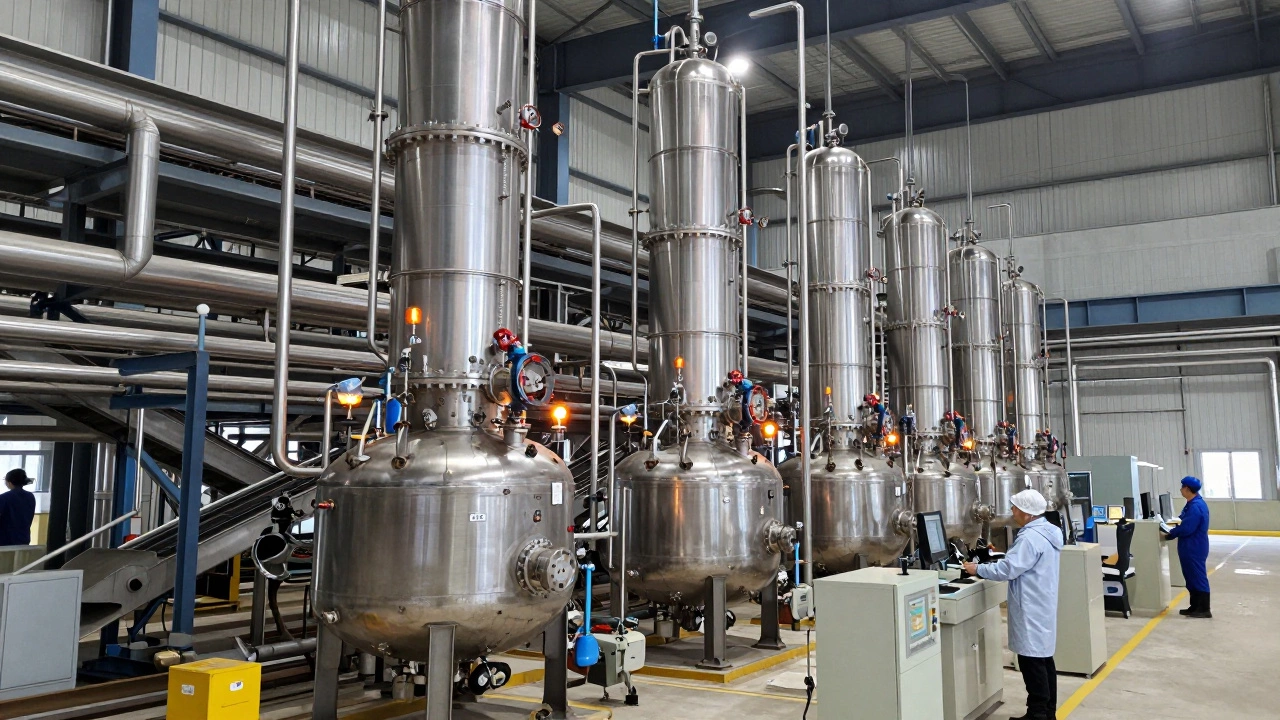
European countries, particularly Germany, France, and Switzerland, represent the gold standard for quality and specialized care. Germany is Europe’s largest pharmaceutical market and home to giants like Bayer and Merck KGaA. Swiss companies, such as Novartis and Roche, are world-renowned for their precision in oncology and ophthalmology treatments.
The European Medicines Agency (EMA) ensures strict adherence to Good Manufacturing Practices (GMP). Drugs produced in Europe are often perceived as having higher purity standards, which appeals to premium markets. Unlike the US model of high-risk, high-reward innovation, or the Indian model of volume-driven generics, Europe focuses on sustainable, high-margin specialty drugs and strong public healthcare integration.
Emerging Contenders: Japan and South Korea
While the big three (US, India, China) dominate headlines, East Asia is rising fast. Japan has an aging population that drives demand for chronic disease management drugs. Japanese firms like Takeda and Astellas are aggressive in acquiring Western biotech assets. Meanwhile, South Korea has transformed from a generic producer to a global Contract Development and Manufacturing Organization (CDMO) hub. Companies like Samsung BioLogics manufacture drugs for Western pharma giants, leveraging advanced automation and speed.
How to Choose the Right Partner or Market
Determining which country is "best" requires aligning your goals with the region's strengths. Here is a quick decision guide:
- For Investors Seeking Growth: Look at the US for innovative biotechs with breakthrough potential, or South Korea for CDMO infrastructure growth.
- For Cost-Conscious Procurement: India is the clear winner for bulk generics and vaccines. Negotiating directly with Indian manufacturers can reduce costs by up to 90% compared to branded alternatives.
- For Supply Chain Security: Diversify. Do not rely solely on China for APIs. A hybrid model using Indian formulation capabilities with diversified API sources is the current best practice.
- For Premium Brand Positioning: European manufacturing adds a layer of trust and quality assurance that resonates with high-end consumers.
Future Trends Shaping the Industry
The landscape is shifting rapidly. By 2027, we expect to see greater consolidation in the Indian market as smaller players exit due to stricter environmental norms. Simultaneously, the US will likely face increased pressure to lower drug prices, potentially opening doors for more generic competition even in domestic markets. China’s push for self-sufficiency in high-end APIs will reduce its export surplus, forcing other nations to accelerate their own chemical manufacturing capabilities.
Artificial Intelligence is also changing the game. AI-driven drug discovery is shortening development timelines, allowing mid-sized companies in Europe and Asia to compete with US giants on speed rather than just budget. The next decade will be defined not just by who makes the most drugs, but by who can make the right drugs faster and more sustainably.
Is India really the pharmacy of the world?
Yes, India supplies over 50% of global vaccine demand and 20% of generic drugs by volume. It is the primary source of affordable HIV/AIDS, tuberculosis, and hepatitis treatments for developing nations.
Why does the US have the largest pharmaceutical market?
The US market is the largest by revenue due to higher drug prices, a robust insurance system, and heavy investment in innovative, patented drugs that command premium pricing.
What are Active Pharmaceutical Ingredients (APIs)?
APIs are the biologically active substances in a medicine responsible for its therapeutic effect. China dominates the global supply of APIs, making it critical to the entire industry.
Are Chinese pharmaceutical products safe?
Safety varies by manufacturer. Major Chinese suppliers adhere to international GMP standards, but quality control inconsistencies have led to past recalls. Rigorous testing by importing countries is essential.
Which country is best for buying generic medicines?
India is the best source for generic medicines due to its vast manufacturing capacity, competitive pricing, and wide range of available formulations approved by global regulators.

Recent Posts
-
India's Oldest Pharma Company: A Look at Bengal Chemicals & Pharmaceuticals
-

Which Indian Wood is Strongest? A Guide for Furniture Makers
-

Why Did Chevrolet Leave India? The GM Exit Explained
-
Who is the Main Exporter of Plastic? Top Countries and Companies in 2026
-
Who is the Largest Steel Fabricator in the United States?