Maruti Suzuki: India's Top Exported Car and Global Market Strategy
Indian Car Export Market Estimator
Market Parameters
Configure the starting volume and duration to see projected growth for major exporters.
Projected Volumes
Enter values and click Calculate to view market projections.
Which Car Is Most Exported from India?
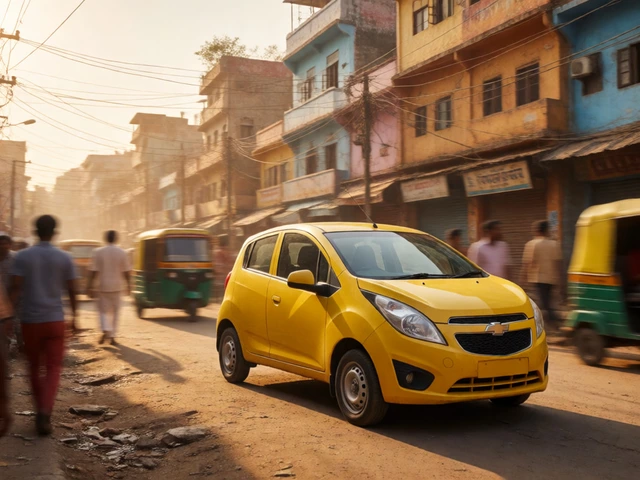
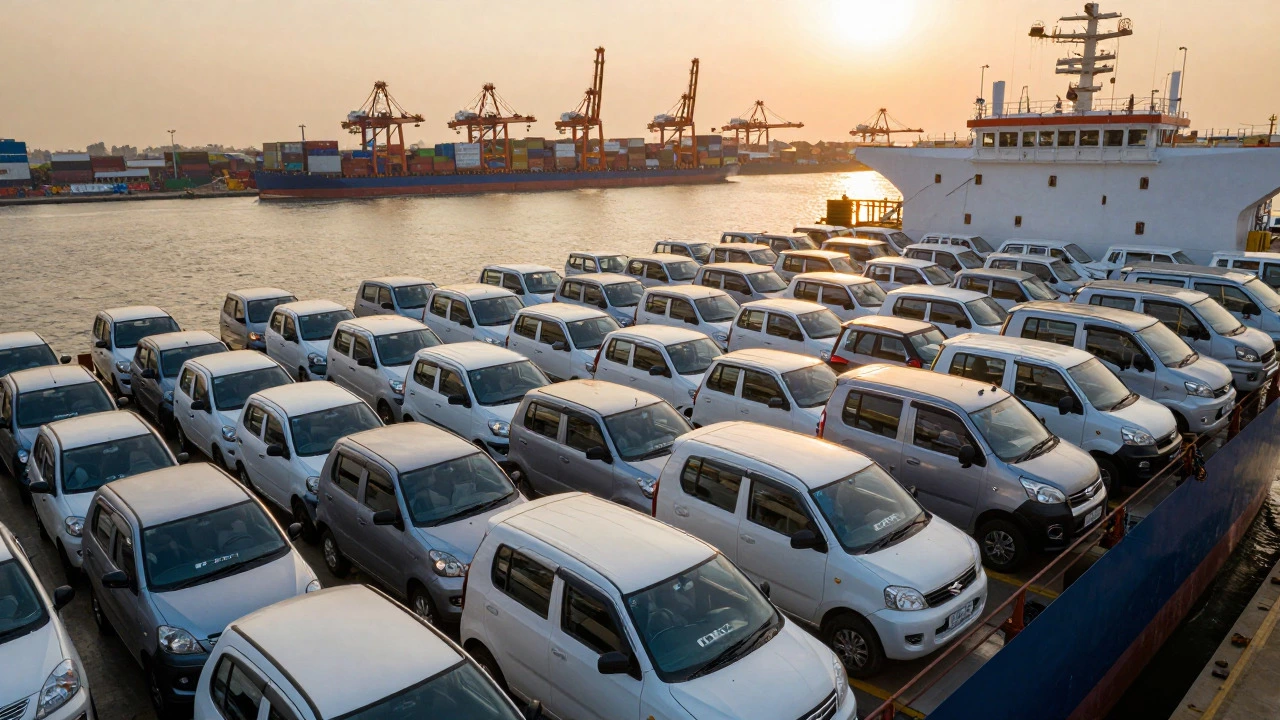
If you look at the bustling ports of Mumbai or Nhava Sheva, you will see thousands of cars stacked like toys, ready to sail across oceans. But which specific vehicle is leading this charge? The answer is clear and consistent over the last decade: Maruti Suzuki vehicles dominate India’s automotive export landscape. While other giants like Tata Motors and Mahindra & Mahindra have strong presences, Maruti Suzuki consistently ships the highest volume of passenger cars globally.
However, it isn’t just one single model that holds the crown. It is a combination of models, primarily the Suzuki Alto, Suzuki Wagon R, and increasingly, electric variants like the Suzuki eVX. These cars are not just sold in India; they are engineered for durability, fuel efficiency, and cost-effectiveness-traits that resonate with buyers in Europe, Africa, South America, and Southeast Asia.
To understand why Maruti Suzuki leads, we need to look beyond just sales numbers. We need to examine the manufacturing strategy, the target markets, and how Indian automakers are adapting to global regulations in 2026.
The Dominance of Maruti Suzuki in Exports
Maruti Suzuki India Limited (MSIL) is not just a brand; it is the backbone of India’s passenger vehicle industry. With a domestic market share often hovering around 40-45%, its scale allows it to negotiate better supply chain costs, which translates into competitive pricing for export markets.
In recent years, MSIL has shifted its focus from merely selling right-hand drive (RHD) cars to neighboring countries like Nepal, Sri Lanka, and Bangladesh, to tackling left-hand drive (LHD) markets in Europe and Latin America. This strategic pivot was crucial. By re-engineering platforms to meet Euro 7 emission standards and safety norms, Maruti made its compact cars viable for stricter regulatory environments.
| Company | Primary Export Markets | Key Export Models | Export Volume Trend (2023-2026) |
|---|---|---|---|
| Maruti Suzuki | Europe, Latin America, Africa, Middle East | Alto, Wagon R, Brezza, eVX | Steady Growth (+15% YoY) |
| Tata Motors | UK, Australia, South Africa | Nexon, Tiago, Harrier | Moderate Growth (+8% YoY) |
| Mahindra & Mahindra | USA, Africa, Australia | Thar, Scorpio-N, Bolero | High Growth in SUVs (+20% YoY) |
| Hyundai Motor India | South America, Africa | i10, Venue, Creta | Stable |
While Mahindra has seen explosive growth in off-road SUVs like the Thar, particularly in the United States and Africa, their total unit volume remains lower than Maruti’s mass-market hatchbacks. Tata Motors has successfully positioned itself as a premium option in the UK and Australia with the Nexon EV, but again, the sheer volume of small cars exported by Maruti keeps it at the top.
Why Do Foreign Buyers Choose Indian Cars?
You might wonder, why would a consumer in Argentina or Kenya choose an Indian-made car over a Japanese or European alternative? The answer lies in three key factors: price, ruggedness, and feature richness.
- Cost Competitiveness: Indian labor and manufacturing costs are significantly lower than in Europe or North America. This allows companies like Maruti to offer fully loaded cars at prices that undercut local competitors by 10-20%.
- Rugged Engineering: Cars designed for Indian roads are built to handle potholes, extreme heat, and varied terrain. This "ruggedness" is highly valued in emerging markets in Africa and South America where infrastructure may still be developing.
- Feature Density: Indian consumers demand high features-sunroofs, touchscreen infotainment, and advanced safety tech-even in budget segments. When these cars are exported, they come with these features as standard, offering better value for money compared to base-model equivalents from other regions.
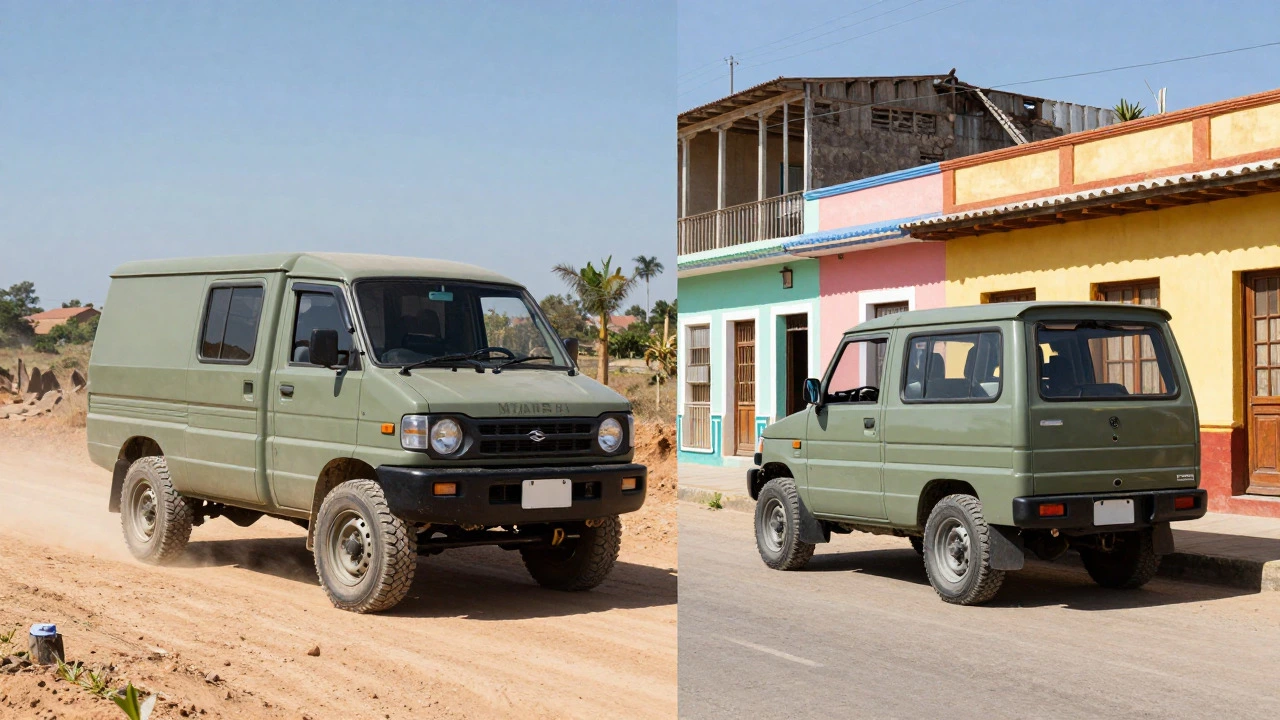
For example, the Suzuki Wagon R is not just a car; it is a utility vehicle that serves as a family hauler and a commercial tool. In markets like Egypt and Nigeria, its boxy shape and high roofline make it indispensable for small businesses, driving massive demand.
Key Export Destinations for Indian Automobiles
Understanding where these cars go helps explain the product mix. India’s export strategy is geographically diverse, reducing reliance on any single market.
- Latin America: Countries like Argentina, Brazil, and Chile are major destinations. Here, the focus is on compact sedans and hatchbacks like the Maruti Swift and Hyundai i20. The economic volatility in these regions makes affordable, reliable cars highly attractive.
- Africa: South Africa, Kenya, and Egypt are key hubs. In these markets, SUVs and pickup trucks from Mahindra and Tata perform well, alongside Maruti’s smaller cars. The harsh climate and road conditions favor vehicles with high ground clearance and robust suspension.
- Europe: This is a newer frontier for Indian exports. Brands like Tata and MG Motor have established service networks in the UK, Germany, and France. The push here is heavily towards Electric Vehicles (EVs), leveraging India’s growing battery manufacturing ecosystem.
- Middle East: The UAE and Saudi Arabia remain traditional strongholds. The hot climate demands efficient air conditioning and engine cooling systems, areas where Indian manufacturers have invested heavily in testing and refinement.
The Role of Electric Vehicles in Future Exports
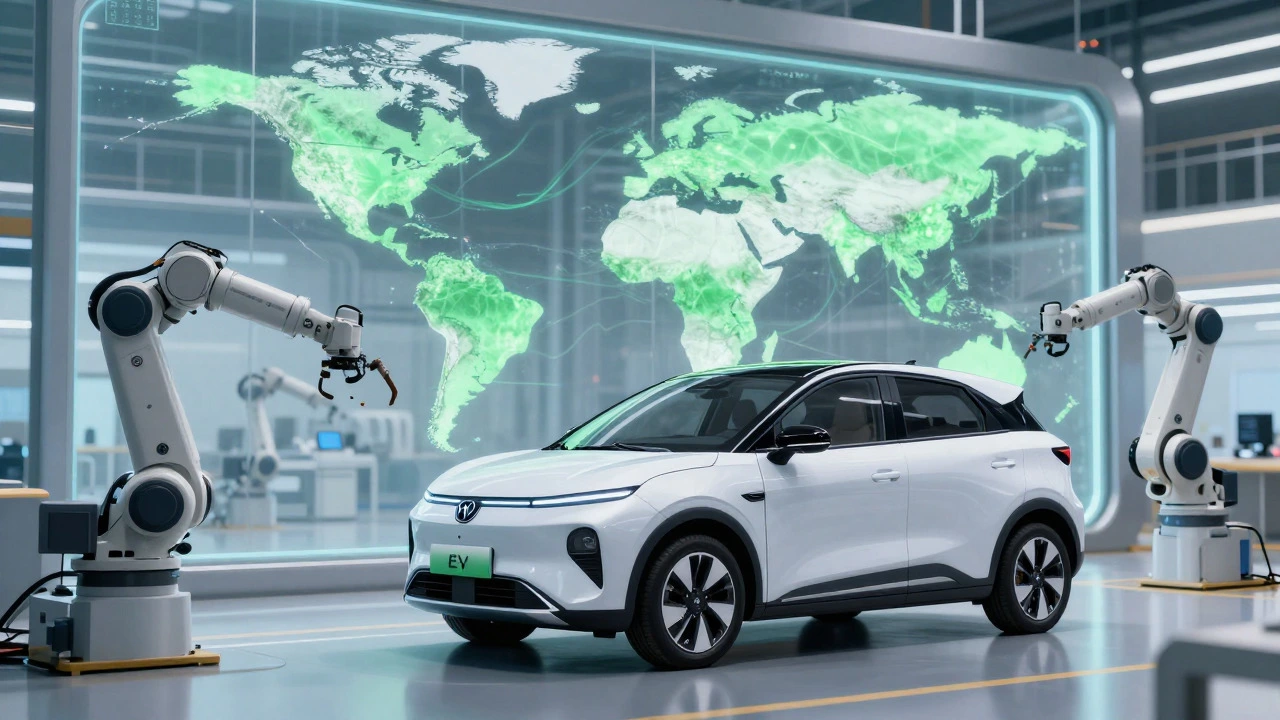
By 2026, the conversation around Indian car exports cannot ignore electric vehicles. The Indian government’s Production Linked Incentive (PLI) scheme for Advanced Chemistry Cell (ACC) batteries has created a domestic supply chain that lowers EV production costs.
Companies like Tata Motors and MG Motor are now exporting EVs to Europe and Southeast Asia. The Tata Nexon EV has become a recognizable name in the UK, competing directly with European brands. Meanwhile, Maruti Suzuki is preparing its first dedicated EV platform, expected to launch globally by late 2026, which could further cement its export leadership.
The shift to EVs also addresses environmental concerns. As countries impose stricter carbon taxes on imported goods, Indian EVs, produced with increasing renewable energy integration in factories, offer a lower-carbon footprint compared to some Asian competitors.
Challenges Facing Indian Auto Exports
It’s not all smooth sailing. Indian automakers face significant hurdles in maintaining their export momentum.
Regulatory Compliance: Meeting the varying safety and emission standards of different countries is expensive and complex. For instance, the EU’s General Safety Regulation (GSR) requires advanced driver-assistance systems (ADAS) that must be integrated into every exported unit. Smaller players often struggle with these costs.
Currency Fluctuations: The strength of the US Dollar against the Indian Rupee impacts profitability. A stronger dollar helps exporters, but volatile currency markets can erode margins quickly. Companies must use hedging strategies to protect their bottom line.
After-Sales Service Networks: Selling a car is only half the battle. Building a reliable network of dealerships, spare parts warehouses, and trained technicians in foreign countries takes time and capital. Brands that fail to establish robust after-sales support risk damaging their reputation, as seen with some early entrants in African markets.
How Indian Manufacturers Are Adapting
To overcome these challenges, Indian automakers are adopting a "Glocal" approach-global standards with local adaptation.
First, they are setting up assembly plants in key markets. Instead of shipping completely built units (CBUs), companies like Maruti and Hyundai are investing in local assembly facilities in Thailand, Indonesia, and potentially Europe. This reduces import duties and logistics costs.
Second, they are focusing on modular platforms. Using common chassis and powertrain components across multiple models allows for economies of scale. Whether it’s a small city car in India or a rugged SUV in Africa, the underlying engineering shares many parts, simplifying supply chains.
Third, digital connectivity is becoming a standard export feature. Remote diagnostics, over-the-air (OTA) updates, and connected car services help manufacturers monitor vehicle health remotely, improving maintenance efficiency and customer satisfaction in distant markets.
Conclusion: The Road Ahead
So, which car is most exported from India? It is undoubtedly the range of compact and utility vehicles led by Maruti Suzuki. However, the narrative is evolving. As electric vehicles gain traction and SUVs continue to dominate global preferences, brands like Tata and Mahindra are closing the gap in specific segments.
For consumers abroad, this means more choices, better value, and access to technology previously reserved for premium markets. For India, it represents a critical step in transforming from a domestic-focused auto hub to a true global manufacturing powerhouse. The next five years will likely see Indian cars becoming even more ubiquitous on roads worldwide, driven by innovation, cost efficiency, and a deep understanding of diverse consumer needs.
Which specific car model is the most exported from India?
While exact monthly figures fluctuate, the Suzuki Alto and Suzuki Wagon R are consistently among the highest-volume exported models due to their popularity in Africa, Latin America, and Southeast Asia. Their affordability and utility make them ideal for emerging markets.
Does India export electric vehicles?
Yes, India is increasingly exporting electric vehicles. Tata Motors leads this segment with the Nexon EV, which is popular in the UK and Europe. Other brands like MG Motor and Mahindra are also expanding their EV export portfolios to meet global demand for sustainable transportation.
Where does India export the most cars?
The primary export destinations for Indian cars include Latin America (Argentina, Brazil), Africa (Egypt, South Africa, Kenya), the Middle East (UAE, Saudi Arabia), and increasingly, Europe (UK, Germany). Each region has different preferences, with Africa favoring rugged SUVs and Latin America preferring compact hatchbacks.
Why are Indian cars cheaper in export markets?
Indian cars are cheaper due to lower labor and manufacturing costs, efficient supply chains, and government incentives like the Production Linked Incentive (PLI) scheme. Additionally, Indian manufacturers design cars with cost-effective materials without compromising on essential safety and comfort features.
Are Indian cars safe for international standards?
Yes, modern Indian cars meet rigorous international safety standards. Brands like Tata, Maruti, and Mahindra have achieved high ratings in Global NCAP crash tests. They incorporate advanced safety features such as multiple airbags, ABS, ESC, and ADAS to comply with regulations in Europe and other developed markets.