Industrial Policy US: What It Is, How It Shapes Manufacturing, and Why It Matters for India
When we talk about industrial policy US, a set of government rules and incentives designed to boost domestic manufacturing and control supply chains. Also known as manufacturing policy, it's not just about tax breaks—it's about who gets to build what, where, and under what conditions. The U.S. isn't just watching global manufacturing—it's rewriting the rules. From the CHIPS Act to the Inflation Reduction Act, Washington is pouring billions into semiconductors, electric vehicles, and clean energy tech. And that’s not just an American story. It’s directly affecting factories in Pune, Hyderabad, and Surat.
The trade policy, the framework that decides which goods can cross borders and at what cost is one of the biggest levers. Tariffs on Chinese-made electronics, steel, and aluminum don’t just hit China—they force Indian exporters to rethink their supply chains. If you’re making auto parts for a U.S. brand, you now need to ask: Are the raw materials coming from a country on the U.S. watchlist? Are your labor practices compliant with the Uyghur Forced Labor Prevention Act? These aren’t theoretical concerns. They’re compliance checks that can shut down shipments overnight.
The US industrial strategy, the long-term plan to bring production back home and reduce reliance on foreign suppliers is pushing companies to reshore or friend-shore. That means more U.S. brands are looking to India—not just as a cheap labor source, but as a trusted manufacturing partner. Think of it like this: if you’re a U.S. battery maker, you can’t source lithium from China anymore. So who’s left? India has the minerals, the skilled workers, and now, the government support. That’s why you’re seeing more U.S. firms setting up joint ventures in Gujarat and Tamil Nadu.
It’s not just about making things. It’s about making them under rules that favor innovation, sustainability, and security. The U.S. now requires disclosure of carbon footprints for federal contracts. It demands traceable supply chains for critical minerals. And it’s offering subsidies only to companies that build in America—or in allied countries with strong labor and environmental standards. That’s a high bar. But for Indian manufacturers who can meet it, it’s also a massive opportunity.
What you’ll find below are real stories from the frontlines: how Indian auto suppliers are adapting to U.S. EV mandates, why pharma makers in Hyderabad are changing packaging to meet U.S. labeling laws, and how textile exporters are proving their cotton isn’t linked to forced labor. These aren’t abstract policies. They’re daily decisions that affect jobs, profits, and survival.
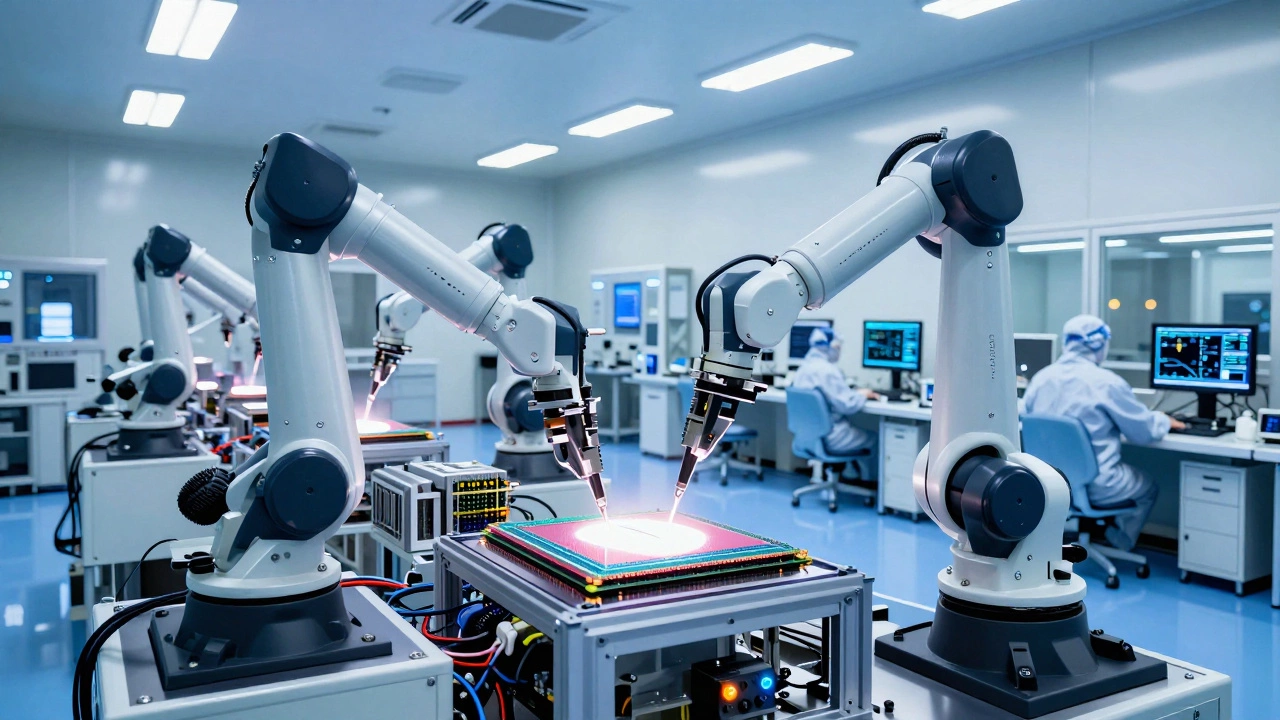
Is Manufacturing Down in the US? Real Data on Trends, Jobs, and Government Help
US manufacturing output is at record highs despite fewer workers. Government programs like the CHIPS Act and Inflation Reduction Act are driving a tech-driven revival in semiconductors, batteries, and clean energy production.
Read More