Plant Layout: Design, Efficiency, and Real-World Examples in Indian Manufacturing
When you think about plant layout, the physical arrangement of machines, workstations, and material flow in a manufacturing facility. Also known as factory layout, it’s not just about fitting equipment into a space—it’s about making every step of production faster, cheaper, and less error-prone. A bad layout can waste hours a day moving parts around. A great one cuts costs, boosts output, and keeps workers safe—all without buying new machines.
Production flow, how materials and products move through a facility from raw input to finished goods is the heartbeat of any plant. If your layout forces workers to walk 200 meters to grab a bolt, or if raw materials pile up near the final assembly line, you’re losing money every minute. Indian factories in Surat’s textile zones, Hyderabad’s pharma hubs, and Khanna’s furniture clusters all learned this the hard way. One textile mill in Surat reorganized its weaving section to match the sequence of dyeing, drying, and packing. Output jumped 30% in six weeks. No new machines. Just better flow.
Industrial layout, the strategic placement of equipment, storage, and personnel to maximize efficiency and safety isn’t one-size-fits-all. Some plants use process layout—grouping similar machines together—for custom jobs. Others use product layout, where everything lines up in sequence, like car assembly lines. In India, you’ll find both. A small pharma maker in Gujarat uses process layout to switch between 15 different drug formulas. A large auto parts plant in Pune uses product layout to crank out 5,000 identical brackets a day. The right choice depends on volume, variety, and how often you change what you make.
And it’s not just machines. Human movement, tool access, waste bins, and even lighting matter. A factory in Khanna cut worker injuries by 40% after moving tool racks closer to workstations. A pharma plant in Hyderabad reduced contamination risks by separating clean and dirty zones with physical barriers—not just signs. These aren’t theory fixes. They’re real changes made by small teams who saw the problem and fixed it.
What you’ll find below are real cases—from failed layouts that cost companies millions to smart redesigns that turned struggling shops into industry leaders. You’ll see how Indian manufacturers solved layout problems with low budgets, local materials, and smart thinking. No consultants. No fancy software. Just clear, practical fixes that worked on the ground.
What Are the 5 Ps of Manufacturing? A Practical Guide for Small and Medium Factories
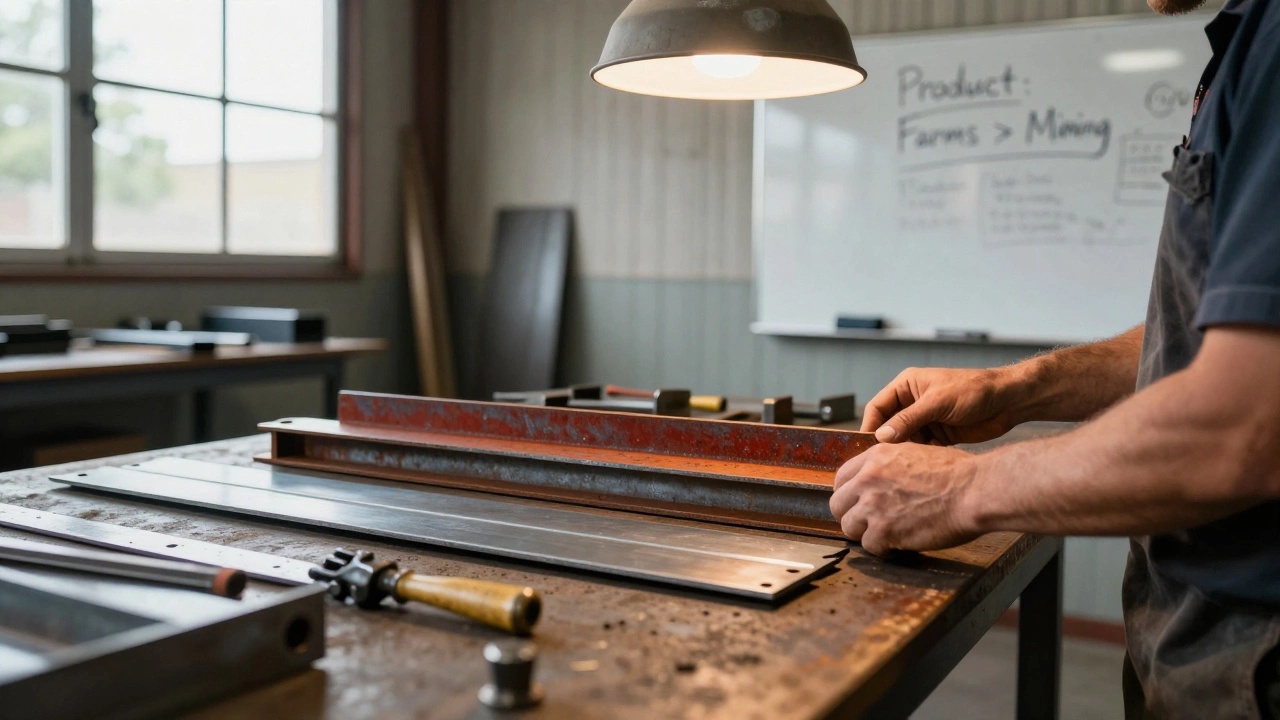
The 5 Ps of manufacturing - Product, Process, Plant, People, and Planning - are the core principles that help small factories run efficiently, reduce waste, and grow sustainably. Learn how to apply them in real-world settings.
Read More