What Are the Characteristics of a Small Scale Industry?
Small Scale Industry Feasibility Calculator
Calculate Your Business Feasibility
This tool determines if your business qualifies as a small scale industry based on global standards from the article. Enter your business details below.
Small scale industries aren’t just tiny versions of big factories. They’re a different kind of machine altogether-built for flexibility, not scale. If you’ve ever walked past a workshop in a quiet neighborhood where five people are making handcrafted leather bags, or seen a garage turned into a metal parts shop, you’ve seen a small scale industry in action. These aren’t corporate plants with assembly lines. They’re local, lean, and often run by families or a handful of skilled workers. But what exactly makes them different? And why do they matter so much in economies from India to Brazil to Nigeria?
Ownership is Local, Not Corporate
One of the clearest signs of a small scale industry is who owns it. Unlike big manufacturers that answer to shareholders in New York or London, small scale industries are almost always owned by individuals, families, or local partnerships. The owner usually lives nearby, works on the floor, and makes decisions on the spot. There’s no boardroom. No quarterly reports. Just a person who knows the machines, the customers, and the neighborhood needs.
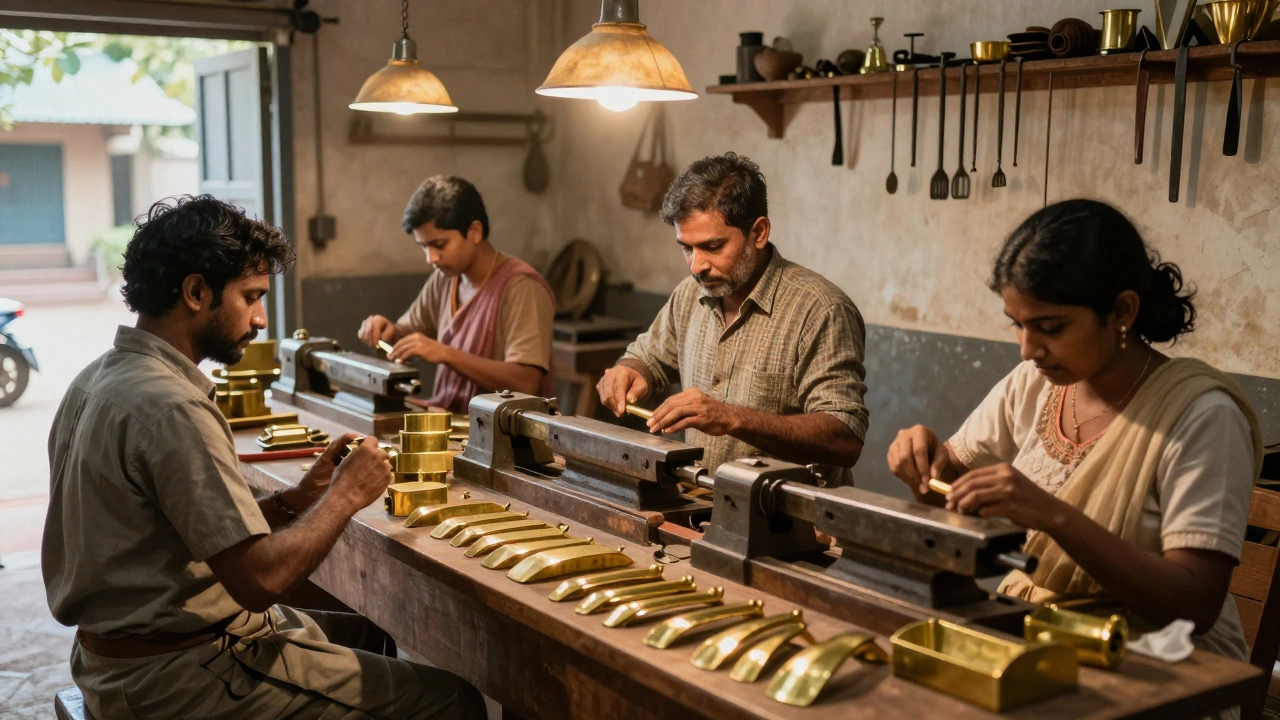
For example, in Tamil Nadu, a family runs a small unit that makes brass door handles. They buy raw brass from a local supplier, shape it with manual lathes, and sell directly to local hardware shops. They don’t export. They don’t use robots. They don’t need investors. Their business survives because they know exactly what the local market wants-and they can change it fast.
Capital Investment Is Limited
There’s no magic number, but most governments define small scale industries by how much they’ve invested in machinery and equipment. In India, for instance, the limit is ₹10 crore (about $120,000) for manufacturing units. In the U.S., the SBA considers businesses with fewer than 500 employees as small, but many small scale manufacturers operate with under 10 people and under $50,000 in equipment.
This low capital requirement means you don’t need a bank loan to start one. A person can begin with a second-hand sewing machine, a few hand tools, or a used injection molding machine bought from a closing factory. That’s why small scale industries are common in rural areas and informal economies. You don’t need a business degree-you need a skill, a space, and the willingness to work hard.
Production Is Manual or Semi-Automated
Big factories use robotics, AI-driven quality control, and automated supply chains. Small scale industries? They use hands. They use muscle. They use experience.
Take a small ceramic tile maker in Rajasthan. They mix clay by hand, press it into molds using a simple hydraulic press, dry it in the sun, and fire it in a small kiln. No conveyor belts. No barcode scanners. No ERP software. Just three workers who’ve done this for 20 years. Their output? Maybe 200 tiles a day. But each one is slightly different-unique, with character. That’s the trade-off: lower volume, higher personal touch.
Even when they use machines, they’re often basic. A single CNC machine, a manual welding setup, or a bench-top lathe. Automation is rare. Efficiency comes from skill, not speed.
Workforce Is Small and Multi-Skilled
Forget departments. In a small scale industry, one person might be the owner, the machine operator, the quality checker, the delivery driver, and the bookkeeper-all on the same day.
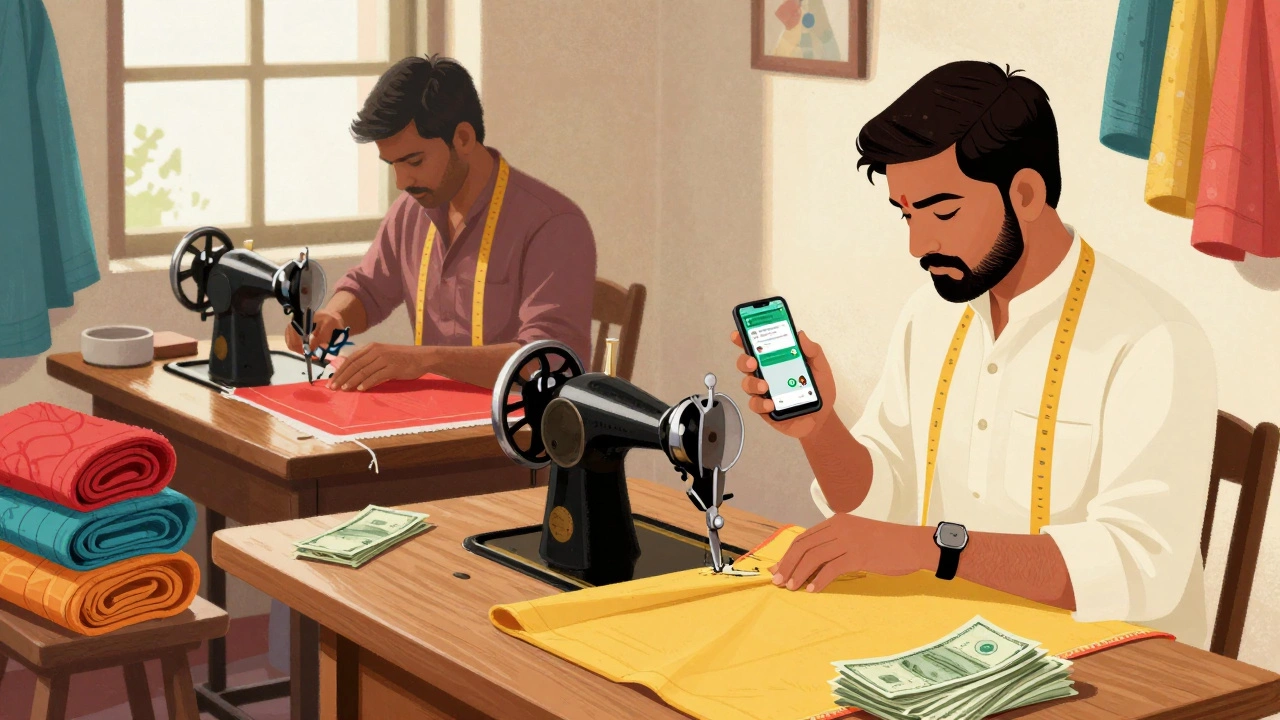
There’s no HR team. No payroll specialist. No safety officer. Workers wear multiple hats because they have to. A tailor in Varanasi might cut fabric, sew garments, handle customer orders over WhatsApp, and collect payments in cash-all before lunch. This multi-skilling isn’t a weakness. It’s a survival tool. It keeps costs low and lets the business adapt quickly.
Many workers are hired locally, often from nearby villages or neighborhoods. Training is on-the-job. Loyalty is high because jobs are scarce elsewhere. Turnover is low. Trust matters more than resumes.
Products Are Niche or Customized
Small scale industries don’t compete with mass producers on price or volume. They compete on specificity.
They make things big companies ignore: custom metal brackets for vintage motorcycles, hand-painted terracotta pots for garden centers, small-batch herbal soaps for local wellness shops. They serve local demand, not global markets. Their customers aren’t Walmart-they’re the hardware store down the road, the temple that needs brass bells, or the boutique hotel that wants handmade soap.
This niche focus means they can respond to feedback fast. If a customer asks for a different color, they change it next week. If a design doesn’t sell, they stop making it. No focus groups. No market research teams. Just listening to the person who walks in the door.
Supply Chains Are Local and Simple
Big manufacturers source materials from global suppliers, ship in containers, and store inventory in warehouses. Small scale industries? They buy from the next street.
A woodworker in Kerala gets teak from a local sawmill. A metal fabricator in Punjab buys scrap steel from a nearby junkyard. A food processor in Uttar Pradesh buys spices from the weekly market. There’s no long-distance logistics. No customs paperwork. No inventory software. Raw materials arrive in sacks, drums, or bundles-and get used quickly.
This local sourcing reduces costs, cuts delays, and builds community ties. It also means they’re more vulnerable to local disruptions-like a flood washing out a supplier’s road-but they bounce back faster because they’re embedded in the neighborhood.
Regulatory Burden Is Lighter-But Still Present
Small scale industries aren’t free from rules. They still need registration, GST numbers, fire safety clearances, and pollution control compliance. But the process is simpler than for big factories.
In many countries, governments offer special schemes for small units: easier licensing, tax breaks, subsidized loans, and training programs. In India, the Udyam Registration system lets small manufacturers register online in under 15 minutes. No lawyers needed. No paperwork stacks.
Still, many operate informally because the cost of compliance feels higher than the benefit. A small dyeing unit might skip wastewater treatment because installing a filter costs more than their monthly profit. That’s not laziness-it’s survival. But when they do go formal, it’s often because they want to grow, get bank loans, or supply to bigger buyers.
They’re the Backbone of Employment
While big factories lay off hundreds during downturns, small scale industries absorb shocks differently. They don’t fire workers-they cut hours. They don’t shut down-they slow down. And when the economy picks up, they hire again-fast.
According to the World Bank, small and micro enterprises account for over 70% of jobs in developing countries. In India alone, small scale manufacturing employs more than 110 million people. That’s more than the entire population of Mexico. These aren’t just jobs. They’re livelihoods built on skill, not degrees.
They’re also the training ground for future entrepreneurs. Many big manufacturers started as small workshops. The owner of a now-successful auto parts company in Ahmedabad began by repairing bicycle chains in his garage. That’s how the system works: small, local, and rooted.
They Adapt Faster Than Big Companies
Big companies take months to launch a new product. Small scale industries? They can do it in days.
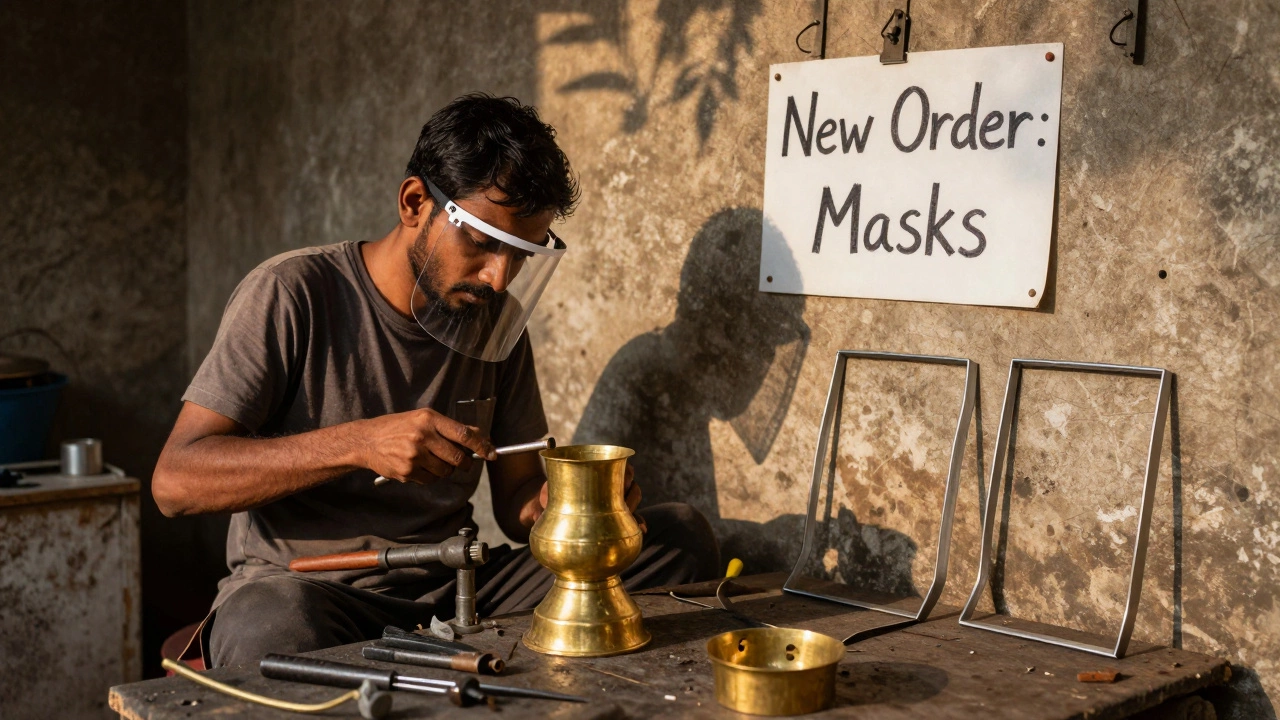
During the pandemic, small manufacturers in India switched from making brass lamps to making face shield frames. In Nigeria, tailors who used to make traditional robes started producing cloth masks. In Brazil, metalworkers turned their welding skills to making hand sanitizers dispensers.
Why? Because they don’t need approval from ten managers. They don’t need to run market tests. They see a need-and they fix it. That’s agility. That’s resilience. That’s the real advantage of small scale manufacturing.
They’re Not Just Surviving-They’re Evolving
Some still think small scale means outdated. But that’s changing. More small manufacturers are using smartphones to take orders, WhatsApp to communicate with suppliers, and YouTube to learn new techniques. Some even use affordable cloud-based accounting tools or low-cost QR code payment systems.
A small electronics assembler in Bengaluru now uses a free app to track inventory. A ceramic studio in Oaxaca sells directly to customers in the U.S. via Etsy. They’re not replacing their machines with robots-they’re adding digital tools to their hands.
The future of small scale industry isn’t about becoming big. It’s about becoming smarter, more connected, and more visible. They don’t need to compete with Amazon. They just need to be found by the people who want what they make.
What is the main difference between small scale and large scale industry?
The biggest difference is scale and structure. Large scale industries use high capital, automation, and global supply chains to produce massive volumes of standardized goods. Small scale industries use low investment, manual or semi-automated methods, local resources, and small teams to make limited quantities of customized or niche products. Large factories answer to shareholders; small units answer to their customers and community.
Can a small scale industry grow into a large one?
Yes, but most don’t-and that’s okay. Some small units grow by adding machines, hiring more staff, and expanding markets. Others stay small because they value flexibility, personal relationships, and quality over growth. Many successful businesses started as small scale operations, like the Tata Group or IKEA, but staying small isn’t failure-it’s a valid business model.
Do small scale industries need government support?
They don’t need it to survive, but support helps them thrive. Government schemes like low-interest loans, training programs, and simplified registration reduce barriers. Access to markets through state-run exhibitions or e-commerce platforms can be life-changing. Support doesn’t mean handouts-it means leveling the playing field so small players can compete fairly.
Are small scale industries environmentally friendly?
Often, yes. Because they use less energy, produce less waste, and rely on local materials, their carbon footprint is usually smaller than big factories. Many use recycled scrap, natural dyes, or traditional methods that generate minimal pollution. But some, especially in informal sectors, lack waste treatment systems. The key is regulation and access to affordable green tech-not size.
What skills are most important to run a small scale industry?
Practical skills come first-welding, sewing, molding, machining, or cooking, depending on the industry. But equally important are people skills: talking to customers, negotiating with suppliers, managing cash flow, and solving problems on the fly. Technical knowledge matters, but adaptability and persistence matter more.
Small scale industries aren’t relics of the past. They’re the quiet engines of local economies. They don’t make headlines. They don’t have IPOs. But they feed families, repair broken things, and keep communities alive. Their strength isn’t in size-it’s in their ability to adapt, connect, and create value where it’s needed most.

Recent Posts
-
Which Wood Is Strongest in India? A Guide for Furniture Manufacturers
-
What Are Food Processing Units? A Complete Guide to Types, Operations, and Business Setup
-
Who Makes Steel for the US Military? Top Defense Suppliers and Domestic Plants
-
How Many Plastic Companies Are There in the US? (2026 Industry Data)
-
How Long Does Plastic Take to Disintegrate? A Timeline for Manufacturers