Which Countries Buy the Most Textiles from India?
Textile Export Market Finder
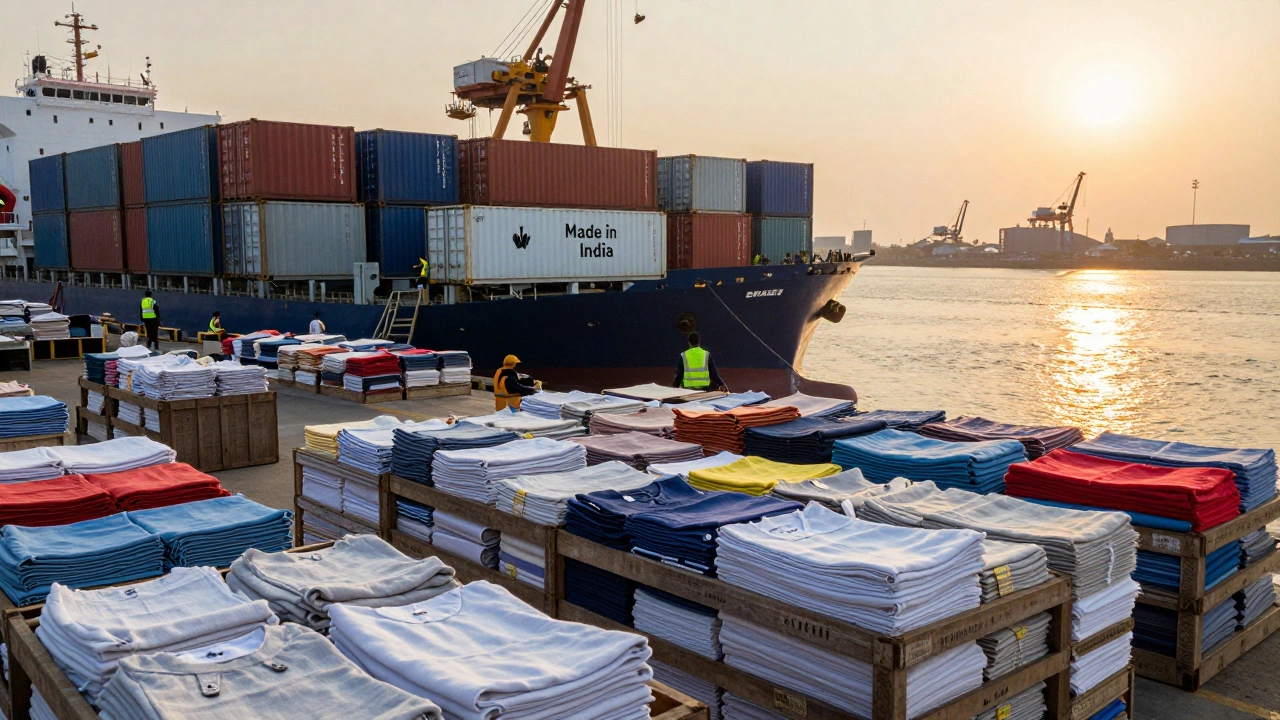
India doesn’t just make textiles-it sells them all over the world. Every year, Indian textile manufacturers ship out over $40 billion worth of fabrics, garments, and home textiles. But who’s actually buying them? If you’re a textile exporter in Surat, a trader in Tiruppur, or a small business owner in Jaipur, knowing where your products are going isn’t just useful-it’s critical for planning production, pricing, and logistics.
United States: The Largest Market for Indian Textiles
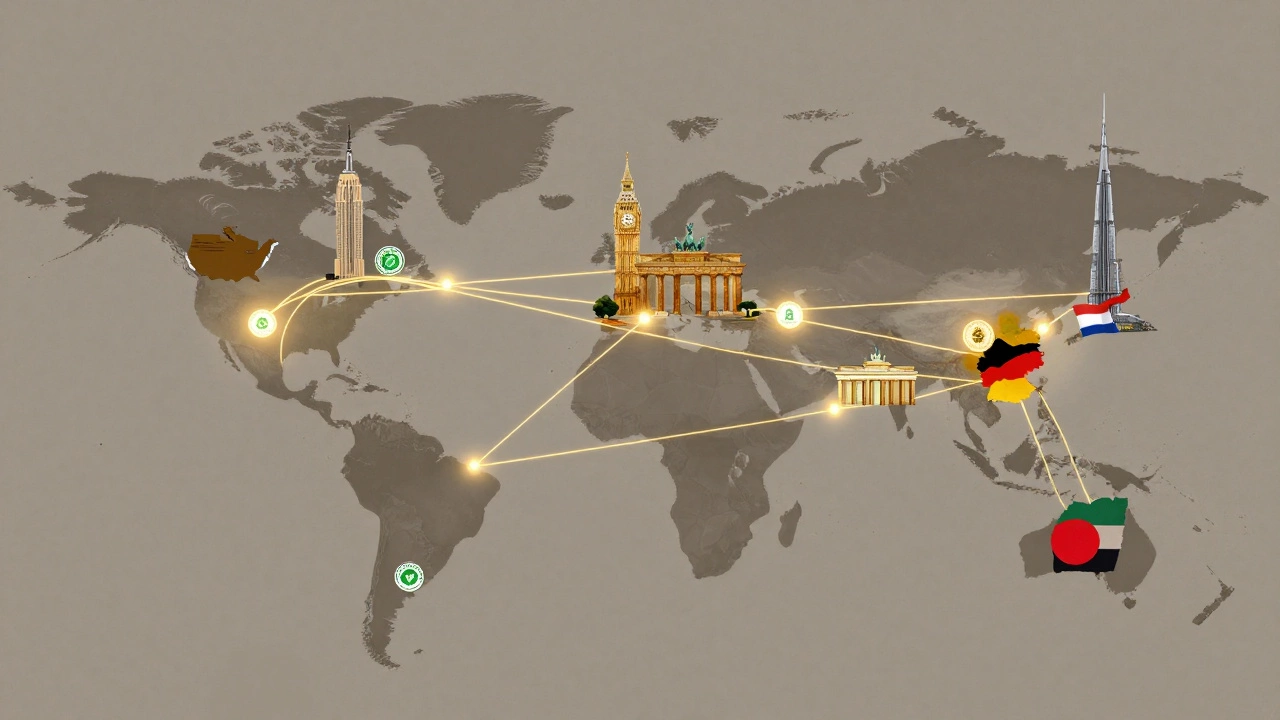
The United States is India’s single biggest buyer of textiles. In 2025, India shipped over $9.2 billion worth of textiles and apparel to the U.S. That’s nearly a quarter of India’s total textile exports. American retailers like Walmart, Target, and Macy’s rely heavily on Indian suppliers for cotton shirts, linen home décor, and casual wear. Why? Because Indian manufacturers offer a strong mix of quality, cost, and speed. Cotton from Gujarat and Tamil Nadu is spun into fabrics that meet U.S. safety and durability standards, without the high labor costs of domestic production.
United Arab Emirates: The Gateway to the Middle East
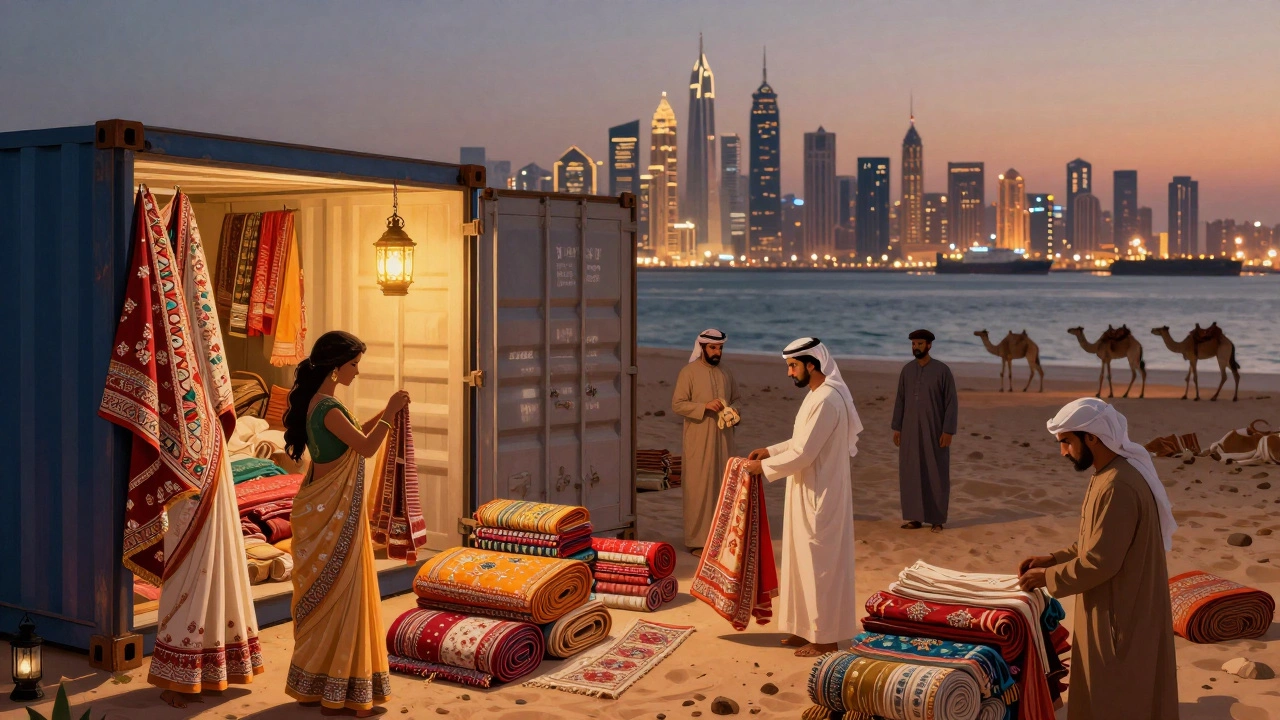
The UAE, especially Dubai, is India’s second-largest textile export market, with imports hitting $5.8 billion in 2025. But it’s not just about direct sales. Dubai acts as a major re-export hub. Textiles from India arrive in Jebel Ali Port, get repackaged, and then ship out to Saudi Arabia, Kuwait, Oman, and even parts of Africa. Indian embroidered sarees, printed cottons, and silk blends are especially popular in Gulf countries for weddings, festivals, and daily wear. Many UAE-based traders work directly with Indian mills in Ludhiana and Panipat, placing bulk orders months in advance.
United Kingdom: Steady Demand for Premium Fabrics
The UK buys around $3.9 billion in Indian textiles annually. While the volume is smaller than the U.S. or UAE, the value per item is often higher. British brands like John Lewis, Marks & Spencer, and independent fashion labels favor Indian linen, handloom cotton, and block-printed fabrics for their ethical sourcing and artisanal appeal. The UK’s focus on sustainability has also boosted demand for organic cotton from Maharashtra and handwoven silk from Karnataka. Many Indian exporters now carry GOTS and Fair Trade certifications just to stay competitive in this market.
Bangladesh and Nepal: Regional Partners in Textile Trade
It might surprise you, but Bangladesh and Nepal are also top buyers of Indian textiles-though not for final sale. Bangladesh imports over $1.5 billion in yarn, fabric, and trims from India each year to use in its own garment factories. Indian cotton yarn from Gujarat and Telangana feeds into Bangladeshi T-shirt production. Nepal, meanwhile, imports woolen fabrics and ready-made garments from India to meet local demand and re-export to neighboring countries. These relationships show how deeply India’s textile industry is woven into South Asia’s supply chain.
Germany and the Netherlands: Europe’s Eco-Conscious Buyers
Germany and the Netherlands together account for over $2.8 billion in Indian textile imports. These countries prioritize environmental standards. Indian exporters who can prove their dyes are non-toxic, water usage is low, and energy comes from renewable sources win the most contracts. Dutch buyers, for example, often order organic cotton bed linens from Coimbatore, while German fashion houses source recycled polyester blends from Maharashtra. Certification like OEKO-TEX® and GRS is now a must, not a bonus, to enter these markets.
Other Key Markets: Vietnam, Japan, and Australia
Vietnam is rising fast. It imported $1.2 billion in Indian textiles in 2025, mostly for blending with its own synthetic fibers to make export-ready garments. Japan prefers high-end silk and handwoven cotton for traditional kimonos and modern minimalist fashion-Indian silk from Assam and Bengal commands premium prices there. Australia, while smaller, is growing. Indian cotton towels, beachwear, and home textiles are popular in coastal cities like Sydney and Melbourne, thanks to their durability and vibrant prints.
What’s Driving This Demand?
India’s textile exports aren’t growing by accident. Several factors make it the go-to source:
- Raw material advantage: India grows over 25% of the world’s cotton and is the second-largest producer of silk.
- Skilled labor: Millions of weavers, dyers, and embroiderers work in clusters-Tiruppur for knitwear, Bhagalpur for silk, Panipat for blankets.
- Government support: Export Promotion Council for Handlooms & Textiles (EPCH) and the Technology Upgradation Fund Scheme (TUFS) help mills upgrade machinery and meet global standards.
- Flexible production: Indian factories can handle small custom orders as easily as bulk shipments, something many Chinese manufacturers can’t match anymore.
Challenges Indian Exporters Face
It’s not all smooth sailing. Rising cotton prices, delays at ports, and stricter environmental rules in Europe are squeezing margins. Some exporters still struggle with inconsistent quality control or slow adoption of digital tools like ERP systems. Also, competition from Bangladesh and Vietnam is growing-they’re cheaper on labor and have better trade deals with the U.S. and EU. But Indian companies that invest in automation, traceability, and certifications are pulling ahead.
What’s Next for Indian Textile Exports?
By 2030, India aims to hit $100 billion in textile exports. To get there, exporters are focusing on:
- High-value products: technical textiles for medical use, automotive interiors, and geotextiles.
- Direct-to-consumer brands: Indian labels like FabIndia, Jaypore, and Aranya are selling globally online.
- Regional trade deals: New agreements with Australia, the UK, and the EU could reduce tariffs and open more doors.
If you’re in the textile business, the message is clear: don’t just chase volume. Focus on quality, certifications, and building relationships in the right markets. The world still needs what India makes-better, faster, and cleaner than ever before.
Which country imports the most textiles from India?
The United States is the largest importer of textiles from India, buying over $9.2 billion worth in 2025. This includes cotton apparel, home textiles, and accessories sold through major retailers like Walmart and Target.
Does India export textiles to Europe?
Yes, India exports textiles to several European countries, especially Germany, the Netherlands, and the United Kingdom. These markets value sustainable, certified fabrics like organic cotton, linen, and OEKO-TEX®-approved materials. European buyers often pay more for ethically produced goods.
Why do Bangladesh and Nepal import textiles from India?
Bangladesh and Nepal don’t import Indian textiles for direct sale-they use them as raw materials. Bangladesh buys cotton yarn and fabric to make garments for export. Nepal imports woolens and ready-made clothes to meet local demand and re-export to nearby regions.
What types of textiles does India export the most?
India exports a wide range, but the top categories are cotton apparel (like shirts and pants), home textiles (bedsheets, towels, curtains), and handloom fabrics (silk, khadi, block prints). Technical textiles, like medical and automotive fabrics, are the fastest-growing segment.
How has the Indian government helped textile exports?
The government supports exports through the Export Promotion Council for Handlooms & Textiles (EPCH), which helps with market access and trade shows. The Technology Upgradation Fund Scheme (TUFS) provides subsidies for modern machinery. Export incentives and duty exemptions also reduce costs for manufacturers.