Why Electronics Are Cheaper in the US Than Europe: The Price Gap Explained
US vs. Europe Electronics Price Calculator
Enter Product Details
Price Comparison
$0.00
€0.00
Based on typical markup strategies to offset higher taxes.
This represents an extra €0.00 per device.
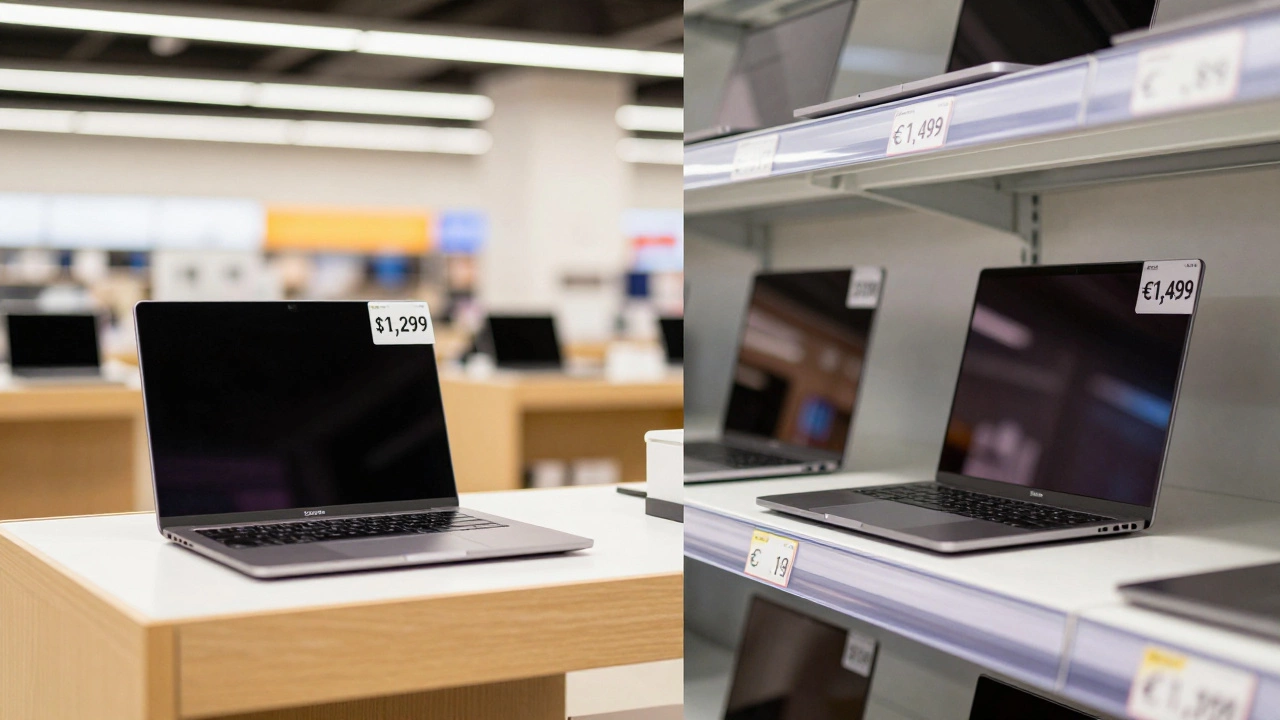
You walk into a Best Buy in New York and see a flagship laptop priced at $1,299. You hop on a plane to Berlin or London, step into a local retailer, and find that same exact model tagged at €1,499 or £1,350. Even after converting currencies, the European price is significantly higher. It’s not just laptops; it’s smartphones, headphones, gaming consoles, and even basic kitchen appliances. If you’ve ever wondered why your wallet takes a bigger hit for the same gadget across the Atlantic, you aren’t imagining things. The price gap is real, consistent, and rooted in structural economic differences between the two regions.
This isn’t a mystery of corporate greed alone. While manufacturers certainly play their part, the primary drivers are taxes, market fragmentation, and logistics. Understanding these factors helps you make smarter buying decisions and explains why global pricing strategies remain so complex for brands like Apple, Samsung, and Sony.
The Tax Structure: Sales Tax vs. VAT
The most immediate reason for the price difference is how taxes are applied to consumer goods. In the United States, sales tax is added at the point of sale and is generally lower than the Value Added Tax (VAT) used in Europe. This creates a fundamental disparity in the final price tag you see on the shelf.
In the US, sales tax varies by state but typically ranges from 0% to about 10%. For example, if you buy a $1,000 laptop in California with an 8.75% sales tax, you pay $1,087.50 total. However, the sticker price usually shows just $1,000. This psychological effect makes the initial cost seem lower, even though you’re paying tax later.
Contrast this with Europe. Most EU countries have a standard VAT rate between 19% and 27%. Germany charges 19%, France 20%, and Sweden 25%. Crucially, the displayed price in Europe includes VAT. So, a €1,000 laptop in Germany already has €168 of tax baked into that number. When you compare the pre-tax base price, the European manufacturer is often charging more before taxes are even considered, but the high VAT rate ensures the final consumer pays a significant premium.
| Region | Tax Type | Average Rate | Price Display |
|---|---|---|---|
| United States | Sales Tax | ~6-8% | Excluded (added at checkout) |
| Germany | VAT | 19% | Included |
| France | VAT | 20% | Included |
| Sweden | VAT | 25% | Included |
For electronics manufacturers, this means they must structure their pricing differently. To maintain profit margins in high-VAT countries, they often raise the base price. This is known as "tax absorption" avoidance. They don’t want to eat the cost of the 25% Swedish VAT, so they pass a portion of that burden onto the consumer through a higher base price.
Market Fragmentation and Regulatory Costs
The United States is a single, unified market of over 330 million people with largely harmonized regulations. Once a product is approved by the Federal Communications Commission (FCC) and meets safety standards, it can be sold anywhere in the country. This scale allows for massive economies of scale in marketing, distribution, and inventory management.
Europe, despite being a single market in theory, is fragmented in practice. There are 27 different member states, each with its own language, cultural preferences, and specific regulatory nuances. A smartphone sold in Poland might need different packaging text, warranty documentation, and even power plug configurations compared to one sold in Italy. Yes, the EU standardized the power plug to Type C/F, but older stock and regional variations still create logistical headaches.
Consider the compliance costs. Companies must navigate the General Data Protection Regulation (GDPR), which imposes strict data handling requirements. While the US has sectoral privacy laws, they are generally less stringent and fragmented than GDPR. Compliance teams in Europe are larger, legal reviews are more extensive, and the risk of non-compliance fines is higher. These administrative costs are inevitably folded into the price of every device sold.
Furthermore, language localization adds up. Marketing materials, user manuals, and customer support must be provided in dozens of languages. In the US, English covers nearly the entire market. In Europe, a major brand needs support in German, French, Spanish, Italian, Dutch, Polish, and more. Each translation and localized campaign requires budget, which reduces the margin available for competitive pricing.
Currency Fluctuations and Pricing Strategy
Global electronics giants like Apple, Samsung, and Dell primarily report revenue in US Dollars. When they set prices for international markets, they factor in currency exchange rates and the volatility associated with them. The Euro and British Pound fluctuate against the Dollar, creating uncertainty for manufacturers.
To protect themselves from currency depreciation, companies often build a "buffer" into their European pricing. If the Euro weakens against the Dollar, the company loses money on every sale unless the price is adjusted upward. By setting higher base prices in Euros or Pounds, they mitigate this risk. This is a common practice in international finance known as hedging, but it directly impacts the consumer’s wallet.
Additionally, there’s a phenomenon called "price discrimination." Companies know that consumers in wealthier nations or those with less price-sensitive markets will pay more. Historically, Europe has been viewed as a market where consumers prioritize brand prestige and are willing to pay a premium for the latest technology. The US market, by contrast, is fiercely competitive with frequent discounts, Black Friday deals, and aggressive retail competition forcing prices down.

Logistics and Distribution Networks
The physical movement of goods plays a surprising role in pricing. The US has a highly efficient, centralized logistics network. Major distribution hubs in places like Memphis, Chicago, and Los Angeles allow products to reach most of the country within days using trucking and air freight. The sheer volume of goods moving through these hubs lowers the per-unit shipping cost.
Europe’s logistics landscape is more complex. While the EU has improved cross-border trade, infrastructure varies significantly between northern and southern Europe. Shipping a pallet of TVs from a central warehouse in Belgium to rural Greece involves multiple handoffs, potential customs checks (especially post-Brexit for UK shipments), and varying fuel surcharges. These inefficiencies add up.
Retailer margins also differ. In the US, big-box retailers like Best Buy, Walmart, and Amazon operate on thin margins but high volume. They negotiate aggressively with manufacturers for lower wholesale prices. In Europe, while chains like MediaMarkt and Fnac exist, there is also a strong presence of smaller, independent retailers who cannot achieve the same volume discounts. Manufacturers often have to offer different wholesale terms to accommodate both large chains and smaller partners, leading to a wider range of retail prices and generally higher average costs.
Warranty and Consumer Rights
Consumer protection laws in Europe are among the strongest in the world. The EU mandates a minimum two-year statutory warranty for all consumer goods. This means if your laptop breaks in month 25, the retailer or manufacturer must fix or replace it for free. In the US, warranties are often limited to one year, with extended coverage requiring additional purchase.
This two-year guarantee carries a hidden cost. Manufacturers must account for the higher likelihood of repairs and replacements over a longer period. They invest more in durability testing and allocate more funds to service centers and spare parts inventories. While this benefits the consumer with better long-term security, it contributes to the higher upfront price. You are essentially pre-paying for extended peace of mind that US buyers often opt out of.

Should You Import Electronics from the US?
If you live in Europe, the temptation to order from US sites like Amazon.com or BestBuy.com is strong. However, it’s rarely as simple as saving 20% on the price. Here’s what you need to consider before clicking "buy":
- Import Duties: Goods shipped from outside the EU may incur customs duties. For electronics, this can range from 0% to 14.5% depending on the category and origin country.
- VAT on Import: You will likely have to pay your country’s VAT on the total value of the item plus shipping and duties. This can erase any savings.
- Warranty Voidance: Many manufacturers limit warranties to the region of purchase. An iPhone bought in the US might not be serviced in Germany without proof of travel or additional fees.
- Voltage and Plugs: While most modern electronics (laptops, phones) handle 110-240V automatically, some devices like hair dryers or gaming consoles may require voltage converters or specific plugs.
- Shipping Costs: International shipping can be expensive and slow, adding weeks to delivery times.
Generally, importing small, high-value items like cameras or niche audio gear might save money. But for mainstream laptops and phones, the hassle and hidden costs usually outweigh the savings.
The Future of Global Pricing
As digital commerce grows, we might see more price convergence. Brands are under pressure to unify their global pricing strategies to avoid accusations of unfair treatment. Additionally, the rise of parallel imports-where authorized distributors sell excess stock across borders-could help level the playing field. However, until tax structures and regulatory frameworks align more closely, the US-Europe price gap will likely persist.
For now, understanding these dynamics empowers you. You know that the higher price in Europe isn’t arbitrary; it’s a reflection of taxes, compliance, and market realities. Armed with this knowledge, you can decide whether the convenience and warranty protections of local purchases are worth the premium, or if seeking out special deals during holiday sales is the best strategy for your budget.
Is it cheaper to buy an iPhone in the US or Europe?
Yes, iPhones are consistently cheaper in the US. Due to lower sales taxes compared to European VAT, a base model iPhone often costs $200-$300 less in the US than in countries like Germany or France. However, you must factor in potential import duties and warranty limitations if you bring it back to Europe.
Why are video games cheaper in the US?
Video games follow the same pricing logic as hardware. The US market benefits from intense competition and lower taxes. Additionally, game publishers often set higher base prices in Europe to offset VAT and localization costs for multiple languages.
Does Brexit affect electronics prices in the UK?
Yes, Brexit introduced new trade barriers between the UK and the EU. While the UK left the EU's VAT system, it now faces potential tariffs and complex customs procedures when importing goods from mainland Europe or the US. This has led to some price instability and occasional increases in electronics costs due to supply chain disruptions.
Can I use a US warranty in Europe?
It depends on the manufacturer. Apple offers global warranty coverage for iPhones and Macs, meaning you can get service in Europe for a US-purchased device. However, many other brands like Samsung or Dell may restrict warranty service to the region of purchase, requiring you to ship the item back to the US for repairs, which is costly and risky.
Are online prices in the US always lower?
Not always, but generally yes. During major sales events like Black Friday or Prime Day, US prices drop significantly more than in Europe. However, for niche or luxury electronics, the price gap may narrow. Always check current exchange rates and calculate total landed costs including shipping and taxes before ordering internationally.

Recent Posts
-

India's Oldest Pharma Company: A Look at Bengal Chemicals & Pharmaceuticals
-

Who is the Largest Steel Fabricator in the United States?
-

Why Did Chevrolet Leave India? The GM Exit Explained
-

Who is the Main Exporter of Plastic? Top Countries and Companies in 2026
-

Which Indian Wood is Strongest? A Guide for Furniture Makers