Who is really to blame for plastic pollution? The role of plastic manufacturing companies
Plastic Pollution Impact Calculator
Understand Your Plastic Impact
Most plastic pollution comes from manufacturing companies, not consumers. This tool shows how your daily habits contribute to the global plastic problem and why systemic change matters.
Your Annual Impact
Plastic Bottles
lbs. per year
Total Plastic
lbs. per year
Manufacturers control the supply of plastic. They design products for disposability and fund campaigns that shift blame onto consumers. This calculator shows your daily habits, but the real change requires:
- Producer responsibility laws where manufacturers pay for waste management
- Bans on single-use plastics
- Investments in reuse systems
- Corporate accountability for plastic pollution
This tool was built to demonstrate how small individual changes can contribute to systemic change—but the largest impact comes from holding manufacturers accountable.
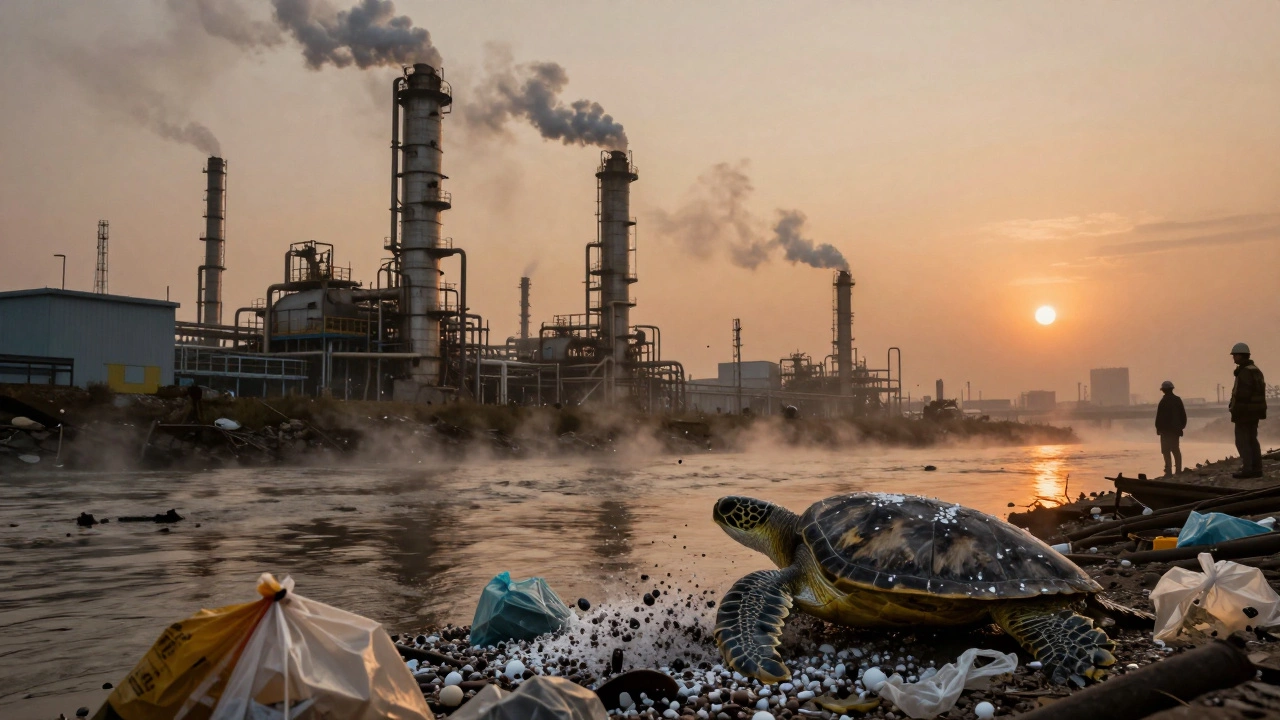
Every year, over 400 million tons of plastic are made. Half of it is designed to be thrown away after one use. You see it on the beach, clogging rivers, choking sea turtles, and piling up in landfills. It’s easy to point fingers at consumers-‘Why don’t people recycle more?’ But the real story starts long before the plastic reaches your hands. It starts in a factory. And the companies running those factories hold the biggest lever.
The system was built to fail
Plastic manufacturing companies didn’t just make products. They built an entire economy around disposability. In the 1950s, when plastics became cheap and easy to produce, companies like Dow, DuPont, and ExxonMobil pushed the idea that convenience was worth more than durability. They didn’t just sell plastic bags-they sold the idea that throwing things away was normal. By the 1970s, over 90% of plastic produced was meant to be used once and tossed. That wasn’t an accident. It was the business model.
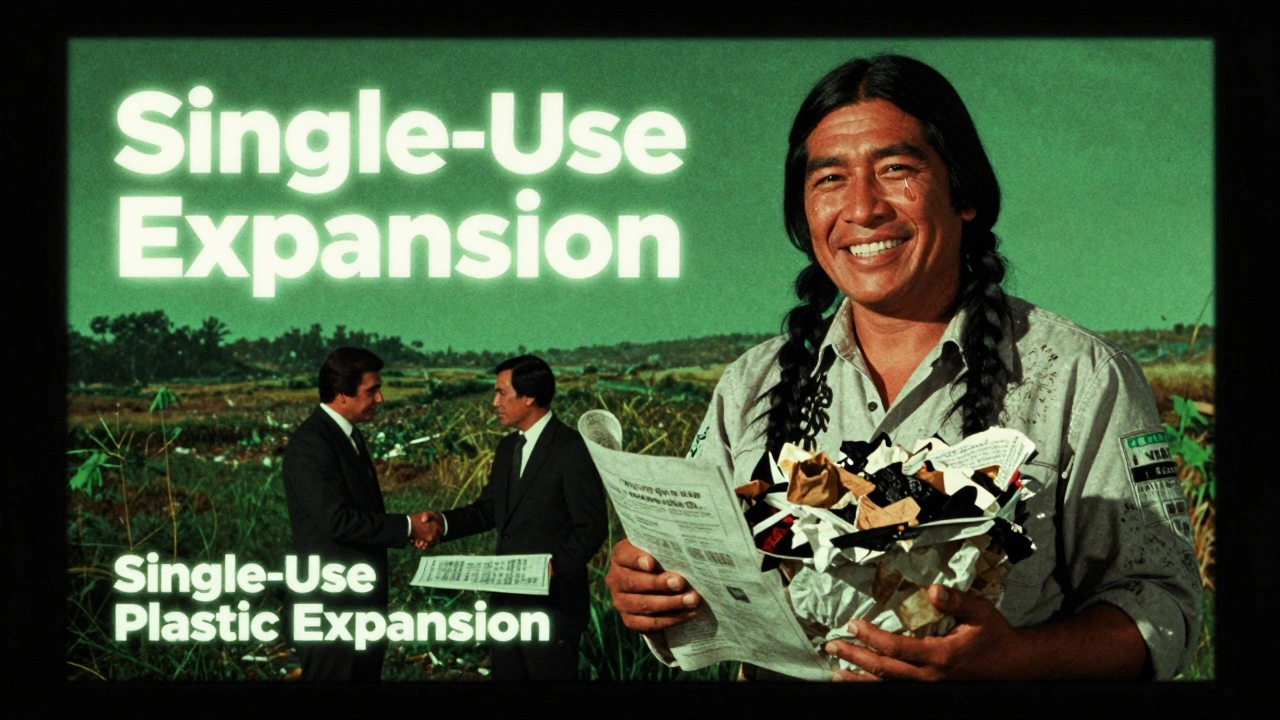
These companies knew recycling wouldn’t work at scale. They also knew people would assume recycling was the solution. So they funded campaigns-like the famous ‘Crying Indian’ ad in the 1970s-that shifted blame onto individuals. ‘Don’t litter,’ the ads said. ‘Recycle more.’ Meanwhile, the same companies lobbied against laws that would force them to design reusable packaging or pay for waste collection. They spent millions to keep single-use plastic the cheapest option.
They knew the consequences
Internal documents from ExxonMobil, Shell, and other major producers, released by investigative journalists, show that as early as the 1970s, scientists working for these companies warned executives that plastic waste would overwhelm the environment. One 1972 internal report from Shell predicted that plastic pollution would become ‘a major environmental problem’ within decades. Another from Exxon in 1986 admitted that ‘the recycling infrastructure is not viable’ and that ‘disposal in landfills and incineration are the only practical options.’
Instead of changing course, they doubled down. They invested in new plastic production lines, not recycling tech. They expanded into emerging markets where waste systems were weak. By 2020, just 20 companies produced over half of the world’s single-use plastic. And those same companies now claim they’re ‘committed to sustainability’-while still planning to triple plastic production by 2050.
Who profits? Who pays?
Plastic manufacturing companies make billions. The global plastic market is worth over $600 billion annually. The top five producers-ExxonMobil, Dow, SABIC, LyondellBasell, and Chevron Phillips-collectively earned over $100 billion in net profit in 2023 alone. Their shareholders got rich. Their executives got bonuses.
Who pays the price? Coastal communities in Indonesia and the Philippines, where plastic waste piles up because there’s no collection system. Indigenous villages in the Amazon, where plastic flows down rivers from distant factories. Fishermen in Ghana who spend hours pulling plastic bags from their nets. Taxpayers in Europe and the U.S., who foot the bill for cleanup and landfill management. And future generations, who will inherit a planet with more plastic than fish in the ocean by 2050.
The myth of consumer choice
‘Just stop using plastic bags!’ people say. But what choice do you have when every grocery store wraps your produce in plastic? When your coffee comes in a plastic lid, your sandwich in a plastic wrap, your water in a plastic bottle? The options aren’t there. Even if you want to avoid plastic, the system is designed to make it impossible.
Plastic manufacturing companies control the supply. They decide what gets made, how much it costs, and how it’s packaged. Retailers like Walmart and Amazon don’t make the plastic-they just use what’s available. The real power lies with the chemical producers who supply the raw materials. They set the rules. And they’ve spent decades making sure those rules favor profit over planet.
They’re not just making plastic-they’re making policy
Corporate lobbying is a major reason plastic regulations are weak. In the U.S., plastic manufacturers spent over $100 million in 2023 alone to fight bans on single-use plastics. In Europe, they pushed back against the EU’s Single-Use Plastics Directive, watering down requirements for reusable packaging. In Africa and Asia, they funded local business groups to oppose waste management laws.
They also pushed for ‘chemical recycling’-a buzzword that sounds high-tech but is mostly unproven. It’s not recycling. It’s incineration with a fancy label. And it lets companies claim they’re ‘solving’ plastic waste while continuing to produce new plastic. The truth? Less than 10% of all plastic ever made has been recycled. The rest was burned, dumped, or leaked into nature.
Who’s stepping up? And who’s not?
A few companies are trying. Not because they’re noble, but because consumers and regulators are pushing back. Nestlé, for example, pledged to make 100% of its packaging recyclable or reusable by 2025. Coca-Cola has invested in refillable bottle systems in some countries. But these are drops in the ocean. Nestlé still produces 3 million tons of plastic packaging a year. Coca-Cola makes 120 billion plastic bottles annually.
Meanwhile, the biggest players-ExxonMobil, Dow, SABIC-have made no real commitments to cut production. Their 2025 sustainability reports are full of green language but zero plans to reduce output. In fact, Dow announced a $2 billion expansion of its plastic plant in Texas in 2024. SABIC is building a new facility in Saudi Arabia. These aren’t exceptions. They’re the norm.

It’s not about willpower. It’s about power
Plastic pollution isn’t a failure of individual behavior. It’s a failure of corporate accountability. You can’t solve a system problem by asking people to be perfect. You fix it by changing who controls the system.
That means holding plastic manufacturers legally responsible. It means making them pay for waste collection and cleanup. It means banning single-use plastics at the source-not after they’ve already polluted the environment. It means forcing them to design for reuse, not just recycling.
Some countries are starting to act. France passed a law in 2023 requiring all plastic packaging to be reusable by 2030. Canada banned six single-use plastic items in 2022 and is now pushing for producer responsibility laws. The European Union is preparing to tax virgin plastic production starting in 2026.
But without global pressure, these efforts won’t be enough. The biggest plastic producers operate across borders. They move production to countries with weak regulations. They’ll keep doing it until the cost of making new plastic is higher than the cost of reusing what already exists.
What needs to change
Here’s what real change looks like:
- Producer responsibility laws - Plastic makers must pay for collecting and recycling their products. Not taxpayers. Not local governments. Them.
- Production caps - Governments must limit how much new plastic is made each year. No more expansion of plastic plants.
- Ban on single-use plastics - No more plastic straws, cutlery, wrappers, or bags. Period.
- Invest in reuse systems - Shift funding from recycling tech to refillable containers, returnable packaging, and delivery systems that don’t need plastic.
- Transparency - Every company must publicly report how much plastic they make, where it goes, and how much is actually recycled.
None of this is impossible. It’s just inconvenient for the companies making billions from plastic. And that’s why it hasn’t happened yet.
Final thought: The buck stops at the factory
Blaming consumers for plastic pollution is like blaming the customer for a faulty car. The manufacturer built it to break. They knew it would. And they made sure you couldn’t fix it.
Plastic pollution isn’t your fault. It’s theirs. The companies that decided convenience mattered more than the planet. The ones that buried the science. The ones that lobbied against solutions. The ones still building new factories today.
Until we hold them accountable, nothing will change.

Recent Posts
-
Who is the Largest Steel Fabricator in the United States?
-

Why Did Chevrolet Leave India? The GM Exit Explained
-
Who is the Main Exporter of Plastic? Top Countries and Companies in 2026
-

Which Indian Wood is Strongest? A Guide for Furniture Makers
-
What is the Biggest Steel Mill in the United States? US Steel Gary Works