Steel Industry Millionaires: Who Made It Big?
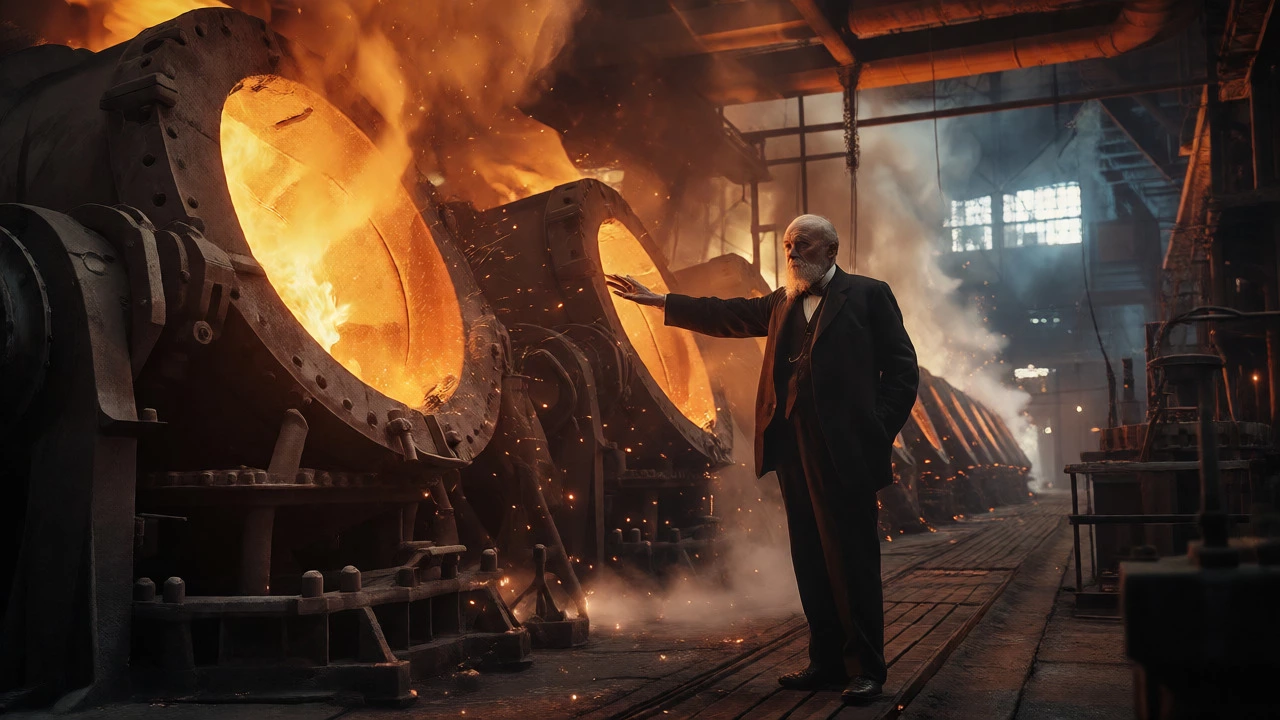
Steel Tycoon Wealth Strategy Explorer
Click on a tycoon below to explore how they built their fortune. Compare vertical integration, global mergers, and technological innovation.
Choose a steel magnate from the list to view their wealth strategy and key insights.
Primary Company
Key Wealth Strategy
Lesson for Modern Investors
You probably know the name Andrew Carnegie. But do you know that he once held more than half of all the wealth in America? Or that a single man, Lakshmi Mittal, controls roughly one-tenth of the world's steel production today? The path to becoming a millionaire-or even a billionaire-in this heavy industry isn't just about digging iron ore out of the ground. It’s about timing, technology, and ruthless efficiency.
If you’re wondering who actually made it big in steel manufacturing plants, you’re looking at a mix of historical titans and modern industrialists. Some built empires from scratch in the 19th century. Others inherited fortunes and doubled them through global mergers. Let’s break down exactly who these people are, how they did it, and what their stories teach us about building wealth in heavy industry.
The Historical Titans: Building Empires on Iron
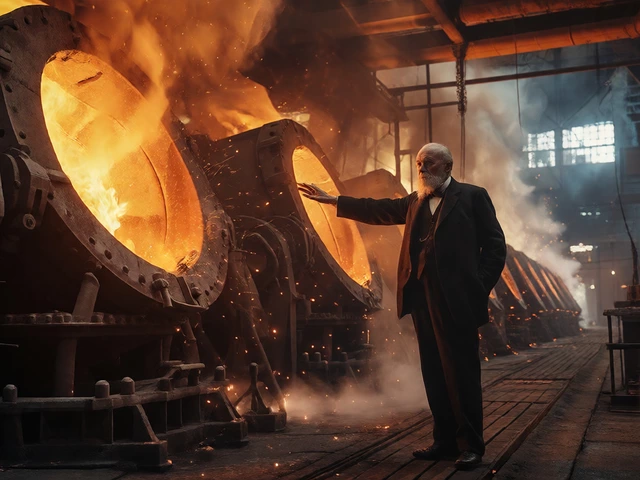
You can’t talk about steel wealth without starting with Andrew Carnegie. He didn’t start rich. He started as a telegraph operator. But by the late 1800s, he had cornered the US market using the Bessemer process, which made steel cheap enough to build skyscrapers and railroads. At his peak, Carnegie Steel was worth $480 million (a staggering sum back then). He sold it to J.P. Morgan for $372 million in cash, making him the richest person in the world at that time.
Then there’s Henry Clay Frick, Carnegie’s partner. While Carnegie focused on production, Frick handled the coke mines and labor relations. He became a millionaire independently before joining forces. Their partnership shows a key rule in steel: control the supply chain. If you own the raw materials and the factories, you own the profit margins.
Across the ocean, Alfred Krupp built the German steel empire that armed Europe. His family business, founded in 1811, revolutionized cannon production and later railway wheels. By the early 20th century, the Krupp family was among the wealthiest in Germany, demonstrating that specialized high-quality steel could command premium prices globally.
The Modern Global Giants: Mergers and Scale
Fast forward to the 21st century. The game changed from local dominance to global consolidation. Enter Lakshmi Mittal. An Indian businessman based in London, Mittal transformed a small steel plant into ArcelorMittal, the largest steelmaker in the world. How? By buying struggling mills in developing countries, upgrading them with modern tech, and selling the output to booming economies like China and India.
Mittal’s net worth hovers around $20 billion. He didn’t invent new steel; he optimized logistics and scale. This is the modern path to wealth: arbitrage. Buy low in inefficient markets, sell high in efficient ones, and use debt wisely to fuel expansion.
Another key figure is John Corriere, former CEO of Nucor Corporation. Nucor pioneered the mini-mill concept, using electric arc furnaces to recycle scrap metal instead of relying on massive blast furnaces. This method cut costs significantly. Under leaders like Corriere, Nucor grew into one of the most profitable steelmakers in North America, creating millionaires among its executive team and shareholders.
How Wealth Is Actually Created in Steel Plants
So, how does someone become a millionaire in this sector? It rarely happens by working on the factory floor alone. Here are the three main routes:
- Ownership and Equity: Founders and major shareholders capture the bulk of value. When a steel company goes public or gets acquired, stock options turn executives into millionaires overnight. Think of the IPOs of mid-sized regional steel producers.
- Executive Compensation: Top CEOs and CFOs of large firms like Nippon Steel or POSCO earn multi-million dollar packages. Bonuses tied to EBITDA (Earnings Before Interest, Taxes, Depreciation, and Amortization) can add millions to annual income.
- Specialized Services: You don’t have to own the mill. Companies that provide refractory bricks, automation software, or maintenance services to steel plants often see founders hit seven-figure exits when they sell to larger industrial conglomerates.
Consider the rise of electric vehicle battery manufacturers. They need specific grades of steel. Suppliers who cracked the code on lightweight, high-strength alloys saw their valuations explode between 2020 and 2025. That’s where new money is flowing now.
Regional Heroes: Beyond the Western Giants
We often hear about American and European names, but Asia dominates current production. In China, He Xiangjian and other entrepreneurs behind companies like Baowu Steel have amassed fortunes rivaling Western counterparts. Baowu is now the world’s largest steel producer by volume, surpassing ArcelorMittal in recent years.
In Japan, the Sumitomo Metal Industries legacy lives on through Nippon Steel. Family-owned zaibatsu groups historically controlled steel, and while ownership has diversified, the wealth remains concentrated among long-term institutional investors and founding families.
Australia also has its share. Fortescue Metals Group, led by Andrew Forrest, started as an iron ore miner but moved downstream into green steel initiatives. Forrest’s bet on renewable energy-powered hydrogen steelmaking positions him as a future leader in sustainable steel wealth.
Comparison of Key Steel Tycoons
To make sense of these different paths, here’s a quick look at how their strategies differed:
| Name | Primary Company | Key Strategy | Estimated Peak Wealth Impact |
|---|---|---|---|
| Andrew Carnegie | Carnegie Steel | Vertical Integration & Cost Cutting | Held >50% of US Wealth (1900) |
| Lakshmi Mittal | ArcelorMittal | Global Mergers & Acquisitions | $20B+ Net Worth (2026) |
| Henry Clay Frick | Frick Coke Co. | Resource Control (Coke/Ore) | Major Philanthropist & Investor |
| Andrew Forrest | Fortescue | Green Steel & Mining Innovation | $25B+ Net Worth (Fluctuating) |
| John Corriere | Nucor | Mini-Mill Efficiency Model | Created Shareholder Value Growth |
What Does It Take to Be a Steel Millionaire Today?
If you’re thinking about entering this space, forget the idea of building a massive blast furnace yourself. The capital requirements are too high. Instead, focus on niches.
For example, recycling scrap metal is a growing goldmine. As regulations tighten on carbon emissions, electric arc furnaces (which run on recycled steel) will dominate. Entrepreneurs who set up efficient scrap processing yards in urban areas are seeing healthy margins. Another hot area is digital transformation. Software that predicts equipment failure in rolling mills saves plants millions in downtime. Founders of such SaaS platforms in the industrial sector frequently exit for eight figures.
Also, consider geographic arbitrage. Steel demand shifts. Right now, Southeast Asia and Africa are seeing infrastructure booms. Local steel distributors who secure exclusive rights to import high-grade products from China or India are building substantial wealth without owning a single ton of capacity.
The Future: Green Steel and New Money
The next wave of steel millionaires won’t come from traditional methods. They’ll come from decarbonization. Hydrogen-based direct reduced iron (DRI) is the buzzword. Companies investing heavily in this tech, like H2 Green Steel in Sweden, are attracting venture capital. Early investors in these startups could see returns similar to tech stocks.
Traditional players aren’t sitting still. ThyssenKrupp and SSAB are pivoting. If you invest in their green transition bonds or equity, you’re betting on the survival of the fittest. Those who adapt will remain wealthy. Those who don’t will fade into history books alongside forgotten coal barons.
Who is the richest person in the steel industry right now?
As of 2026, Lakshmi Mittal remains one of the wealthiest individuals associated with steel, with a net worth estimated around $20 billion. However, mining magnates like Andrew Forrest (Fortescue) and Chinese industrialists involved in state-backed giants like Baowu Steel also hold comparable or higher fortunes due to vertical integration with iron ore resources.
Did Andrew Carnegie really give away all his money?
Yes, Andrew Carnegie famously pledged to give away 90% of his fortune during his lifetime. He donated approximately $350 million (equivalent to billions today) to libraries, universities, and foundations, leaving only a small fraction to his heirs. This act defined the concept of philanthropy for modern billionaires.
Can you become a millionaire working in a steel plant?
It is difficult to become a millionaire solely through wages unless you reach senior management levels. Most steel workers rely on union contracts for stable middle-class incomes. Wealth accumulation usually comes from stock options, bonuses, or side investments rather than base salary alone. Executive roles, however, regularly produce millionaires.
Why did so many steel companies go bankrupt recently?
Overcapacity driven by Chinese production, fluctuating raw material costs, and strict environmental regulations have squeezed margins. Many older, inefficient plants couldn’t afford the upgrades needed to meet emission standards, leading to consolidation. Survivors were those with low-cost operations or niche high-value products.
Is green steel profitable yet?
Currently, green steel commands a premium price because it’s scarce and meets corporate sustainability goals. While production costs are higher than traditional methods, early adopters and investors are banking on future regulatory penalties on carbon emissions to make green steel cost-competitive within the next decade.

Recent Posts
-
Who is the Main Exporter of Plastic? Top Countries and Companies in 2026
-
Steel Industry Millionaires: Who Made It Big?
-
Who is the Largest Steel Fabricator in the United States?
-

India's Oldest Pharma Company: A Look at Bengal Chemicals & Pharmaceuticals
-
What is the Biggest Steel Mill in the United States? US Steel Gary Works