Understanding the 3 Major Components of a Manufacturing System
Manufacturing System Health Auditor
Identify which of the three core pillars is hindering your production. Rate your current state for each component (1 = Critical / 5 = Optimized).
Physical Assets
Machinery, tools, and infrastructure.
Human Resources
Skills, labor, and management.
Operational System
Workflows, ERP, and scheduling.
Diagnostic Result:
Quick Summary: The Core Pillars of Production
- Physical Assets: The hardware, tools, and raw materials that physically create the product.
- Human Resources: The skill, labor, and management required to operate the assets.
- Operational Systems: The software, schedules, and workflows that coordinate the first two.
The Physical Assets: The Hardware of Production
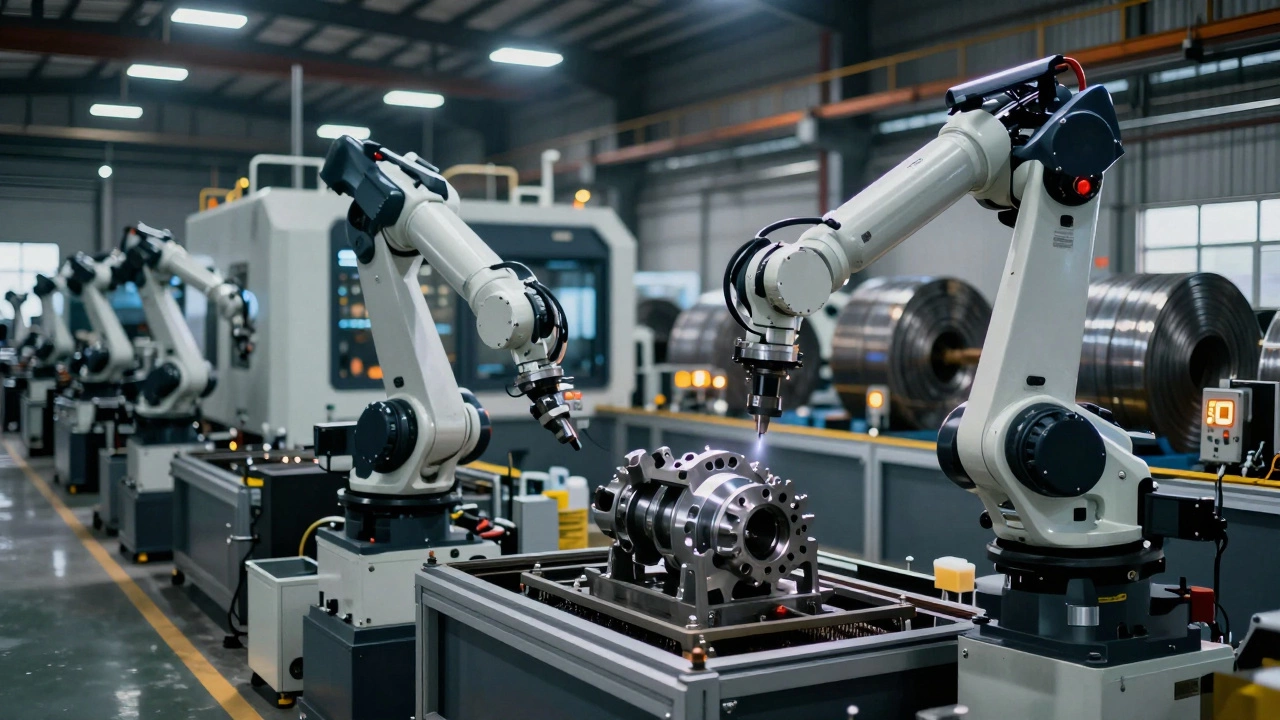
The first major component is what most people think of when they hear the word "manufacturing." These are the tangible things you can touch. In the industry, we call these Physical Assets, which are the machinery, equipment, and raw materials used to transform inputs into finished goods.
Think of it like baking a cake. Your oven, the mixing bowl, and the flour are your physical assets. In a real-world industrial setting, this includes everything from massive CNC machines and 3D printers to the conveyor belts that move parts from one station to another. But it's not just about the machines. The manufacturing system also includes the facility itself-the layout of the floor, the electricity grid, and the ventilation systems that keep the machines from overheating.
If you are looking at Government Schemes for industrial growth, you'll notice that many grants focus specifically on this component. Why? Because upgrading a 20-year-old hydraulic press to a modern automated system can increase output by 40% overnight. When you evaluate your physical assets, look at "uptime." If a machine is broken for three days a week, your asset isn't an asset; it's a liability.
| Asset Type | Examples | Key Performance Metric |
|---|---|---|
| Capital Equipment | Robotic arms, Lathes, Furnaces | OEE (Overall Equipment Effectiveness) |
| Tooling | Molds, Dies, Drill bits | Wear Rate / Lifespan |
| Infrastructure | Warehouse racks, HVAC, Power grids | Square footage utilization |
| Raw Materials | Steel coils, Plastic pellets, Resin | Inventory Turnover Ratio |
The Human Element: The Brains and Brawn
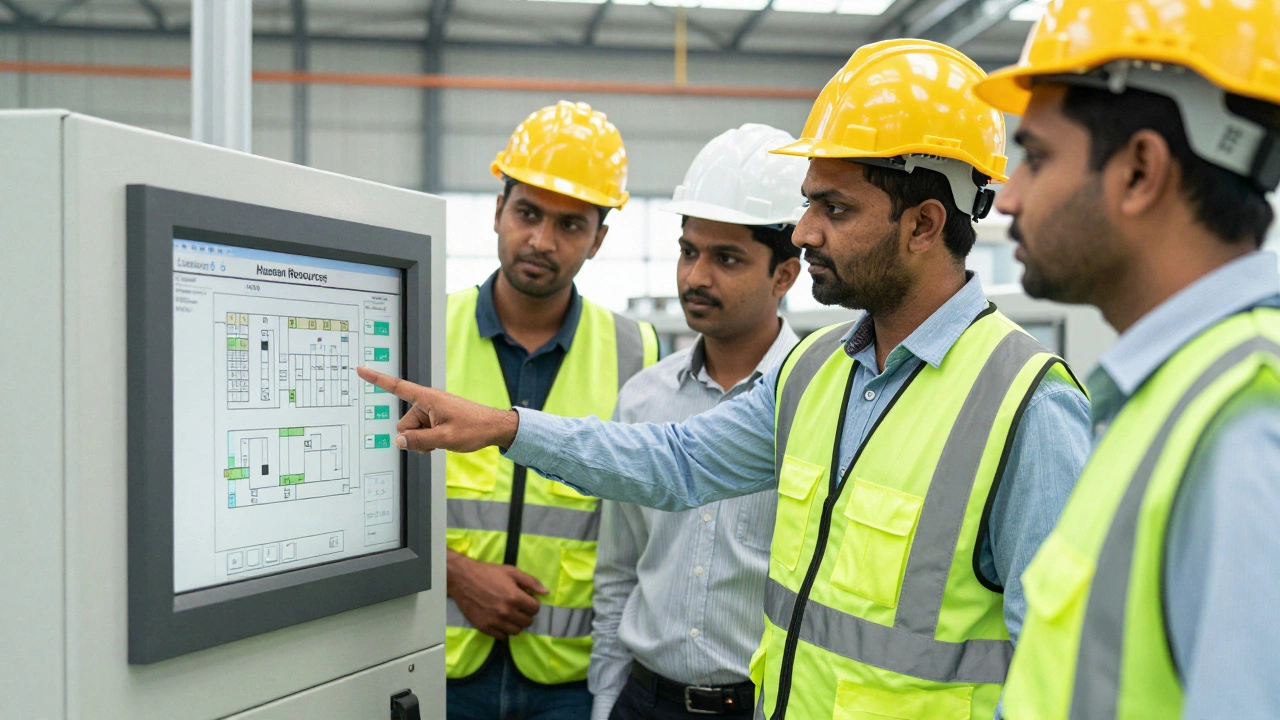
You can buy the most expensive machine in the world, but if nobody knows how to program it, it's just a very expensive piece of metal. This is where the second component comes in: Human Resources. In a manufacturing context, this isn't just the HR department that handles payroll; it's the collective skill, experience, and labor of everyone on the floor.
We generally split this into three levels. First, you have the skilled laborers-the technicians who can hear a tiny rattle in a machine and know exactly which bolt is loose. Second, you have the engineers who design the parts and optimize the flow. Finally, you have the management team that ensures the factory is meeting deadlines and staying under budget.
A huge problem in modern manufacturing is the "skills gap." As factories move toward Industry 4.0 (the trend of automating manufacturing with smart technology), the need for traditional manual labor is dropping, but the need for people who can code PLC (Programmable Logic Controllers) is skyrocketing. If you're applying for government subsidies, you'll often find that "training and development" is a separate fund. This is because the government knows that a factory is only as fast as its slowest operator.
Consider a real-world scenario: a textile mill installs new automated looms. The machines are great (Physical Assets), but the workers are still using 1980s techniques to load the yarn. The result? The machines keep jamming because the human element isn't synced with the technology. This is why investing in people is just as critical as buying new hardware.
The Operational System: The Invisible Glue
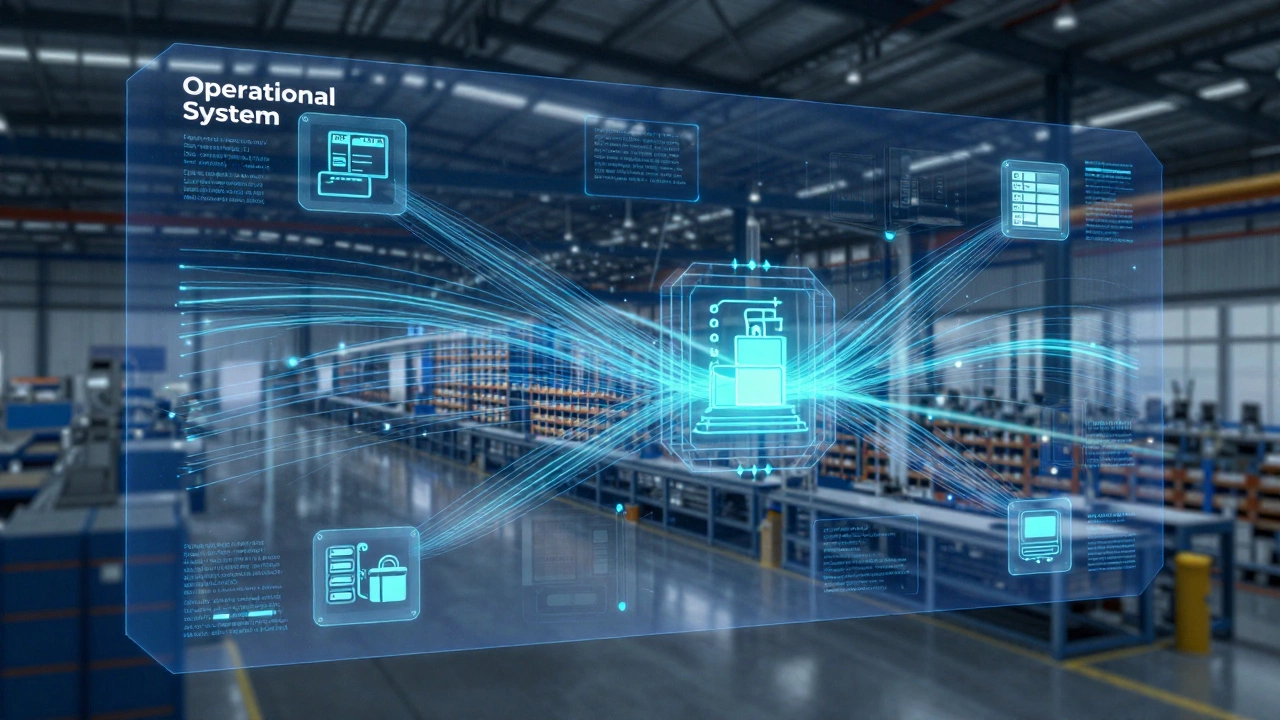
The final component is the one people usually forget because you can't see it. This is the Operational System, which consists of the processes, software, and rules that tell the people what to do with the assets. If the physical assets are the body and the humans are the brain, the operational system is the nervous system.
This includes your ERP (Enterprise Resource Planning) software, which tracks how many orders are coming in and how much raw material is left in the warehouse. It also includes the "Lean Manufacturing" principles you might use to reduce waste. Have you ever heard of Just-in-Time (JIT) Manufacturing? That's a classic example of an operational system. Instead of keeping a massive, dusty warehouse full of parts, you arrange for materials to arrive exactly when they are needed for production.
Without a strong operational system, you get "bottlenecks." A bottleneck happens when one part of your process is slower than the rest. For example, imagine you have a machine that can make 1,000 widgets an hour, but your packaging team can only wrap 100 widgets an hour. You don't need a faster machine; you need a better operational system to balance the workload.
Modern systems are now integrating IoT (Internet of Things) sensors. These sensors feed data back into the operational system in real-time. If a machine in the assembly line starts to vibrate too much, the system automatically alerts the technician before the machine actually breaks. This shift from "fix it when it's broken" to "fix it before it breaks" is what separates profitable factories from those that struggle to survive.
How These Components Interact in the Real World
To see how these three work together, let's look at a company making electric vehicle (EV) batteries.
First, they invest in Physical Assets: high-precision coating machines and clean-room environments to prevent dust contamination. Next, they hire Human Resources: chemical engineers who understand lithium-ion reactions and technicians who can maintain the vacuum seals. Finally, they implement an Operational System: a software suite that tracks every single battery cell's quality and ensures that the cobalt and nickel are ordered from suppliers just as the production line is ready for them.
If the company only focused on the machines (assets) and the engineers (people) but had a terrible scheduling system (operational), they would end up with thousands of half-finished batteries sitting on the floor because the packaging materials didn't arrive on time. This disconnect is where most manufacturing businesses fail.
| Neglected Component | Symptom | Likely Outcome |
|---|---|---|
| Physical Assets | Old, slow, or breaking machinery | Low quality, high scrap rate, slow output |
| Human Resources | Unskilled staff, high turnover | Frequent errors, safety accidents, inability to innovate |
| Operational Systems | Confusion, bottlenecks, missing parts | Wasted materials, missed deadlines, high overhead costs |
Leveraging Government Schemes for System Improvement
When you're looking for government support to improve your factory, don't just ask for money for a new machine. That's a common mistake. Instead, frame your request around the interaction of these three components. Governments today are less interested in just "buying hardware" and more interested in "digital transformation."
For instance, if you're applying for a grant under a Manufacturing Incentive Scheme, show them how a new piece of equipment (Asset) will be operated by a newly trained staff member (Human) using a cloud-based tracking system (Operational). This "triple-threat" approach proves that you aren't just adding a machine to a messy floor, but you're actually upgrading your entire system.
Many schemes also offer tax credits for adopting "Green Manufacturing" practices. This usually requires a change in all three areas: new energy-efficient machines, training workers on sustainable waste management, and a new operational workflow to recycle water or heat. By hitting all three components, you maximize the value of the government's investment and your own profit margins.
Can one component be more important than the others?
In a word: No. They are interdependent. If you have the best machines and the best software but no skilled people, nothing gets built. If you have the best people and machines but no system, you'll have a lot of activity but very little actual productivity. Balance is the only way to achieve efficiency.
What is the easiest component to improve quickly?
The operational system is often the fastest to improve. While buying a new machine takes months and training a worker takes years, changing a workflow or implementing a new scheduling software can often be done in a few weeks. This is why many consultants suggest "optimizing the process" before "buying the machine."
How does Industry 4.0 change these components?
Industry 4.0 blurs the lines. Physical assets become "smart" (they talk to the system), humans move from manual labor to "supervisory" roles, and operational systems move from static schedules to AI-driven, real-time adjustments. It's less about three separate pillars and more about one integrated digital web.
Where do most small manufacturers fail?
Most small shops fail at the operational system. They are great at the craft (human) and have the basic tools (assets), but they struggle with inventory management, pricing, and scheduling. This leads to "feast or famine" cycles where they are either overwhelmed with work they can't finish or have no orders at all.
Do government schemes cover software for operational systems?
Yes, many modern schemes specifically target "digitization." Grants for ERP implementation, AI integration, and cloud computing are becoming more common because these tools increase the national competitiveness of the manufacturing sector.
Next Steps for Factory Owners
If you feel your production is lagging, don't guess where the problem is. Start with a simple audit. Spend one week tracking where your parts spend the most time. If they are sitting in a pile waiting for a machine, you have an Asset problem. If they are sitting in a pile because the operator is confused about the next step, you have a Human or Operational problem.
Once you identify the weak link, look into local government grants. Focus on the "Digital Transformation" or "Skills Upgrading" categories if you're struggling with the latter two. Remember, the goal isn't to have the most expensive factory-it's to have the most synchronized one.

Recent Posts
-
How Many Plastic Companies Are There in the US? (2026 Industry Data)
-

Which Wood Is Strongest in India? A Guide for Furniture Manufacturers
-

How Long Does Plastic Take to Disintegrate? A Timeline for Manufacturers
-
What Are Food Processing Units? A Complete Guide to Types, Operations, and Business Setup
-
Cheapest Countries to Manufacture in 2026: A Guide for Startups