Which Country Makes the Best Cars? Real Rankings Based on Quality, Innovation, and Reliability
Car Quality Comparison Tool
What's Most Important to You?
Select your top priorities to find which country makes the best cars for your needs
Your Best Match
Quick Insights
Longest-lasting cars with minimal repairs
Precision engineering and refined handling
Premium features at affordable prices
Cutting-edge software and charging technology
Fastest EV development and highest production volume
Built for tough conditions and extreme environments
When people ask which country makes the best cars, they’re not just looking for a name on a badge. They want to know where cars are built to last, where innovation actually matters, and where you can trust your daily ride to get you home without breaking down. The answer isn’t simple. It’s not just Japan or Germany. It’s not even just the U.S. or South Korea. The truth is, the best cars come from a handful of countries - each with their own strengths, trade-offs, and real-world proof.
Japan: The Quiet Leader in Reliability
Japan still leads in one thing no other country can match: long-term reliability. A 2024 J.D. Power Vehicle Dependability Study showed that Toyota, Honda, and Nissan ranked in the top five for vehicles with the fewest problems after three years of ownership. The average Japanese-built car needs fewer repairs in its first five years than any other. Why? It’s not magic. It’s manufacturing discipline. Japanese factories use lean production methods that cut waste, reduce errors, and prioritize consistency over flashy features. A Toyota Camry or Honda Civic might not look like a luxury car, but after 200,000 miles, it still runs like it just rolled off the lot.
Japanese automakers also build for global markets. A Corolla made in Kentucky still follows the same quality standards as one built in Japan. That’s why, in 2025, Toyota sold over 10 million vehicles worldwide - more than any other brand. Reliability isn’t a marketing slogan here. It’s a system.
Germany: Precision Engineered, But Not Always Practical
If Japan is about reliability, Germany is about engineering. Brands like BMW, Mercedes-Benz, and Audi have spent decades perfecting suspension systems, engine tuning, and driver feedback. German cars deliver a driving experience that feels connected, controlled, and refined. The 2025 BMW 3 Series still sets the benchmark for handling. Mercedes’ EQ electric models lead in battery management and software integration.
But here’s the catch: precision comes at a cost. German cars rank high in performance but low in long-term ownership costs. A 2023 Consumer Reports study found that luxury German brands had 2.3 times more repair issues after five years than Japanese equivalents. A single transmission repair on a Mercedes can cost over $5,000. And don’t forget maintenance - synthetic oil, specialized fluids, and dealer-only diagnostics add up fast.
Germany’s strength isn’t in making cars that last forever. It’s in making cars that feel extraordinary while they’re new. If you care more about how a car handles than how much it costs to fix, Germany wins.
South Korea: The Dark Horse That Beat Everyone
Most people still think of Hyundai and Kia as budget brands. That changed in 2020. Since then, Hyundai has consistently ranked #1 in J.D. Power’s Initial Quality Study. Kia beat out luxury brands in 2024 for the highest customer satisfaction score. Their EVs - like the Hyundai Ioniq 6 and Kia EV6 - have the longest real-world range in their class, beating Tesla in some tests.
How? South Korea invested billions in R&D, hired top engineers from Germany and the U.S., and rebuilt their entire supply chain. Today, Korean cars combine Japanese reliability with German-level features. A 2025 Kia Sportage has a 10-year/100,000-mile powertrain warranty - longer than almost any competitor. The build quality? Solid. The infotainment? Better than many German rivals. And the price? Often $5,000 less than a comparable BMW or Mercedes.
Korea doesn’t just make good cars. It makes the best value.
United States: Electric Leadership and Mixed Results
The U.S. used to be the land of gas-guzzlers. Now, it’s leading the electric revolution. Tesla remains the biggest EV name globally, but Rivian and Ford’s Mustang Mach-E are gaining ground. In 2025, American EVs hold 3 of the top 5 spots for range, charging speed, and software updates.
But traditional American gas cars? They’ve fallen behind. Chevrolet and Ford still sell millions of trucks and SUVs, but their reliability scores lag behind Japanese and Korean rivals. A 2024 study found Ford F-150s had 27% more electrical issues after three years than Toyota Tacomas. And Chrysler? Its last new model was in 2020.
The U.S. isn’t making the best all-around cars anymore. But when it comes to electric vehicles, innovation is happening here - fast. If you want cutting-edge software, over-the-air updates, and autonomous features, American EVs are still ahead.
China: Building Fast, But Trust Is Still Growing
China makes more cars than any country on Earth - over 30 million in 2025. Brands like BYD, Geely, and XPeng are flooding global markets with affordable EVs. BYD sold 3 million EVs in 2024, beating Tesla in global sales. Their batteries are cheaper, their designs are bold, and their tech is advanced.
But here’s the problem: quality control is inconsistent. A 2025 Auto Trader survey found Chinese-made EVs had 40% more software glitches than Japanese models. Door seals leak. Touchscreens freeze. Apps disconnect. That’s not the norm - but it’s common enough to worry buyers.
China’s advantage? Speed. They design, test, and launch new models in under 18 months. They’re the only country where a new EV can go from concept to dealership in a year. If you’re okay with occasional quirks and want the latest tech at half the price, China is your best bet.
India: The Rising Player with Big Potential
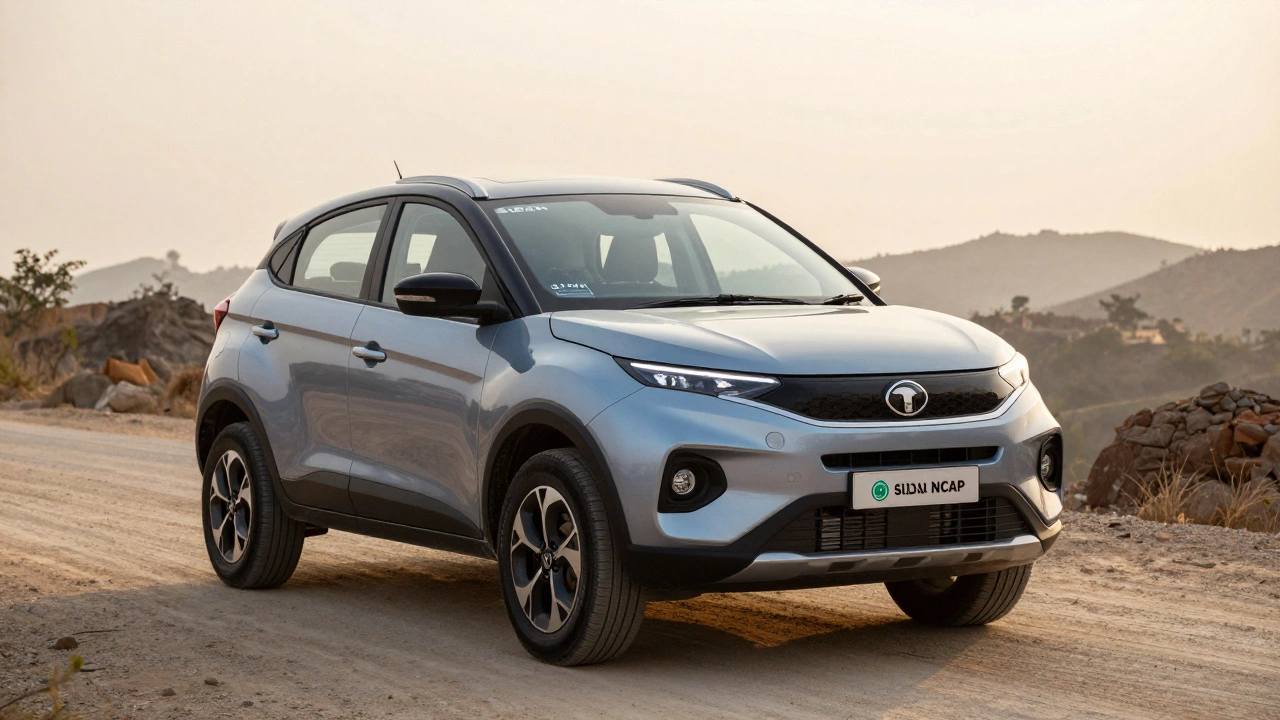
India isn’t on most people’s list for car quality. But that’s changing. Tata Motors and Mahindra have spent the last decade upgrading their engineering, materials, and safety standards. The Tata Nexon EV is now one of the safest compact SUVs in its class, with a 5-star Global NCAP rating. Mahindra’s XUV700 matches German SUVs in ride quality and noise insulation.
Indian cars are designed for tough conditions - dusty roads, extreme heat, and rough handling. That means they’re built tougher than many European models. The Tata Punch, for example, has a steel frame rated for 120 km/h crashes - a standard few global brands match.
India’s biggest strength? Cost. A fully loaded Tata Safari costs less than a Hyundai Creta. And with government incentives pushing EV adoption, Indian automakers are now exporting to Europe and Africa. In 2025, India exported over 1 million vehicles - up 65% from 2023.
Is India making the best cars? Not yet. But it’s the only country where quality is improving faster than anywhere else.
So, Which Country Makes the Best Cars?
There’s no single winner. It depends on what you need.
- If you want a car that runs for 20 years with minimal repairs - Japan is your pick.
- If you care about driving feel and premium materials - Germany still leads.
- If you want luxury features, long warranties, and low prices - South Korea is unbeatable.
- If you’re buying an electric vehicle with cutting-edge tech - United States and China are pushing boundaries.
- If you want value, toughness, and rapid innovation - India is the surprise contender.
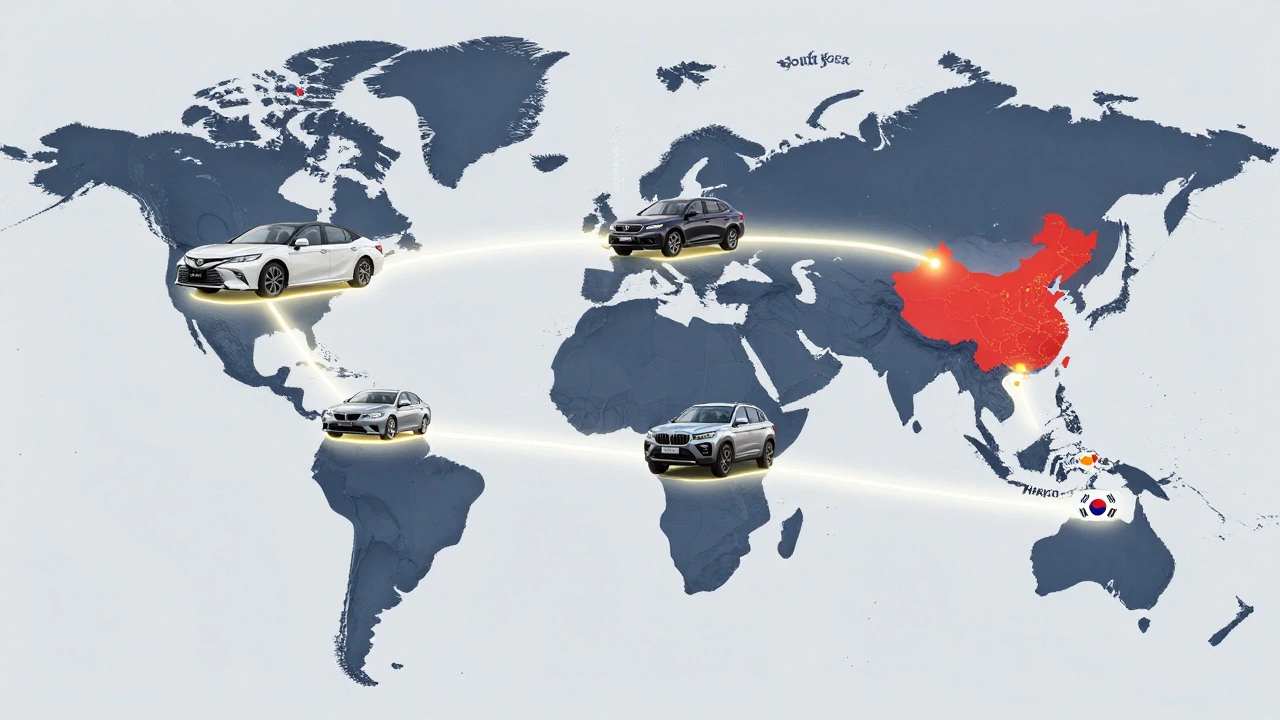
The global car market isn’t about one country dominating anymore. It’s about specialization. Japan masters durability. Germany masters feel. Korea masters balance. America masters electric innovation. China masters speed and scale. And India? It’s mastering how to build high-quality cars at prices the world can’t ignore.
Is Germany still the best country for car quality?
Germany is still the best for driving dynamics and engineering detail, but not for long-term reliability. German cars often have more expensive repairs after five years compared to Japanese or Korean models. If you prioritize how a car feels on the road, Germany wins. If you care about how much it costs to maintain, look elsewhere.
Why are Korean cars suddenly so good?
South Korea invested heavily in R&D, hired top engineers from Europe and the U.S., and redesigned their entire manufacturing process. Hyundai and Kia now use the same global platforms, materials, and safety standards as premium brands - but at 20-30% lower prices. Their 10-year warranties and top ratings in customer satisfaction prove they’re not just cheap - they’re well-built.
Are Indian-made cars reliable?
Yes, increasingly so. Tata and Mahindra now build cars to global safety standards, with crash test ratings matching European models. The Tata Nexon EV and Mahindra XUV700 have earned 5-star ratings from Global NCAP. Indian cars are designed for harsh conditions, making them tougher than many European models. While long-term data is still growing, current models are among the most reliable in their price range.
Which country makes the best electric cars?
The U.S. leads in software, over-the-air updates, and autonomous features. Tesla and Rivian set the pace. China leads in volume and battery cost, with BYD selling more EVs than any brand. South Korea offers the best balance - the Hyundai Ioniq 6 and Kia EV6 combine long range, fast charging, and premium interiors at competitive prices. So it depends: tech? U.S. Value? Korea. Volume? China.
Should I avoid cars made in China?
Not necessarily. Chinese EVs like BYD and XPeng offer cutting-edge tech and low prices, but software glitches and build inconsistencies are more common than in Japanese or Korean models. If you want a car that’s flawless from day one, stick with Korea or Japan. If you’re okay with occasional software hiccups and want the latest features at half the cost, Chinese EVs are worth considering.