Which Country Sells Cheapest Electronics? Real Costs Behind the Prices
Real Electronics Cost Calculator
Compare Electronics Costs by Country
See how manufacturing location, shipping, and taxes affect the real price of electronics. Input your preferences to calculate the true cost difference.
When you see a $150 smartphone advertised as "made in China" and another for $120 labeled "Made in India," it’s easy to assume India is cheaper. But the truth? It’s not that simple. The country selling the cheapest electronics isn’t just about where it’s assembled-it’s about supply chains, taxes, labor, and scale. And right now, no single country holds all the cards.
China Still Leads in Volume and Cost
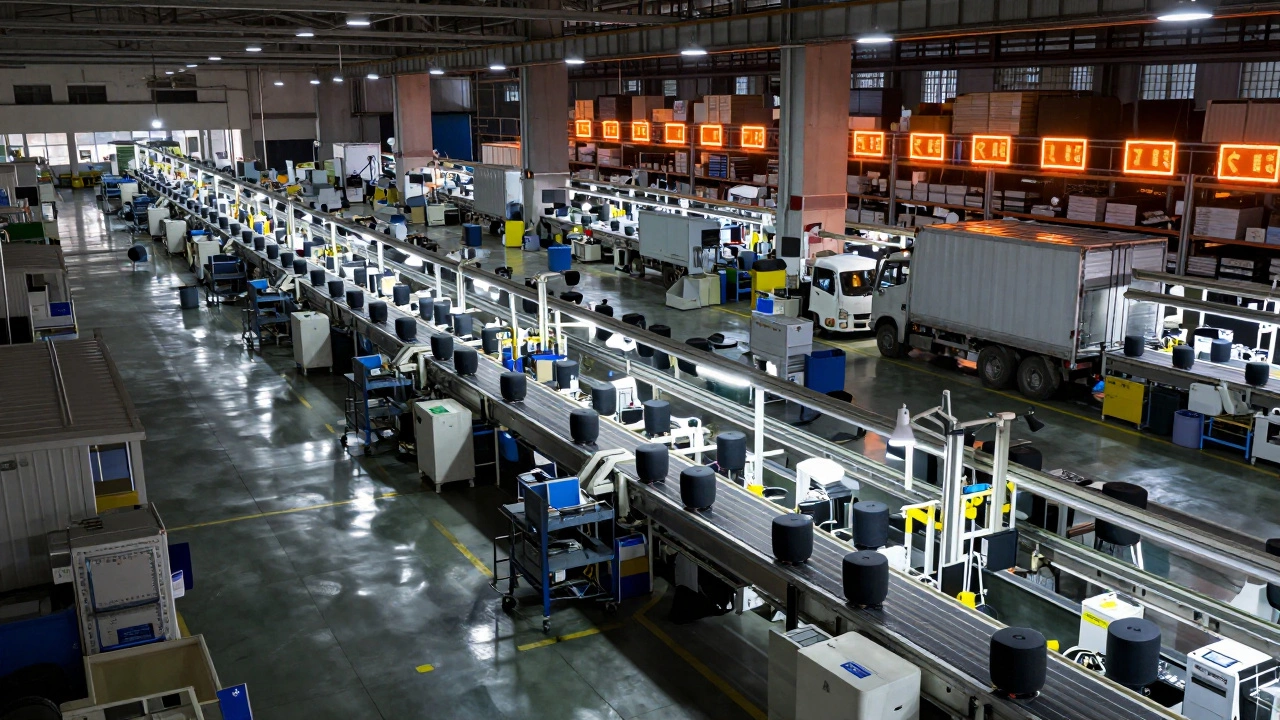
China still produces over 70% of the world’s consumer electronics. Why? Because it’s not just a factory-it’s an ecosystem. From rare earth mines in Inner Mongolia to circuit board suppliers in Shenzhen, everything is within a few hours’ drive. A single factory in Guangdong can make 50,000 smart speakers a day. That kind of volume drops the cost per unit below what any other country can match.
Take the Amazon Echo. In 2025, the average manufacturing cost was $28.50 per unit in China. In Vietnam, it was $34.20. In India, it was $36.80. The difference? Logistics, labor, and component sourcing. China has over 200 suppliers for just one type of capacitor. In India, you might find three. That gap adds up.
India’s Rise Is Real-But Not Everywhere
India has made huge progress. The government’s Production Linked Incentive (PLI) scheme has brought Apple, Samsung, and Xiaomi to build phones here. In 2025, India exported over 120 million smartphones-up from 30 million in 2020. But most of those are mid-range models. The cheapest smartphones sold in India? They’re still mostly made in China and imported.
Why? Because local production still struggles with two things: high import duties on components and weak supplier networks. A smartphone made in India uses 60-70% imported parts. Each part adds 10-15% in customs tax. That means even if labor is cheaper, the final price doesn’t drop much.
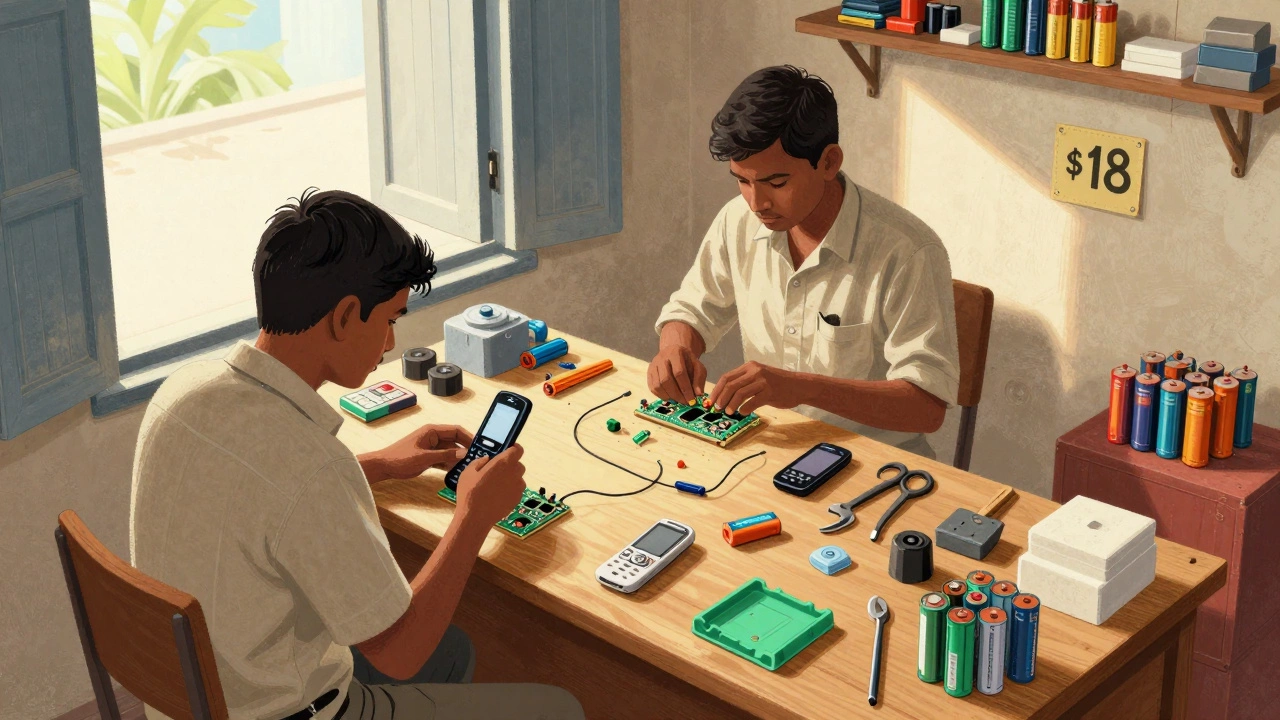
There’s one exception: feature phones. Brands like Lava and Micromax now make basic phones entirely in India using locally sourced batteries, screens, and plastic casings. These sell for as low as $18. That’s the only category where India truly beats China on price.
Where Else Is Electronics Made Cheaply?
Malaysia and Indonesia are quietly becoming players. Malaysia specializes in high-precision components-think microchips and camera modules. It’s not the cheapest, but it’s reliable. Indonesia is pushing hard on battery production. With nickel reserves and cheap labor, it’s starting to make power banks and e-bike batteries at 20% lower cost than China.
Vietnam is another name you’ll hear. It’s great for assembling laptops and wearables. But it doesn’t make the chips or screens. Those still come from China or Taiwan. So while final assembly is cheaper, the total cost isn’t.
For true low-cost electronics, you need vertical integration. That’s still only possible in China.
Why Price Isn’t the Whole Story
Let’s say you’re buying a Bluetooth speaker. You see one for $22 from China and another for $26 from India. You think, "I’ll pick the cheaper one." But here’s what you might not know:
- The Chinese model uses a 12-month warranty. The Indian one? 24 months.
- The Chinese speaker’s battery lasts 8 hours. The Indian one lasts 12.
- The Chinese one is made with recycled plastic. The Indian one? Virgin plastic that’s harder to recycle.
That $4 difference? It might be the cost of quality, durability, and sustainability. Many buyers don’t realize they’re paying for a product designed to last-and not just one that’s cheap to make.
Also, shipping matters. If you’re in Australia, buying from China means paying $12 in customs and waiting 18 days. Buying from India? $8 in duties and 10 days. Suddenly, the "cheaper" product isn’t so cheap when you add delivery time and fees.
Who Actually Gets the Lowest Price?
Big retailers like Walmart, Amazon, and Aldi don’t buy from one country. They buy from multiple. They’ll make 500,000 units in China for bulk pricing, then 100,000 in Vietnam to avoid tariffs, and 50,000 in India for local market demand.
That’s why you’ll find the same model sold under different names in different countries-with different prices. The "cheapest" version isn’t always the one labeled "Made in China." Sometimes, it’s the one made in Poland for the EU market, or in Mexico for North America.
For the average consumer, the cheapest electronics are rarely tied to one country. They’re tied to timing, bulk deals, and how much you’re willing to wait.
What’s Changing in 2026?
India is building 15 new electronics manufacturing parks this year. One in Tamil Nadu will make entire TV panels from scratch-glass, chips, and frames. If that works, India could cut the cost of TVs by 30% by 2027.
China is moving up the value chain. It’s no longer making cheap speakers. It’s making AI chips and quantum sensors. That means the "cheap" electronics you buy today? They’re more likely to come from Southeast Asia or Eastern Europe.
And then there’s automation. Factories in Mexico and Turkey are using robots to assemble electronics. Labor costs are rising everywhere. The real winner? The country that combines cheap labor with smart machines.
The Bottom Line
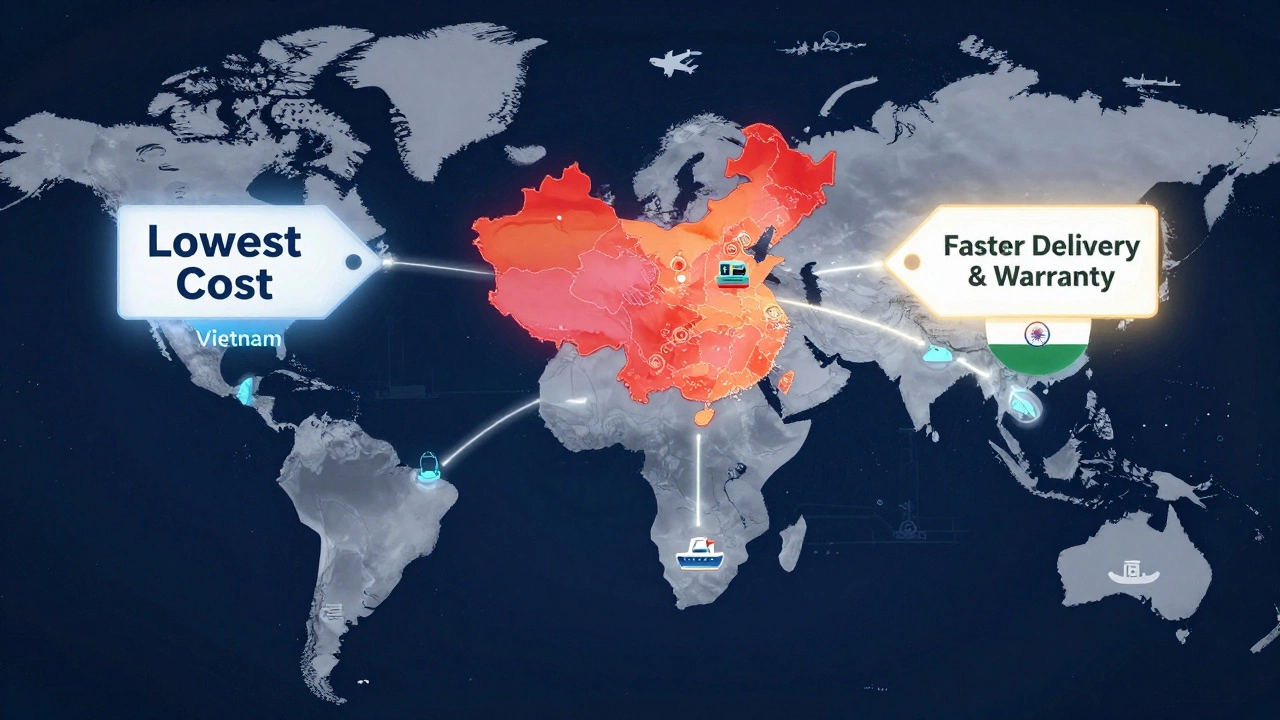
So which country sells the cheapest electronics? For now, it’s still China-but only if you’re buying in bulk, don’t mind long shipping, and aren’t worried about warranty or sustainability. For everyday shoppers, the answer is more complex: it depends on the product, your location, and what you value.
If you want the lowest upfront price? Look for Chinese-made goods. If you want better warranty, faster delivery, or local support? Check India, Vietnam, or Mexico. And if you’re buying a TV or laptop? Wait for sales in Q3. That’s when manufacturers clear last year’s stock-and prices drop hardest.
There’s no single country that wins every time. But there’s one truth: the cheapest electronics aren’t made in one place. They’re built across a global network-and the real savings come from knowing where to look.
Is India really cheaper than China for electronics?
For basic phones and feature devices, yes-India can be cheaper because of local production and lower labor costs. But for smartphones, laptops, and smart home gadgets, China still wins on price. That’s because China has a complete supply chain: from chips to batteries to packaging, all in one region. India still imports most components, which adds taxes and delays.
Why are electronics from China so cheap?
China’s cheap electronics come from scale, speed, and integration. A single factory in Shenzhen can produce thousands of units daily using parts sourced from nearby suppliers. There’s no waiting for shipments. No import taxes on components. And labor is still lower than in most Western countries. This system cuts waste and overhead, making the final product cheaper-even after shipping.
Are electronics made in Vietnam cheaper than those made in China?
Vietnam is cheaper for final assembly-especially for wearables and laptops-but not for full production. Most parts still come from China or Taiwan. So while labor costs are lower, the total cost doesn’t drop much. Vietnam is great for avoiding tariffs, not for beating China on price.
Can I buy truly cheap electronics directly from manufacturers?
Yes-but only if you buy in bulk. A single unit from a factory in China won’t be cheaper than Amazon. But if you order 5,000 units, you can cut the price by 40%. Most small buyers can’t do this. That’s why retail prices stay high. The real savings go to big retailers, not individual shoppers.
What electronics are cheapest to buy right now in 2026?
Right now, the cheapest electronics are basic Bluetooth speakers, power banks, and wired earbuds made in China and sold in bulk. Feature phones made in India are also very affordable-under $20. But for anything with a screen, processor, or smart features, China still leads in price. Look for end-of-season sales in July and November for the deepest discounts.

Recent Posts
-
MES vs MOM: Key Differences Explained for Modern Manufacturing
-
Why Local Manufacturing Matters: Benefits, Government Schemes & Economic Impact
-

India's Rank in Global Textile Manufacturing: Current Standing and Future Outlook
-

The World's Most Expensive Furniture: From the $25M Chair to Indian Luxury Craftsmanship
-

Highest Profit Margin Manufacturing Products: Top Ideas for Startups