Who Is the No. 1 Car Manufacturer in India?
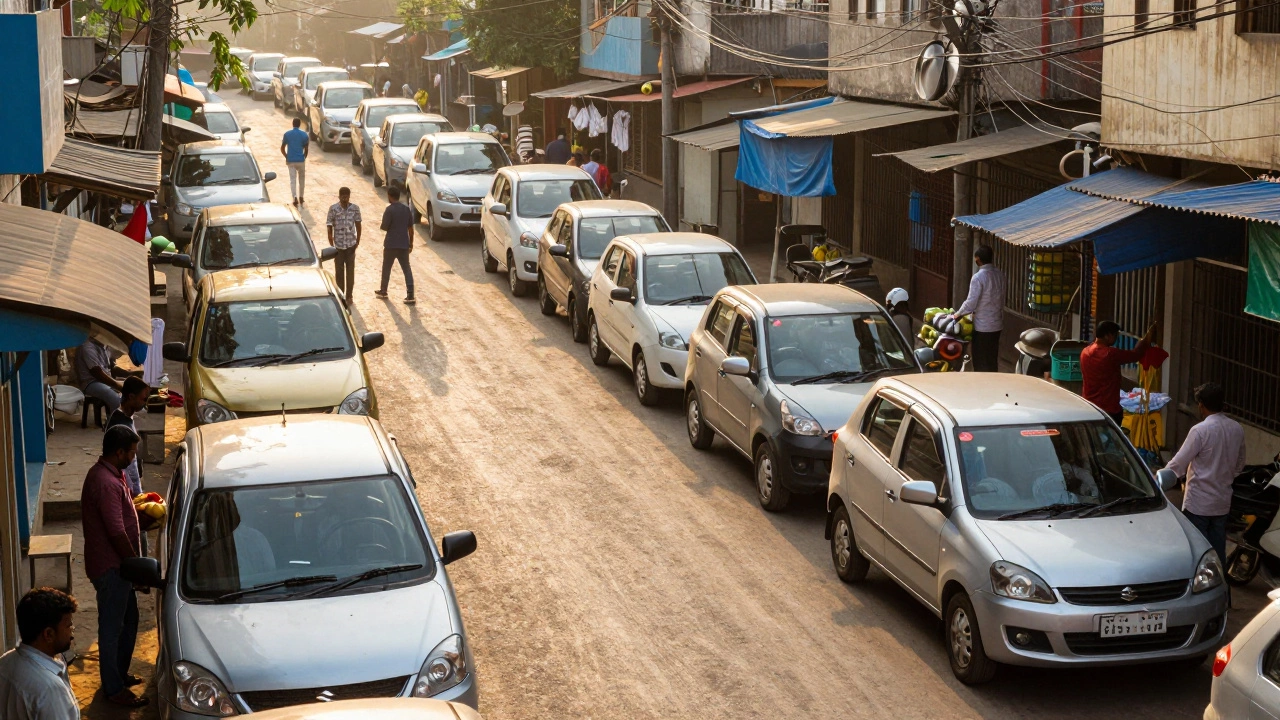
When you think of cars in India, one name keeps popping up in every conversation, every news report, and every dealership showroom: Maruti Suzuki. But is it really the No. 1 car manufacturer in India? The answer isn’t just about numbers-it’s about market control, customer trust, and decades of strategic positioning.
Maruti Suzuki Leads by a Wide Margin
In 2025, Maruti Suzuki sold over 1.8 million vehicles in India. That’s nearly 4 out of every 10 cars bought in the country. Its market share sits at 41.2%, according to the Society of Indian Automobile Manufacturers (SIAM). That’s more than the next three competitors combined. Hyundai comes in second with around 18%, Tata Motors third with 14%, and Honda and Mahindra trailing behind.
Why does Maruti Suzuki dominate? It’s not because it makes the flashiest cars. It’s because it makes the cars Indians actually need: affordable, reliable, and easy to repair. The Swift, Alto, and Wagon R aren’t luxury models-they’re everyday vehicles for families, small business owners, and first-time buyers. These models account for over 60% of Maruti’s total sales.
How Did Maruti Suzuki Become #1?
Maruti Suzuki didn’t rise to the top overnight. Its story began in the 1980s when the Indian government opened up the auto market and partnered with Suzuki Motor Corporation of Japan. Before that, India’s car market was dominated by slow, expensive, and hard-to-maintain vehicles. Maruti changed that.
By 1983, the Maruti 800 hit the roads. It was small, fuel-efficient, and cost less than half of what other cars did. Within a decade, it became the most common car in Indian cities. Even today, millions of Maruti 800s are still on the road-proof of their durability.
Over the years, Maruti kept listening. When demand shifted toward SUVs, it launched the Brezza. When urban buyers wanted compact sedans, it gave them the Celerio. It didn’t chase trends-it built what people asked for. And it did so with a nationwide service network of over 5,000 dealerships and 10,000 service centers. That’s more than any other car brand in India.
Who Are the Other Players?
Hyundai is Maruti’s closest rival. It made big moves in the last five years with models like the Creta, Venue, and i20. Its design-focused cars appeal to younger buyers and urban professionals. But Hyundai’s pricing is generally 15-25% higher than Maruti’s equivalent models. That gap matters when a family is choosing between a new Alto and a new Grand i10.
Tata Motors has been gaining ground thanks to its electric vehicles. The Tigor EV and Nexon EV are now among the top-selling EVs in India. Tata’s 2025 EV sales crossed 80,000 units, making it the country’s largest EV maker. But in total vehicle sales-including petrol and diesel-Tata still trails far behind Maruti.
Other brands like Honda, Mahindra, and Kia have their niches. Honda’s Amaze and City are popular in southern India. Mahindra owns the SUV segment with the Scorpio and Thar. Kia’s Carens and Seltos attract premium buyers. But none come close to Maruti’s scale.
Why Market Share Matters More Than Profit
Some people assume the biggest carmaker is also the most profitable. That’s not true here. Maruti’s profit margins are thinner than Hyundai’s or Tata’s because it sells so many low-cost models. But volume creates power. More sales mean more data, more feedback, and more leverage with suppliers. It also means cheaper parts and faster repairs across the country.
When a Maruti owner breaks down in a small town, there’s a mechanic nearby who’s trained on that exact model. That kind of accessibility isn’t just convenient-it’s life-changing for people who can’t afford long waits or expensive repairs.
The Electric Future and Maruti’s Challenge
India’s car market is shifting fast. By 2030, the government wants 30% of all new cars sold to be electric. Tata is ahead here. Maruti is playing catch-up. Its first EV, the Maruti Suzuki Fronx EV, launched in late 2024. It’s priced around ₹12 lakh, which is still higher than its petrol equivalents.
Maruti’s challenge? Making EVs affordable at scale. Right now, its EVs account for less than 2% of total sales. That’s far behind Tata’s 12% EV share. But Maruti has one advantage: its distribution network. If it can bring down EV prices by 20% over the next two years, it could dominate the electric market too.
What This Means for Buyers
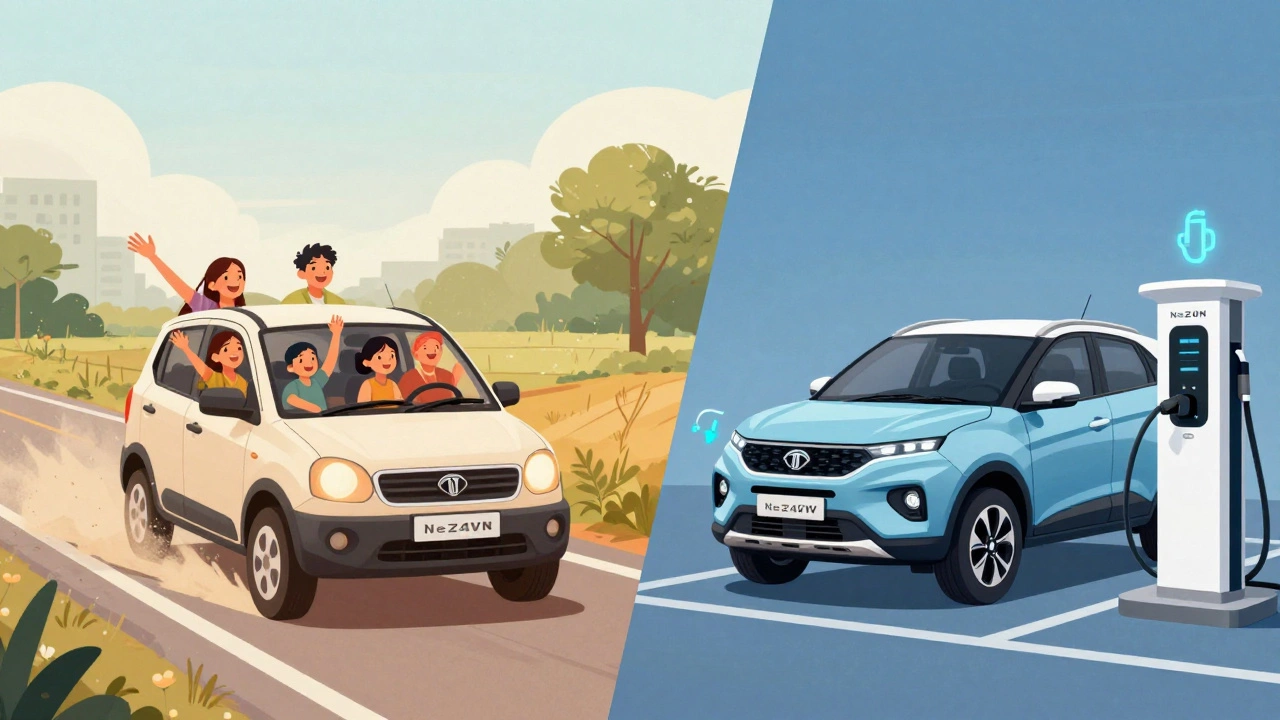
If you’re buying your first car in India, Maruti Suzuki is still the safest bet. You’ll get low maintenance costs, easy resale value, and parts that are available even in remote towns. If you want cutting-edge tech or luxury features, Hyundai or Tata might be better. But if you want reliability, affordability, and peace of mind? Maruti still wins.
It’s not glamorous. It’s not flashy. But for over 40 years, Maruti Suzuki has been the quiet force behind India’s mobility revolution. And as of 2025, it’s still the No. 1 car manufacturer in India-with no sign of slowing down.
| Rank | Brand | Total Sales (Units) | Market Share | Key Models |
|---|---|---|---|---|
| 1 | Maruti Suzuki | 1,820,000 | 41.2% | Swift, Alto, Wagon R, Brezza |
| 2 | Hyundai | 790,000 | 17.9% | Creta, Venue, i20 |
| 3 | Tata Motors | 620,000 | 14.0% | Nexon, Harrier, Punch, EVs |
| 4 | Honda | 310,000 | 7.0% | Amaze, City, BR-V |
| 5 | Mahindra | 280,000 | 6.3% | Scorpio, Thar, XUV700 |
Frequently Asked Questions
Is Maruti Suzuki the largest car manufacturer in India by revenue?
No, Maruti Suzuki is the largest by sales volume, but not by revenue. Hyundai and Tata Motors generate higher revenue per vehicle because they sell more expensive models. Maruti’s strength is in selling millions of low-cost cars, which gives it market dominance but thinner profit margins.
Which car brand has the best resale value in India?
Maruti Suzuki cars consistently have the highest resale value in India. Models like the Swift, Alto, and Baleno retain over 60% of their original price after five years. This is due to high demand for used Marutis, widespread service availability, and their reputation for reliability.
Is Tata Motors catching up to Maruti Suzuki?
Tata Motors is growing fast, especially in the electric vehicle segment, where it leads India with over 80,000 EV sales in 2025. But in overall vehicle sales-including petrol and diesel-Tata still sells less than half of what Maruti does. Maruti’s scale, distribution, and brand loyalty make it hard to overtake.
Why don’t more people buy Hyundai if it’s so popular?
Hyundai is popular, but its cars are generally more expensive than Maruti’s. For example, the Hyundai Grand i10 costs about ₹1.2 lakh, while the Maruti Alto starts at ₹3.9 lakh. For first-time buyers and budget-conscious families, that price difference is decisive. Maruti wins on affordability, not features.
Will electric vehicles replace Maruti Suzuki’s dominance?
Not anytime soon. While EVs are growing fast, they still make up less than 10% of India’s total car sales. Maruti is investing heavily in EVs, but its real advantage is its massive service network and low-cost manufacturing. Even if EVs become mainstream, Maruti’s infrastructure gives it a huge edge in reaching rural and semi-urban buyers.
What’s Next for India’s Car Market?
The next five years will be critical. With government push for EVs, local manufacturing incentives, and rising fuel prices, the rules are changing. Maruti Suzuki is adapting-but so are its rivals. The real question isn’t who’s No. 1 today. It’s who can stay No. 1 when the next wave of buyers-tech-savvy, eco-conscious, and price-sensitive-comes of age.
One thing is certain: India’s car market won’t be ruled by one brand forever. But for now, Maruti Suzuki still holds the crown-and the keys to millions of Indian homes.