Bangalore: Why It's Known as the Electronics City of India

India's Electronics Hubs Explorer
Click on a city card below to explore its specific strengths, key players, and role in India's electronics ecosystem.
Bangalore
The Electronics Capital
R&D & DefenseNoida/Greater Noida
Mobile Assembly Hub
Consumer ScaleChennai
Detroit of India
Auto ElectronicsHyderabad
Semiconductor Focus
Chip Design/TestBangalore (Bengaluru): The Diversified Powerhouse
Why it leads:
Bangalore is unique because it combines deep R&D capabilities with significant manufacturing presence. It started with public sector giants like BEL and HAL in the 1960s/70s, creating a gravitational pull for private suppliers and talent.
- Key Strength: Unmatched breadth – from defense radars to consumer IoT design.
- Talent Pool: Proximity to IISc and top engineering colleges ensures a steady supply of specialized electrical engineers.
- Ecosystem: High density of component suppliers, testing labs, and packaging firms within a 20km radius.
Major Players:
- • Bharat Electronics Ltd (BEL)
- • Texas Instruments
- • Intel
- • Qualcomm
- • Dell, HP, Lenovo
Noida/Greater Noida: The Volume Leader
Why it matters:
Noida has emerged as the primary hub for mobile phone assembly, driven largely by Chinese smartphone manufacturers leveraging the Production Linked Incentive (PLI) scheme.
- Key Strength: Massive scale of production for consumer devices.
- Focus: Final assembly and integration rather than deep core R&D or chip design.
- Growth Driver: Government incentives for domestic manufacturing of handsets.
Major Players:
- • Xiaomi
- • Vivo
- • Samsung
- • Foxconn
Chennai: Automotive Electronics Specialist
Why it matters:
Known as the "Detroit of India," Chennai’s electronics strength is tightly integrated with its massive automotive industry.
- Key Strength: Deep integration with vehicle manufacturing supply chains.
- Focus: Engine control units, infotainment systems, sensors, and displays.
- Advantage: Strong logistics infrastructure for export-oriented auto components.
Major Players:
- • Hyundai
- • TCS (Automotive Division)
- • Murugappa Group
Hyderabad: Semiconductor & Pharma Nexus
Why it matters:
Hyderabad focuses heavily on semiconductor design, testing, and packaging, alongside its strong pharmaceutical base which also requires precision electronics.
- Key Strength: Specialized chip fabrication support and advanced testing facilities.
- Focus: High-value semiconductor services and R&D.
- Future: Growing cluster for wafer-level packaging and test (WLP).
Major Players:
- • Qualcomm
- • Micron
- • T-Hub
Quick Comparison Matrix
| City | Primary Focus | Key Strength |
|---|---|---|
| Bangalore | Diversified Electronics & Defense | R&D depth and component ecosystem |
| Noida | Mobile Phone Assembly | Scale of production for consumer devices |
| Chennai | Automotive Electronics | Integration with auto industry |
| Hyderabad | Semiconductors & Pharma | Specialized chip fabrication and testing |
You might be surprised to learn that while many people guess Mumbai or Delhi for this title, the answer is actually Bangalore (officially Bengaluru), which holds the reputation as the electronics city of India. This nickname isn't just a marketing slogan; it’s backed by decades of industrial history, massive foreign direct investment, and a dense cluster of semiconductor and hardware companies that simply don’t exist at this scale anywhere else in the country. If you are looking into starting a business, sourcing components, or understanding where India’s tech hardware really comes from, knowing why Bangalore earned this title is your first step.
Why Bangalore Earned the Title
The story starts long before the software boom of the 1990s. In the 1960s and 70s, the Indian government made a strategic decision to establish heavy electrical and electronics industries in Karnataka. They set up public sector undertakings like Bharat Electronics Limited (BEL) and Hindustan Aeronautics Limited (HAL). These weren't small workshops; they were massive factories building everything from radar systems to aircraft electronics. Because these anchor institutions were located in Bangalore, private suppliers and smaller manufacturers naturally clustered around them to reduce logistics costs and share talent pools. This created a gravitational pull that never stopped.
Today, this legacy has evolved. While BEL still manufactures defense electronics, the ecosystem has expanded to include consumer electronics, telecommunications equipment, and increasingly, semiconductor assembly and testing units. The concentration of expertise here is unmatched. When a startup needs a PCB designer or a component supplier, they can find one within a 20-kilometer radius. In other cities, you might have to wait weeks for specialized parts or fly engineers in from abroad. That immediacy is what cements Bangalore’s status.
The Major Players Driving the Hub
To understand the scale, you have to look at who operates there. It’s not just about local startups. Global giants have placed their hearts in Bengaluru. Companies like Texas Instruments, Intel, and Qualcomm have significant R&D and manufacturing presence here. But it’s the manufacturing floor that matters for the "electronics city" tag. Brands like Dell, HP, and Lenovo run large-scale assembly plants in the Peenya Industrial Area and surrounding zones. Peenya alone is often called the second-largest industrial area in Asia, and a huge chunk of its output is electronic goods.
Let’s break down the key entities involved in this ecosystem:
- Bharat Electronics Limited (BEL): A state-owned enterprise founded in 1954, specializing in defense electronics and aerospace systems.
- Peenya Industrial Area: One of the largest planned industrial areas in Asia, hosting thousands of SMEs focused on electronics and engineering.
- Electronic City: A dedicated township developed by Karnataka Industrial Areas Development Board (KIADB) specifically for IT and electronics companies.
The distinction between "Electronic City" (the specific locality) and "Electronics City" (the nickname for the whole region) often confuses outsiders. While Electronic City is a physical suburb south of the main city, known for Infosys and Wipro campuses, the broader metropolitan area-including Whitefield, Peenya, and Bommasandra-collectively forms the industrial backbone that earns the statewide nickname.
Infrastructure and Talent Pool Advantages
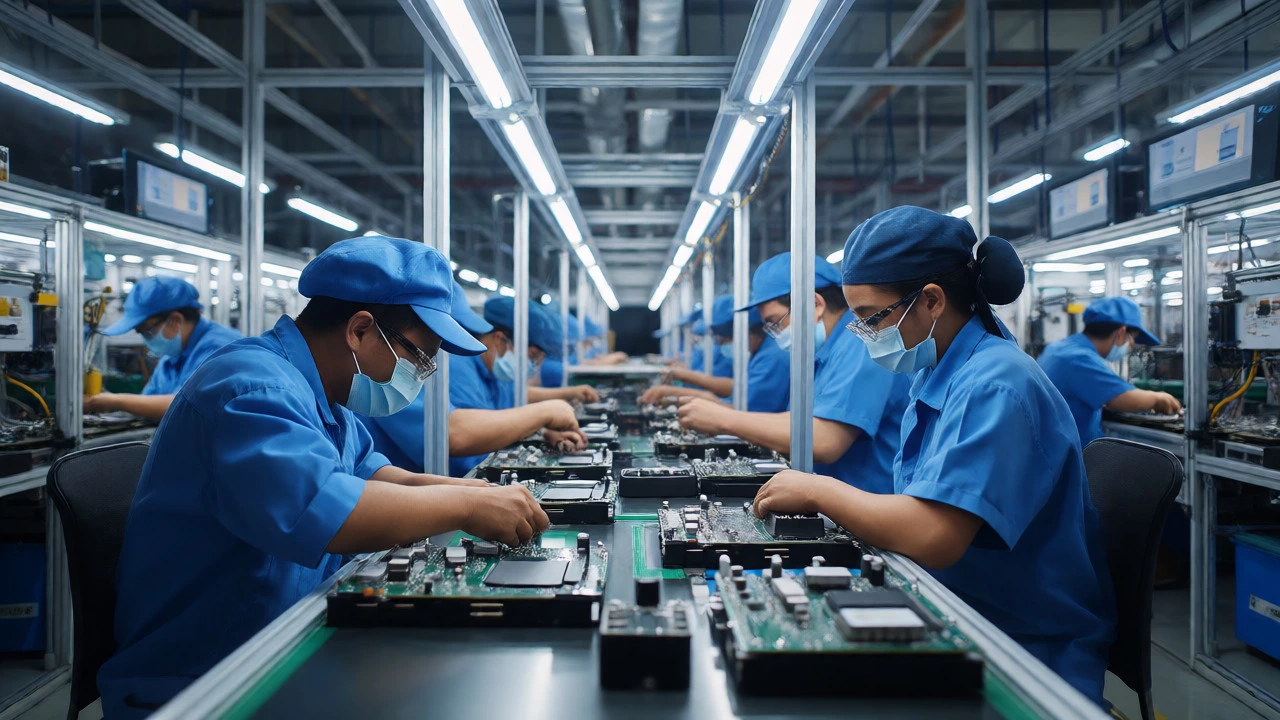
Hardware manufacturing requires more than just land; it needs reliable power, water, and skilled labor. Bangalore scores high on the talent front because of its proximity to premier institutes like the Indian Institute of Science (IISc) and various engineering colleges. These institutions produce thousands of electrical and electronics engineers every year. Unlike cities that rely solely on imported talent or generalist graduates, Bangalore has a steady pipeline of specialists who understand circuit design, embedded systems, and supply chain management.
However, infrastructure has been a mixed bag. Power cuts used to be a frequent complaint, forcing factories to run expensive diesel generators. In recent years, the state government has improved grid reliability, but bottlenecks remain. Traffic congestion can delay logistics, meaning a truck carrying sensitive capacitors from the airport to a factory in Peenya might spend two hours in traffic instead of forty minutes. Despite these challenges, the density of support services-packaging firms, testing labs, and customs brokers-is so high that the operational friction is often outweighed by the speed of innovation.
Comparison with Other Emerging Hubs
Is Bangalore the only player? No. Noida/Greater Noida in Uttar Pradesh has emerged as a massive mobile phone manufacturing hub, largely driven by Chinese smartphone makers like Xiaomi and Vivo setting up shop under the Production Linked Incentive (PLI) scheme. Chennai is strong in automotive electronics and displays. Hyderabad focuses on semiconductors and pharmaceuticals. Yet, Bangalore retains the breadth. While Noida might assemble more smartphones by volume, Bangalore designs the chips, builds the defense radars, and develops the IoT devices that go into smart homes across India.
| City | Primary Focus | Key Strength | Notable Entities |
|---|---|---|---|
| Bangalore | Diversified Electronics & Defense | R&D depth and component ecosystem | BEL, TI, Dell, HAL |
| Noida/Greater Noida | Mobile Phone Assembly | Scale of production for consumer devices | Xiaomi, Samsung, Foxconn |
| Chennai | Automotive Electronics | Integration with auto industry | TCS, Hyundai, Murugappa Group |
| Hyderabad | Semiconductors & Pharma | Specialized chip fabrication and testing | Qualcomm, Micron, T-Hub |
The Role of Government Policy
You cannot talk about India’s electronics growth without mentioning policy. The central government’s PLI scheme for Large Scale Electronics Manufacturing offers financial incentives to companies that increase their domestic sales value. Bangalore benefits indirectly because many of the companies receiving these incentives have their corporate headquarters and R&D centers there, even if the final assembly happens elsewhere. Furthermore, the Karnataka state government has historically offered tax holidays and subsidized land rates to attract electronics firms, creating a favorable regulatory environment compared to some other states.
Recent initiatives aim to boost semiconductor fabrication. While no major wafer fab exists in Bangalore yet, several advanced packaging and test facilities are being proposed. If these projects materialize as planned by 2030, Bangalore’s claim to the title will shift from "assembly and design" to "full-stack manufacturing," further solidifying its dominance.
Challenges Facing the Electronics City
It’s not all smooth sailing. Water scarcity is a recurring nightmare for Bangalore. Factories need millions of liters of water for cooling and cleaning processes. During drought years, industries have faced restrictions that force them to buy tankered water at premium prices, eating into margins. Additionally, the cost of real estate in prime industrial zones has skyrocketed. Small and medium enterprises (SMEs) that form the backbone of the component supply chain are being pushed out to distant suburbs, increasing their commute times and logistical complexity.
Another hurdle is global competition. Vietnam and China still dominate low-cost electronics manufacturing. For Bangalore to maintain its lead, it must move up the value chain. Designing complex ASICs (Application-Specific Integrated Circuits) or developing proprietary battery technology offers higher margins than assembling plastic casings for smartphones. The current trend shows a healthy shift toward this higher-value work, but it requires continuous investment in education and research.
Future Outlook for Electronics in India
The future looks bright for those betting on Bangalore. As India pushes for self-reliance (Atmanirbhar Bharat), demand for locally made electronics is rising. From smart meters replacing old analog ones to electric vehicle controllers requiring sophisticated power electronics, the domestic market is hungry for products designed and built in India. Bangalore is best positioned to serve this demand because of its existing ecosystem. You don’t have to build a community from scratch; you plug into a network that already works.
If you are an entrepreneur, consider sourcing components from Peenya or Electronic City before looking overseas. You’ll likely get faster turnaround times and better communication due to shared time zones and language ease. For investors, keep an eye on companies leveraging the PLI scheme in Karnataka. The synergy between software prowess and hardware capability makes Bangalore a unique hybrid in the global landscape, unlike Shenzhen (pure hardware) or Silicon Valley (pure software/design).
Which city is officially known as the Electronics City of India?
Bangalore (Bengaluru) is widely recognized as the Electronics City of India. This title stems from its historical role as a hub for defense electronics, its current status as a center for IT and hardware R&D, and the presence of major multinational corporations and manufacturing units like BEL and Dell.
Why is Bangalore called the Electronics City?
Bangalore earned this title due to the early establishment of public sector electronics industries like Bharat Electronics Limited (BEL) and Hindustan Aeronautics Limited (HAL). Over time, this attracted private investment, leading to a dense cluster of electronics manufacturing, design, and assembly companies, supported by a highly skilled workforce from local engineering institutes.
Is Electronic City different from Bangalore?
Yes. Electronic City is a specific township and industrial area located in the southern part of Bangalore, primarily known for IT parks and corporate offices. Bangalore refers to the entire metropolitan city, which includes multiple industrial zones like Peenya and Whitefield that contribute to its "Electronics City" nickname.
What are the major electronics companies in Bangalore?
Major companies include Bharat Electronics Limited (BEL), Texas Instruments, Intel, Qualcomm, Dell, HP, and Lenovo. Many global tech firms have their R&D centers here, while others operate assembly plants in the Peenya Industrial Area.
Does Bangalore manufacture semiconductors?
Currently, Bangalore is a major hub for semiconductor design and testing rather than wafer fabrication. However, new investments are being made to establish advanced packaging and testing facilities, aiming to bring more end-to-end semiconductor capabilities to the region.

Recent Posts
-

Bangalore: Why It's Known as the Electronics City of India
-

India's Oldest Pharma Company: A Look at Bengal Chemicals & Pharmaceuticals
-

What is the Textile Capital of the World? Surat vs. Tirupur vs. Global Hubs
-
Who is the Largest Steel Fabricator in the United States?
-

Which Indian Wood is Strongest? A Guide for Furniture Makers