What is the Textile Capital of the World? Surat vs. Tirupur vs. Global Hubs

Global Textile Sourcing Advisor
Not sure where to source your next apparel line? Answer these three questions to find the ideal manufacturing hub.
You might assume the title belongs to a city in China or maybe Italy. After all, when you look at your clothing tag, "Made in China" is still everywhere. But if you ask anyone who actually moves fabric for a living-from the dyers in Gujarat to the knitters in Tamil Nadu-the answer gets messy fast. There isn't just one textile capital of the world. The truth is that the global supply chain has fractured into specialized capitals. If you want synthetic fabrics and sarees, you go to Surat. If you want cotton knitwear and T-shirts, you go to Tirupur. If you want high-end luxury silk, you might look toward Suzhou in China or Como in Italy.
So why does this question matter? Because knowing where the power lies tells you where the money flows, where innovation happens, and where jobs are being created. For Indian manufacturers, understanding these distinctions is key to positioning themselves against Chinese competitors. Let’s break down who holds the crown in different sectors and why the narrative around India’s role in global textiles is changing.
The Case for Surat: The Silk City of India
If you walk through the Ring Road in Surat, you’ll see more gold than you can imagine. This city in Gujarat handles over 80% of India’s man-made fiber (MMF) trade. That’s not a small stat. It processes roughly 45 million meters of fabric every single day. When people argue that Surat is the textile capital, they aren’t talking about raw cotton bales sitting in a warehouse. They are talking about processing power.
Here’s the thing about Surat: it’s incredibly efficient at volume. The cluster effect here is real. You have spinners, weavers, printers, and exporters all within a 50-kilometer radius. This proximity cuts logistics costs significantly. In 2023-24, Surat’s textile exports crossed the $1 billion mark alone, but its domestic contribution is massive. It supplies the bulk of the synthetic fabric used in Indian fashion.
However, calling it the "world's" capital ignores one critical factor: brand value. Surat produces the fabric, but Milan and Paris often sell the final product at a 10x markup. Still, without Surat’s output, those European brands would struggle to source affordable synthetics. The city’s strength lies in its ability to pivot quickly. When fashion trends change, Surat changes its prints faster than almost any other hub.
Tirupur: The Knitwear Capital of the World
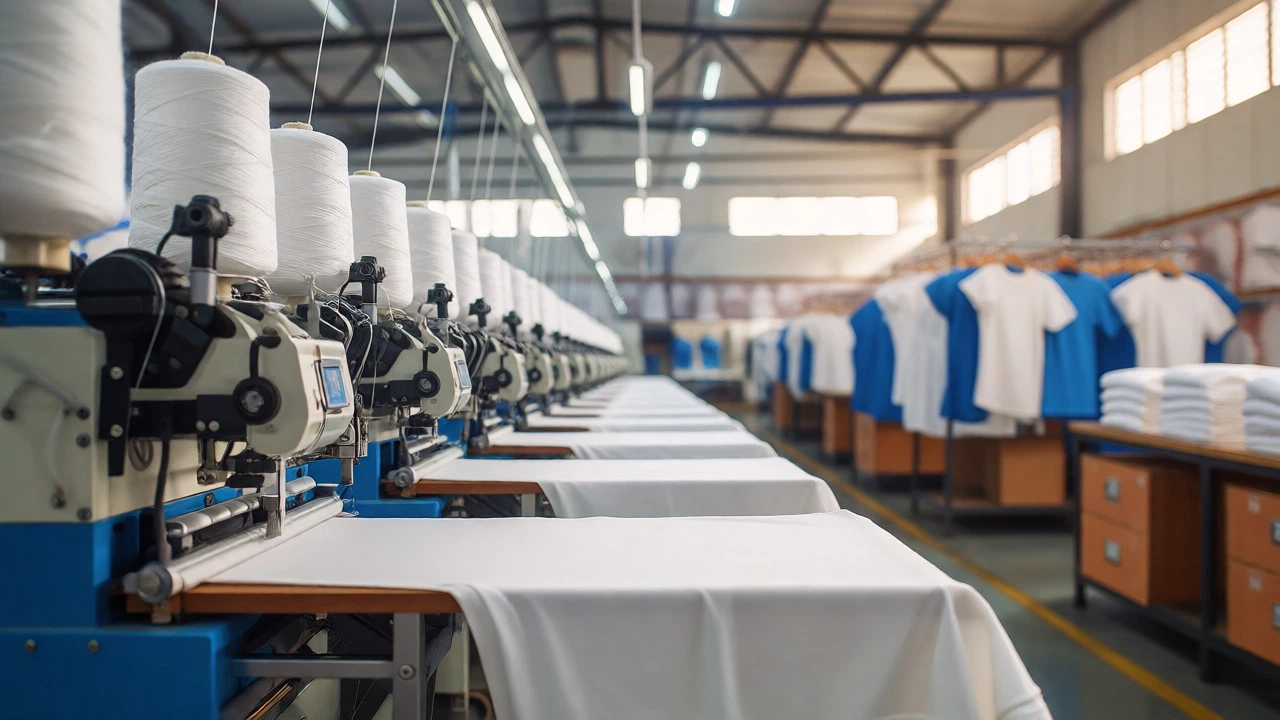
Move south to Tamil Nadu, and the story shifts completely. If Surat is about woven synthetics, Tirupur is the global epicenter for cotton knitwear, supplying nearly 60% of India’s total knitwear exports. This city doesn’t just make clothes; it makes the basics that the world wears. Think H&M, Zara, Uniqlo, and Gap. A significant chunk of their T-shirts, sweatshirts, and underwear starts here.
Tirupur earned its nickname because of sheer dominance in the knitwear segment. While Surat fights with China on synthetics, Tirupur competes directly with Bangladesh and Vietnam on cotton. And it wins on quality consistency. Western buyers often prefer Tirupur because the compliance standards are higher. Factories here have invested heavily in effluent treatment plants (ETPs) to meet strict environmental regulations from Europe and the US.
Is it the world’s capital? In terms of volume, Shanghai or Guangzhou might edge it out. But in terms of ethical sourcing and mid-market reliability, Tirupur is arguably the most important hub outside of China. The ecosystem supports everything from spinning mills to garment finishing units. If you’re looking to launch a sustainable apparel brand, Tirupur is likely your first stop, not Shenzhen.
China’s Shadow: Why Suzhou and Shaoxing Matter
We can’t talk about textile capitals without addressing the elephant in the room: China. For decades, China was the undisputed king. But the landscape has shifted. Today, the focus has moved to specific clusters rather than the whole country.
Shaoxing, home to the Keqiao Textile Market, is another giant. It claims to be the largest textile distribution center in Asia. What makes these cities dangerous competitors is their integration of technology. They use AI-driven quality control and automated warehousing at a scale India is still catching up to. However, rising labor costs and geopolitical tensions are pushing buyers to diversify. This is where Indian cities like Surat and Tirupur gain ground. They offer a viable alternative that balances cost with capability.
Comparing the Global Heavyweights
To understand who leads, we need to compare them on what matters: specialization, speed, and sustainability. Here’s how the top contenders stack up.
| City/Region | Primary Specialization | Key Strength | Major Challenge |
|---|---|---|---|
| Surat, India | Man-Made Fibers, Sarees, Synthetic Fabrics | Unmatched volume in MMF; low logistics costs due to clustering | Limited presence in high-end branded apparel; water stress issues |
| Tirupur, India | Cotton Knitwear, Garments | High compliance standards; strong relationships with EU/US retailers | Competition from lower-cost nations like Bangladesh |
| Shaoxing, China | Fabric Trading, Chemical Fibers | Largest trading market in Asia; advanced digital infrastructure | Rising labor costs; geopolitical trade barriers |
| Dhaka, Bangladesh | Ready-Made Garments (RMG) | Lowest labor costs globally; duty-free access to EU | Limited backward linkage (relies on imported fabric); safety concerns |
| Como, Italy | Luxury Silk, High-End Fashion | Brand prestige; artisanal craftsmanship; high margins | Extremely high production costs; low volume capacity |
Beyond Fabric: The Role of Dhaka and Vietnam
While Surat and Tirupur handle fabric and garments respectively, Dhaka in Bangladesh deserves mention. It is the ready-made garment capital of the world by volume. If you buy a cheap T-shirt in London, there’s a good chance it came from Dhaka. The country accounts for over 6% of global apparel exports.
Vietnam, specifically Ho Chi Minh City, plays a similar role but with a tech-forward approach. Vietnam benefits from free trade agreements that India lacks. This allows Vietnamese factories to undercut Indian prices slightly while maintaining high technical standards. For many global brands, Vietnam is now the primary alternative to China, leaving India fighting for third place in some segments.
This fragmentation means no single city rules them all. The "capital" depends entirely on what you are buying. Need polyester shirting? Surat. Need organic cotton hoodies? Tirupur. Need ultra-cheap basics? Dhaka. Need luxury silk scarves? Como.

Why India’s Position is Strengthening
For years, the narrative was that India lost the textile race to China. That’s outdated. India is currently the second-largest producer of textiles and garments after China. The government’s Production Linked Incentive (PLI) scheme is pouring billions into creating large-scale textile parks. These parks aim to replicate the efficiency of Chinese clusters but with better environmental safeguards.
Moreover, India has a unique advantage: raw material sovereignty. Unlike Bangladesh, which imports most of its cotton and yarn, India grows its own. This reduces exposure to global price shocks. When cotton prices spike, Indian manufacturers in Surat and Coimbatore can absorb the hit better than their Bangladeshi counterparts.
Another shift is happening in sustainability. European buyers are demanding traceability. They want to know exactly where the cotton was grown and how much water was used to dye the fabric. Indian hubs are adopting blockchain tracking and green energy faster than many competitors. This isn’t just PR; it’s becoming a requirement for market access.
How to Choose Your Manufacturing Hub
If you’re an entrepreneur or a sourcing manager, don’t get hung up on the "capital" label. Focus on your product needs. Here’s a quick decision guide:
- Choose Surat if: You need synthetic fabrics, sarees, dupattas, or home furnishings made from polyester or nylon. Speed to market for trend-based items is your priority.
- Choose Tirupur if: You are launching a cotton apparel brand. You need OEKO-TEX certified fabrics and want to appeal to eco-conscious consumers in Europe or North America.
- Choose Dhaka if: Price is your only metric. You are selling high-volume, low-margin basics and can tolerate longer lead times and less flexibility.
- Choose Vietnam if: You need complex technical garments or sportswear and want to avoid tariffs associated with certain trade disputes involving China.
The reality is that the global textile map is shifting westward and southward. While China remains dominant in scale, India is reclaiming its historical position as a diversified powerhouse. The title of "textile capital" isn’t a fixed trophy; it’s a rotating spotlight based on current market demands.
Which city is known as the Manchester of India?
Ahmedabad is historically known as the Manchester of India due to its early establishment of cotton mills during the British era. However, today, Surat and Tirupur have surpassed Ahmedabad in terms of modern textile production volume and export capabilities.
Is Surat cheaper than Tirupur for manufacturing?
It depends on the product. Surat is generally more cost-effective for synthetic fabrics and printed materials due to local availability of raw polymers. Tirupur may be more competitive for cotton knitwear because of its integrated supply chain for cotton yarn and knitting machines.
What is the biggest textile market in the world?
The Keqiao Textile Market in Shaoxing, China, is widely considered the largest textile trading market in the world by volume and variety. It serves as a central hub for fabric distribution across Asia and beyond.
Why is Tirupur called the knitwear capital?
Tirupur earns this title because it produces approximately 60% of India’s knitwear exports. The region has a dense cluster of spinning mills, knitting units, dyeing houses, and garment factories, allowing for rapid turnaround and high-quality output for international brands.
Does India compete with China in textiles?
Yes, India is the second-largest textile producer globally and a direct competitor to China. While China leads in overall volume and technological automation, India competes strongly on cost, raw material availability, and increasingly on sustainability credentials.

Recent Posts
-

What is the Textile Capital of the World? Surat vs. Tirupur vs. Global Hubs
-

Steel Industry Millionaires: Who Made It Big?
-

What is the Biggest Steel Mill in the United States? US Steel Gary Works
-

India's Oldest Pharma Company: A Look at Bengal Chemicals & Pharmaceuticals
-
Why Did Chevrolet Leave India? The GM Exit Explained