Is US Manufacturing Dying? The Truth Behind Reshoring and Government Schemes
Manufacturing Strategy Analyzer
Find Your Optimal Strategy
Answer these three questions to see which approach aligns with current 2026 economic trends.
Recommended Strategy:
Reshoring
Bring production back to the US.
- ✔ High gov't subsidies
- ✔ IP Protection
- ✘ Higher labor costs
Nearshoring
Move to Mexico/Latin America.
- ✔ Lower labor costs
- ✔ Faster logistics than Asia
- ⚠ Fewer federal grants
Hybrid Model
Split production strategically.
- ✔ Risk diversification
- ✔ Optimized cost/quality
- ⚠ Complex management
Why this works:
Government Incentives:
Risk Assessment:
Walk through the rusted gates of a former steel mill in Ohio or stare at the empty assembly lines in Detroit, and it’s easy to believe the narrative: American manufacturing is dead. For decades, we watched jobs vanish overseas, factories shutter, and entire towns wither. But if you look past the headlines and into the data from early 2026, the story isn’t about death. It’s about transformation. The question isn’t whether manufacturing is dying; it’s whether it’s evolving fast enough to survive.
The United States didn’t lose its ability to make things. It lost its cost advantage in low-skill, high-volume production. But that equation has flipped. With rising labor costs in Asia, supply chain shocks from recent global conflicts, and aggressive government manufacturing schemes designed to bring production home, the U.S. is seeing a resurgence. This isn’t nostalgia. It’s hard economics backed by billions in federal funding.
The Great Unraveling: Why We Thought It Was Over
To understand where we are, we have to look at where we’ve been. Between 2000 and 2010, the U.S. shed millions of manufacturing jobs. The logic was simple: why pay $30 an hour when you could pay $3? Companies moved operations to China, Vietnam, and Mexico. Domestic factories closed, not because Americans couldn’t work, but because the math didn’t add up for shareholders demanding quarterly growth.
This era created a vacuum. Small businesses struggled to find local suppliers. Innovation slowed because R&D was separated from production. And communities suffered. But here’s the twist: while job numbers dropped, manufacturing output actually remained relatively stable. Automation did more work with fewer people. However, this efficiency came with a hidden cost: fragility. When the pandemic hit in 2020, the world realized just how fragile those global supply chains were. Masks, ventilators, semiconductors-all stuck in shipping containers or locked down in foreign plants.
| Metric | 2010 | 2026 |
|---|---|---|
| U.S. Manufacturing Jobs | ~11.5 Million | ~13.2 Million |
| Global Supply Chain Reliance | High (Just-in-Time) | Moderate (Just-in-Case) |
| Federal Investment in Industry | Minimal | $400 Billion+ (IRA & CHIPS) |
| Average Factory Automation Level | Low-Medium | High (AI-Integrated) |
The Policy Pivot: Government Schemes Changing the Game
If automation kept the lights on, government policy is what’s bringing people back. The shift began with the realization that national security depends on industrial capacity. You can’t fight a war or lead a tech revolution if you rely on adversaries for your chips and batteries. Enter the era of industrial policy.
The two pillars of this new approach are the CHIPS and Science Act legislation providing subsidies and tax credits for semiconductor manufacturing and the Inflation Reduction Act (IRA) climate legislation offering incentives for clean energy production and electric vehicles. These aren’t small grants. They are massive injections of capital designed to reshape the economic landscape.
Under the CHIPS Act, companies like Intel, TSMC, and Samsung are building mega-fabs in Arizona, New York, and Texas. These facilities require thousands of construction workers and hundreds of highly skilled engineers. The IRA does something similar for the green economy. It offers tax credits for electric vehicles only if their batteries are assembled in North America with minerals sourced from free-trade partners. This effectively forces companies to build battery plants here.
For small manufacturers, these schemes trickle down. Large contractors need local suppliers. If a giant EV plant opens in Georgia, it needs brackets, wiring harnesses, and packaging from nearby shops. This creates a ripple effect that revives regional economies. The government isn’t just handing out money; it’s creating demand.

Reshoring vs. Nearshoring: Where Are Jobs Going?
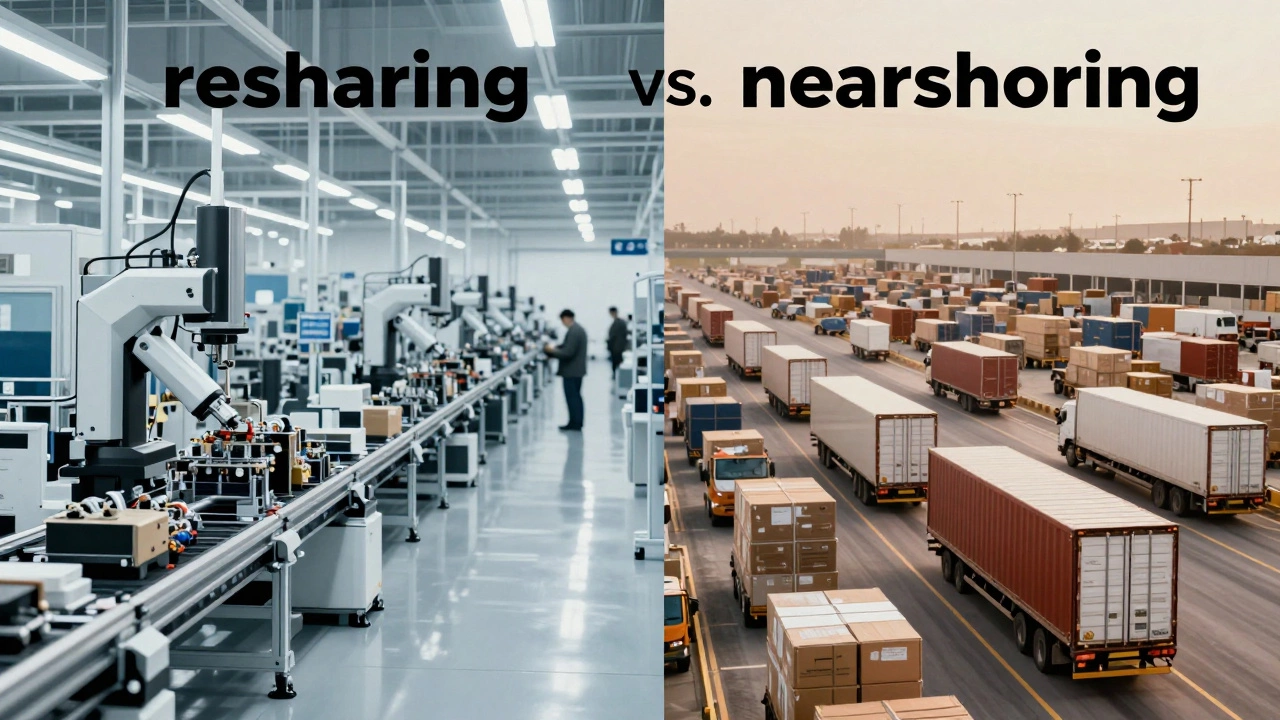
You’ll hear two terms thrown around constantly: reshoring and nearshoring. They sound similar, but they mean different things for the U.S. economy.
- Reshoring: Bringing production back to the United States from overseas. This is the goal of most government schemes. It’s expensive upfront but reduces long-term risk.
- Nearshoring: Moving production to neighboring countries, primarily Mexico. This is cheaper than reshoring but still keeps supply chains within the Western Hemisphere.
In 2026, both are happening. High-tech, sensitive industries like semiconductors and defense materials are reshoring. Consumer goods, furniture, and basic electronics are often nearshoring to Mexico. Why? Because labor costs in Mexico are lower, and logistics are faster than shipping from Asia. But even nearshoring benefits the U.S. indirectly. It strengthens regional trade networks and reduces reliance on distant competitors.
Consider the automotive industry. Ten years ago, a car might have had parts from ten different continents. Today, many automakers are consolidating their supply chains in North America. This means more jobs in the U.S., but also more pressure on domestic factories to be efficient. You can’t compete on cheap labor anymore. You have to compete on speed, quality, and technology.
The Technology Factor: Automation Is the Real Driver
Let’s address the elephant in the room: robots. Many people fear that reshoring will result in "jobless growth"-factories open, but no one gets hired because machines do everything. There’s truth to this, but it’s incomplete.
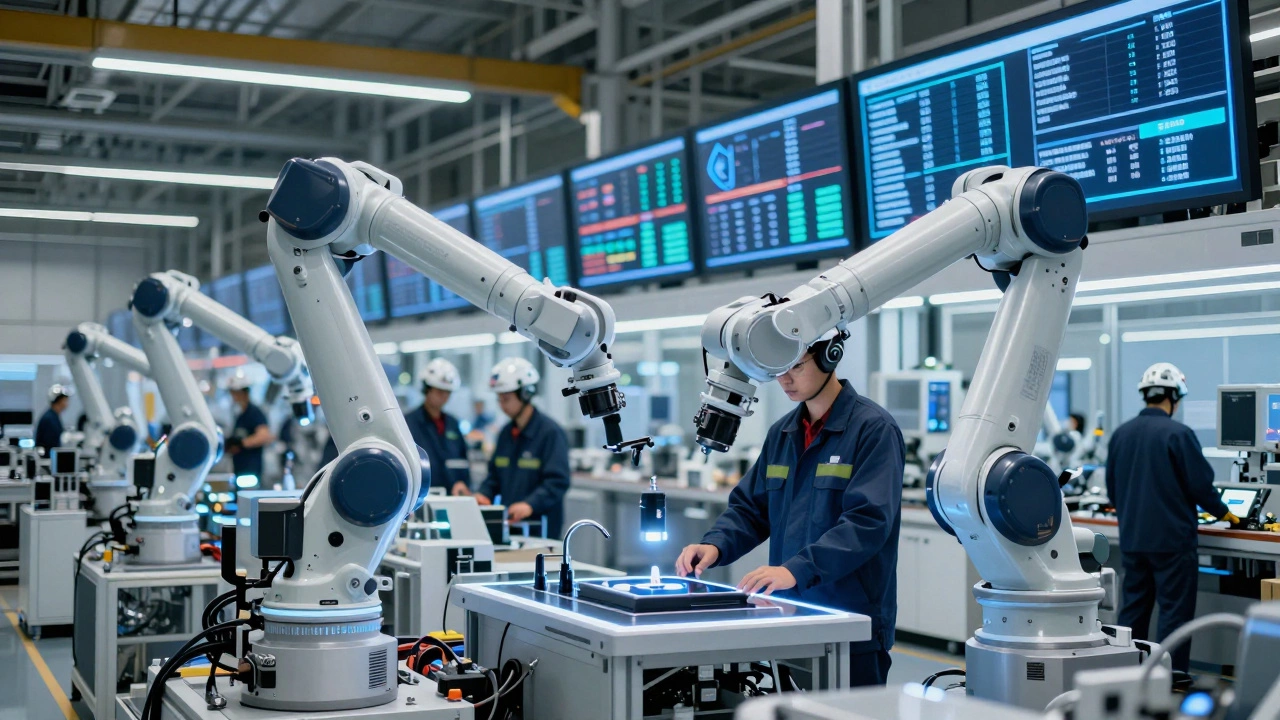
Modern manufacturing is less about assembly lines and more about integration. A factory today uses AI to predict maintenance needs, drones to inspect inventory, and collaborative robots (cobots) to work alongside humans. This doesn’t eliminate jobs; it changes them. We don’t need as many line workers. We need more technicians, programmers, data analysts, and logistics coordinators.
This creates a skills gap. The problem isn’t a lack of jobs; it’s a lack of qualified workers. Vocational schools and community colleges are struggling to keep up with demand. Companies are spending millions on training programs. If you’re a worker looking to enter manufacturing, now is a great time. But you’ll need to learn new skills. Welding is still valuable, but knowing how to operate CNC machines or troubleshoot IoT sensors is even more so.
Challenges Remain: It’s Not All Sunshine
Despite the positive trends, significant hurdles remain. Energy costs in the U.S. are higher than in some Asian countries. Regulations can be complex and slow down project approvals. And there’s always the risk of political shifts. Government schemes depend on elected officials. What happens if the next administration pulls back funding?
Additionally, the pace of change is uneven. Tech hubs and energy-rich states like Texas and Arizona are booming. Rural areas without infrastructure or broadband access are left behind. Manufacturing isn’t returning everywhere equally. It’s clustering around regions with talent, power, and transport links.
There’s also the issue of scale. While large corporations benefit from tax credits, small manufacturers often struggle to navigate the bureaucracy. Applying for grants takes time and expertise. Many small business owners would rather focus on production than paperwork. This is a critical area where government support needs to improve. Simplifying access to funds could accelerate growth across the board.
What This Means for Businesses and Workers
If you’re a business owner, the message is clear: adapt or fall behind. Invest in automation. Train your workforce. Look for opportunities to supply larger reshored industries. Don’t wait for perfect conditions. The market is shifting now.
If you’re a worker, upskill. Learn digital tools. Embrace technology rather than fearing it. Manufacturing jobs of the future are cleaner, safer, and better paid than those of the past. But they require education. Community colleges, online courses, and apprenticeship programs are your best friends.
For investors, look at sectors benefiting from government schemes: semiconductors, clean energy, defense, and advanced materials. These industries have tailwinds that won’t disappear overnight. But be cautious of hype. Not every company claiming to be part of the reshoring wave is legitimate. Do your due diligence.
Is manufacturing really coming back to the US?
Yes, but it’s changing form. High-tech and strategic industries are returning due to government incentives and supply chain risks. Low-skill mass production remains largely offshore or nearshore.
Which government schemes are helping manufacturing?
The CHIPS and Science Act supports semiconductor production. The Inflation Reduction Act boosts clean energy and EV manufacturing. Both offer substantial tax credits and direct subsidies.
Will automation kill manufacturing jobs?
Automation reduces low-skill roles but increases demand for technical positions. The net effect is a shift toward higher-paying, skilled jobs requiring training in robotics, AI, and data analysis.
Where are the best places to start a manufacturing business in the US?
States with strong industrial policies, affordable energy, and good infrastructure like Texas, Ohio, Michigan, and Arizona are currently attracting the most investment and talent.
How can small manufacturers benefit from reshoring?
Small businesses can become suppliers to large reshored companies. Focus on niche products, rapid prototyping, and local delivery. Seek out state-level grants and simplified federal funding programs.