Which Wood Is Strongest in India? A Guide for Furniture Manufacturers
Indian Wood Selection Assistant
Define Your Project Needs
Recommendation
Select your criteria and click "Find Best Wood Match" to see recommendations.
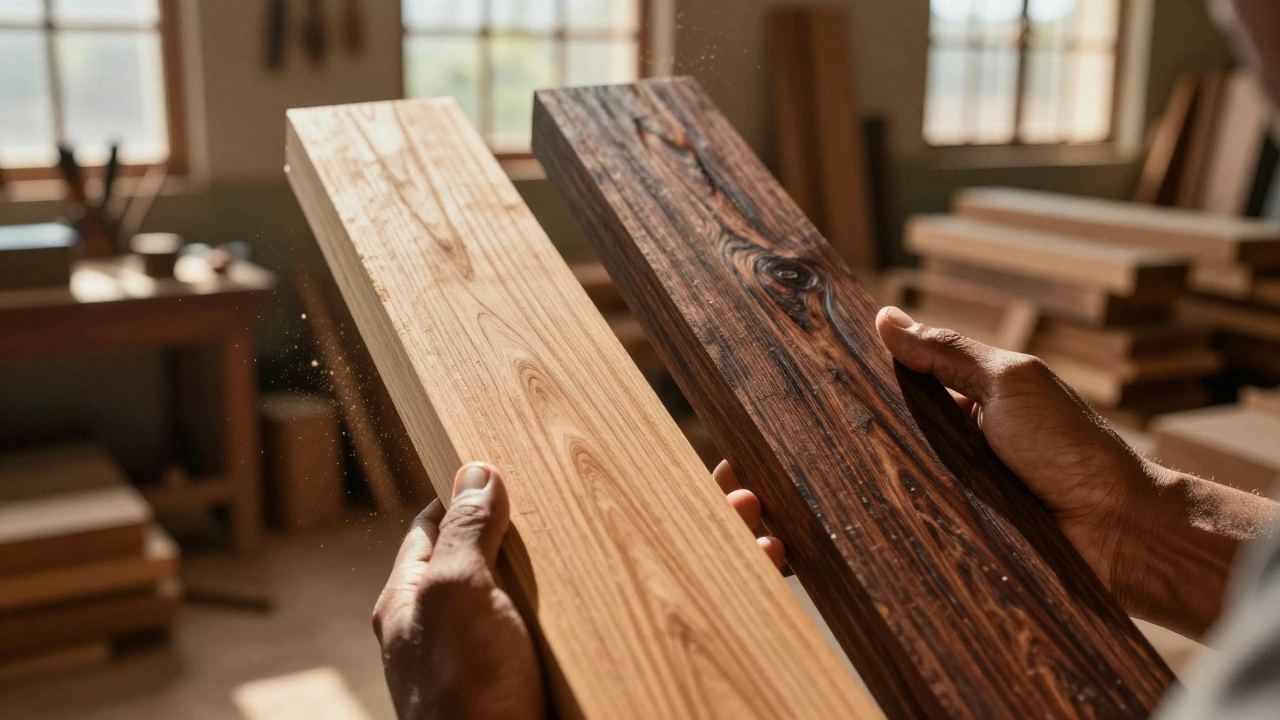
You are standing in a workshop, holding two planks. One feels light, almost spongy. The other is dense, heavy, and unyielding. For a furniture manufacturer in India, this difference isn't just about weight; it is the difference between a product that lasts decades and one that warps within months. The question of which wood is strongest in India does not have a single answer because "strength" means different things to different makers. Are you looking for resistance to termites? Flexibility for bending? Or sheer crushing power for structural beams?
The Indian subcontinent offers some of the most resilient timber on Earth, thanks to its tropical climate and diverse forest ecosystems. However, navigating these options requires understanding the specific mechanical properties of each species. Let’s break down the top contenders, their real-world applications, and how they fit into modern manufacturing workflows.
The Undisputed King: Teak (Tectona grandis)
If you ask any veteran carpenter in Mumbai or Delhi what the best wood is, they will likely point to Teak, scientifically known as Tectona grandis. This is the gold standard for outdoor and high-end indoor furniture. Why? Because of its natural oils and silica content.
These natural compounds act as a built-in preservative. They repel water, resist fungal decay, and keep insects at bay without needing harsh chemical treatments. In terms of mechanical strength, Teak has a high modulus of rupture (MOR), meaning it can withstand significant bending stress before breaking. It also has excellent dimensional stability, which means it doesn’t expand or shrink drastically with humidity changes-a critical factor for manufacturers dealing with India’s monsoon seasons.
- Hardness: Moderate to High (Janka hardness approx. 1070 lbf).
- Workability: Good, but the silica can dull saw blades quickly.
- Best Use: Outdoor seating, door frames, luxury cabinetry.
The downside? Cost and availability. Genuine Indian Teak from old-growth forests is rare and expensive due to strict regulations under the Forest Conservation Act. Many manufacturers now use plantation Teak, which grows faster but has slightly lower density and oil content than its wild counterpart. You need to know the source to guarantee quality.
The Heavyweight Champion: Sal (Shorea robusta)
If Teak is the king, Sal, or Shorea robusta, is the bodyguard. Found primarily in the eastern and central parts of India, Sal is denser and harder than Teak. It is often referred to as the "Ironwood" of the region.
Sal has exceptional compressive strength, making it ideal for load-bearing structures like railway sleepers, bridges, and heavy-duty flooring. For furniture, it is perfect for items that need to endure heavy wear and tear, such as dining tables or industrial workbenches. Its interlocking grain pattern gives it a unique aesthetic, though it can make planing difficult if not done with sharp tools.
| Wood Species | Density (kg/m³) | Termite Resistance | Workability | Primary Use |
|---|---|---|---|---|
| Teak | 650 - 730 | Excellent | Good | Fine Furniture, Outdoor |
| Sal | 800 - 900 | Very Good | Moderate | Structural, Flooring |
| Sheesham | 750 - 850 | Good | Excellent | Decorative Furniture |
| Rosewood | 850 - 950 | Excellent | Difficult | Luxury Items, Musical Instruments |
Manufacturers must be careful with Sal during drying. It tends to check (crack) if dried too quickly. Controlled kiln drying is essential to maintain its integrity. Despite this, its durability makes it a favorite for export markets where longevity is a key selling point.
The Export Favorite: Sheesham (Dalbergia sissoo)
Sheesham, also known as Indian Rosewood or Dalbergia sissoo, strikes a perfect balance between strength, beauty, and cost. It is arguably the most popular choice for mid-to-high-range furniture manufacturers in India today.
Sheesham is strong enough to handle daily abuse but flexible enough to be bent into curves for chair backs and sofa frames. Its rich reddish-brown color darkens with age, developing a patina that customers love. Unlike Teak, which can look yellowish when new, Sheesham offers immediate visual appeal.
From a production standpoint, Sheesham is easier to work with than Sal. It glues well, nails hold firmly, and it finishes beautifully with oils or varnishes. Because it is widely cultivated across northern India, supply chains are robust, and prices are more stable compared to Teak. For a startup or small-scale manufacturer, Sheesham offers the best margin-to-quality ratio.
The Luxury Option: Indian Rosewood (Dalbergia latifolia)
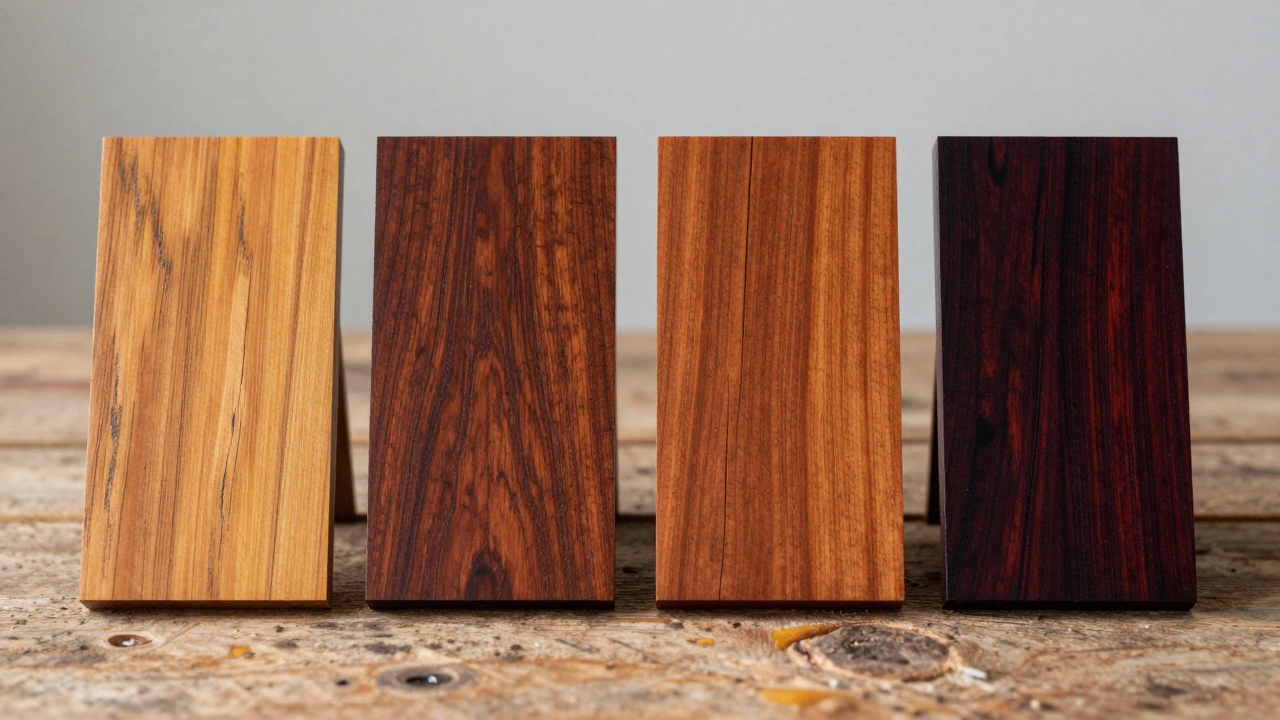
Do not confuse Sheesham with true Indian Rosewood, or Dalbergia latifolia. This is a premium hardwood found mainly in the Western Ghats. It is incredibly dense, hard, and resistant to decay. Historically, it was used for carving intricate details and making musical instruments due to its acoustic properties.
For furniture, Rosewood is reserved for luxury pieces. Its strength is immense, but so is its price. Working with Rosewood requires specialized equipment because its density wears down cutting edges rapidly. Additionally, trade regulations are strict due to CITES listings for certain Dalbergia species. Manufacturers must ensure proper documentation to avoid legal issues. If your target market is ultra-premium, Rosewood adds significant perceived value.
Budget-Friendly Alternatives: Mango and Eucalyptus
Not every project requires exotic hardwoods. Mango Wood, sourced from fruit-bearing trees after they stop producing, is a sustainable and affordable option. While not as strong as Teak or Sal, it is sufficiently durable for indoor furniture like beds and side tables. Its distinctive grain patterns, including burl and knots, add character that mass-produced MDF cannot replicate.
Eucalyptus is another fast-growing alternative. It is very hard and heavy, making it suitable for flooring and pallets. However, it has high tannin content, which can cause staining and corrosion of metal fasteners. Proper sealing is mandatory. For budget-conscious brands, these woods allow for competitive pricing without sacrificing complete structural integrity.
Legal and Sustainability Considerations
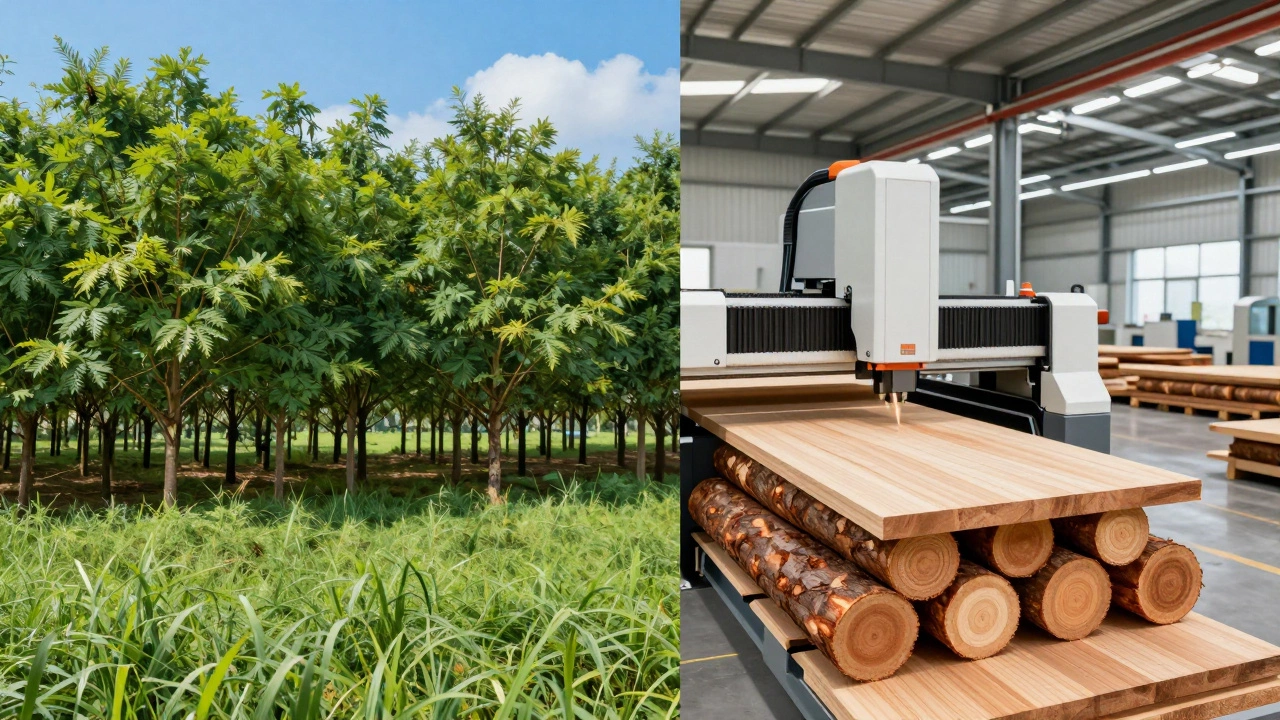
In 2026, sustainability is no longer optional; it is a regulatory requirement and a consumer expectation. The Indian government enforces strict laws regarding the harvesting of native species. Using illegal timber can shut down your business overnight.
Always verify that your supplier provides FSC (Forest Stewardship Council) certification or equivalent proof of legal origin. Plantation-grown Teak and Sheesham are safer bets than wild-harvested logs. Consumers are increasingly asking questions about the carbon footprint of their furniture. Highlighting sustainable sourcing practices can be a powerful marketing tool, distinguishing your brand from competitors who cut corners.
How to Choose the Right Wood for Your Product Line
Selecting the right wood depends on three factors: function, environment, and budget.
- Function: Is the piece structural (like a table leg) or decorative (like a drawer panel)? Structural parts need high MOR and compression strength (Sal, Teak). Decorative parts can use softer woods (Mango, Pine).
- Environment: Will the furniture be used outdoors or in humid areas? If yes, prioritize woods with natural oils (Teak, Rosewood). For dry indoor environments, Sheesham or Mango works well.
- Budget: Calculate the cost per cubic foot including waste. Exotic woods have higher yield loss due to defects. Fast-growing plantations offer better consistency and lower costs.
Test samples before committing to bulk orders. Check for moisture content-ideal levels are between 10% and 12% for indoor furniture. Higher moisture leads to warping later. Invest in good kiln-drying facilities or partner with suppliers who do.
Future Trends in Indian Timber
The industry is shifting towards engineered wood products combined with solid veneers. This allows manufacturers to use scarce hardwoods efficiently by applying thin layers of Teak or Rosewood over a stable core of plywood or MDF. This approach reduces cost, minimizes waste, and maintains the aesthetic appeal of premium woods.
Additionally, there is growing interest in lesser-known native species like Khair and Bamboo. Bamboo, technically a grass, has tensile strength comparable to steel and grows rapidly. Innovations in bamboo lamination are creating strong, sustainable alternatives for modern furniture designs.
Understanding the strengths and weaknesses of each wood type empowers you to make informed decisions. Whether you choose the timeless elegance of Teak, the rugged durability of Sal, or the versatile charm of Sheesham, the key lies in matching material properties to customer needs while adhering to legal and ethical standards.
Is Teak really the strongest wood in India?
Teak is not necessarily the hardest wood, but it is the most balanced in terms of strength, durability, and workability. Woods like Sal and Rosewood are denser and harder, but Teak’s natural oils make it superior for resisting weather and pests, which contributes to its overall longevity.
What is the best wood for outdoor furniture in India?
Teak is the best choice for outdoor furniture due to its high silica and oil content, which naturally repels water and insects. If budget is a constraint, treated Sheesham or Acacia can be used, but they require regular maintenance with sealants.
Can I use Mango wood for heavy-duty furniture?
Mango wood is moderately strong and suitable for indoor furniture like beds and cabinets. However, it is not recommended for heavy-load structural components like large table legs or outdoor use without extensive treatment, as it is prone to cracking and termite attack.
How do I identify genuine Teak wood?
Genuine Teak has a golden-brown color that may darken with age. It contains visible black streaks (silica deposits) and emits a distinct earthy smell when cut. Fake Teak often looks uniformly colored and lacks the natural oily feel. Always ask for certification from your supplier.
Is it legal to harvest wild Teak in India?
Harvesting wild Teak is heavily regulated and often restricted to protect forest ecosystems. Most commercial Teak comes from private plantations or government-managed forests with specific permits. Ensure your supplier provides legal documentation to avoid penalties.