Top 3 Furniture Manufacturing Countries: China, Vietnam, and the USA
Furniture Sourcing Strategy Calculator
Define Your Needs
Recommended Sourcing Strategy
Alternative options considered:
Adjust the sliders and click "Analyze" to see which country fits your business model.
The living room in your apartment likely tells a story of global trade. That sleek sofa? Probably stitched together in Southeast Asia. The sturdy oak dining table? Likely carved in Eastern Europe or North America. The cheap, flat-pack bookshelf? Almost certainly assembled in East Asia. Furniture manufacturing is not just about carpentry anymore; it is a complex web of logistics, raw material sourcing, and labor economics that spans continents. When you ask which countries produce the most furniture, you are really asking where the world’s supply chain converges.
In 2026, the landscape has shifted significantly from a decade ago. While one giant still dominates by sheer volume, new players have risen to challenge its monopoly, driven by shifting tariffs, rising labor costs, and changing consumer preferences for sustainability. If you are a retailer, an importer, or just curious about where your goods come from, understanding the top three manufacturers-China, Vietnam, and the United States-is essential. These nations do not just make chairs and tables; they define the price points, styles, and availability of furniture worldwide.
1. China: The Unshakable Giant
For over two decades, China has been the undisputed factory of the world when it comes to furniture. Even as some industries move away, China remains the largest producer and exporter of furniture globally. In 2025, Chinese furniture exports exceeded $140 billion, accounting for roughly 25% of the global market share. This dominance isn't accidental; it is the result of decades of infrastructure investment and a deeply integrated supply chain.
Why does China still hold the crown? It is not just about cheap labor anymore. It is about scale and speed. A manufacturer in Guangdong Province can source wood veneers, metal frames, foam, and fabric within a 200-mile radius. This vertical integration allows them to produce millions of units at a cost that competitors struggle to match. Whether it is high-end solid wood pieces exported to Europe or budget-friendly particle board items shipped to North America, China covers every segment of the market.
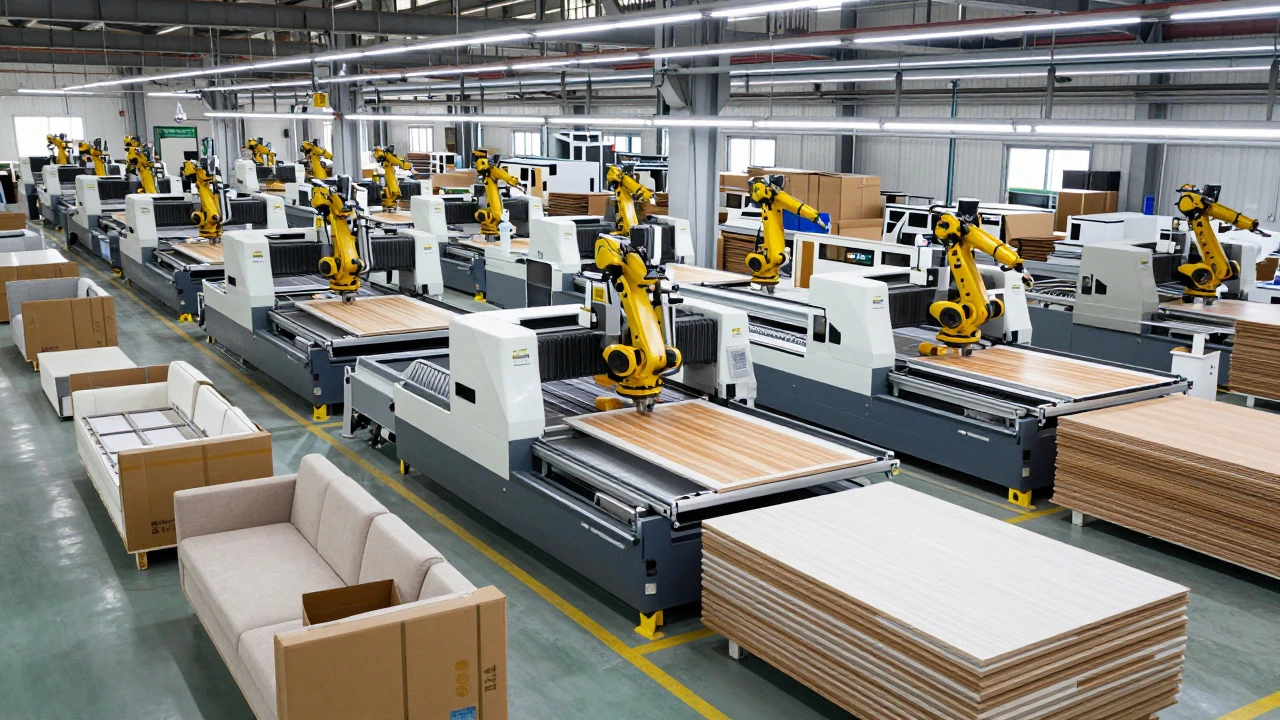
However, the nature of Chinese production is evolving. Rising wages and stricter environmental regulations have pushed many factories to upgrade their technology. Automated CNC machines and robotic painting lines are now common in major hubs like Foshan and Dongguan. This shift means that while prices have increased slightly compared to ten years ago, the quality and consistency have improved dramatically. For buyers, this translates to fewer defects and more reliable delivery times, even if the "rock-bottom" pricing era is slowly fading.
- Key Hubs: Guangdong (Foshan, Dongguan), Zhejiang, Jiangsu.
- Specialty: Everything from mass-market flat-packs to luxury custom woodwork.
- Export Volume: Over $140 billion annually.
2. Vietnam: The Rising Star
If China is the incumbent king, Vietnam is the challenger who has earned its place on the throne through relentless growth. Over the past five years, Vietnam has surged to become the second-largest furniture exporter in the world, surpassing traditional powerhouses like Italy and Germany in export value. By 2026, Vietnam’s furniture exports are projected to hit $30 billion, with a significant portion going directly to the United States and the European Union.
What drives this boom? Two main factors: trade agreements and labor costs. Vietnam benefits from favorable free trade agreements, including the Comprehensive and Progressive Agreement for Trans-Pacific Partnership (CPTPP) and the EU-Vietnam Free Trade Agreement (EVFTA). These deals reduce or eliminate tariffs on Vietnamese goods entering key markets, making them more competitive than Chinese alternatives, especially after the US-China trade war reshaped import strategies.
Labor is another critical advantage. While wages in Vietnam have risen, they remain lower than in China. More importantly, Vietnam has a young, growing workforce eager to work in manufacturing. The government has also invested heavily in industrial parks with reliable electricity and port access, particularly in the south near Ho Chi Minh City and in the north near Hanoi. Many multinational brands, including IKEA, have expanded their sourcing from Vietnam to diversify risk and maintain cost efficiency.
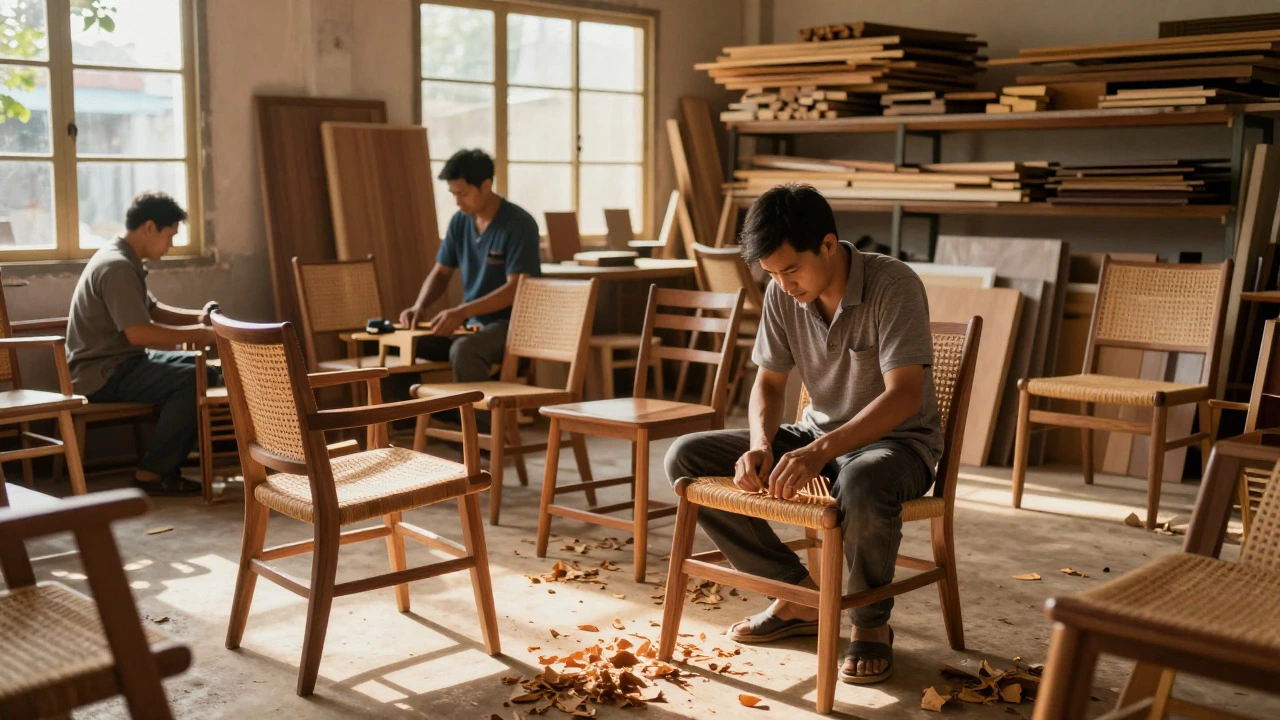
Vietnam excels in wooden furniture, leveraging its abundant timber resources and skilled craftsmanship. However, the country is also expanding into upholstered furniture and office seating. For importers, Vietnam offers a compelling mix of quality, cost-effectiveness, and geopolitical stability. It is no longer just a backup plan; it is a primary destination for large-scale procurement.
- Key Hubs: Binh Duong, Dong Nai, Hai Phong, Bac Ninh.
- Specialty: Solid wood furniture, rattan, wicker, and increasingly, upholstered items.
- Growth Rate: Average annual export growth of 8-10% over the last five years.
3. United States: The Domestic Powerhouse
It might surprise some to see the United States on this list, but it is consistently the third-largest furniture manufacturer in the world by production value. Unlike China and Vietnam, which focus heavily on exports, the US primarily manufactures for its own massive domestic market. With a population of over 330 million and a strong middle class, American consumers spend billions on furniture every year, driving local production.
The US furniture industry is diverse, ranging from small artisanal workshops to massive automated plants. States like North Carolina, California, and Michigan are historic hubs for furniture making. North Carolina alone accounts for a significant percentage of national output, specializing in upholstered furniture and mattresses. The proximity to raw materials, such as hardwood forests in the Midwest and South, gives US manufacturers a logistical advantage for heavy, bulky items where shipping costs eat into margins.
In recent years, there has been a resurgence in "Made in USA" branding. Consumers are increasingly willing to pay a premium for locally made furniture due to concerns about supply chain resilience, carbon footprint, and labor standards. Tariffs on imported goods have also made domestic production more competitive. Companies like Ashley Furniture, the largest furniture manufacturer in the world by revenue, operate extensive facilities across the US, blending automation with local sourcing to keep costs down.
While the US may not compete on price with Asian manufacturers for low-end items, it leads in innovation, customization, and high-value segments. Smart furniture, ergonomic office solutions, and sustainable designs often originate here. For businesses targeting the North American market, sourcing locally can mean faster turnaround times, easier returns, and stronger brand loyalty among eco-conscious consumers.
- Key Hubs: North Carolina, California, Michigan, Ohio.
- Specialty: Upholstered furniture, mattresses, office furniture, and smart home integrations.
- Market Focus: Primarily domestic, with some exports to Canada and Mexico.
Comparing the Top Three: What Should You Choose?
Choosing between these three giants depends on your specific needs as a buyer or business owner. Each country offers distinct advantages and challenges. Below is a comparison to help you navigate the decision-making process.
| Feature | China | Vietnam | United States |
|---|---|---|---|
| Primary Advantage | Scale, speed, and complete supply chain | Lower labor costs, tariff benefits | Proximity to market, quality perception |
| Best For | High-volume orders, complex products | Cost-sensitive imports, wooden furniture | Domestic sales, fast delivery, premium brands |
| Lead Time | 4-8 weeks (production + shipping) | 5-9 weeks (production + shipping) | 2-4 weeks (domestic logistics) |
| Minimum Order Quantity (MOQ) | Often flexible, but favors bulk | Moderate, improving flexibility | Varies widely, often lower for custom |
| Sustainability Focus | Improving, but mixed record | Growing emphasis on certified wood | High demand for green materials |

Emerging Trends Shaping the Industry
The furniture manufacturing sector is not static. Several trends are reshaping how and where furniture is made in 2026 and beyond. Understanding these shifts can help you anticipate future changes in supply and pricing.
Nearshoring and Friend-shoring: Geopolitical tensions have accelerated the trend of moving production closer to home or to allied nations. While China remains dominant, many companies are adopting a "China Plus One" strategy, keeping some production in China while shifting other lines to Vietnam, India, or Mexico. This diversification reduces risk and mitigates the impact of potential trade disputes.
Sustainability and Circular Economy: Consumers and regulators are demanding more environmentally friendly practices. Manufacturers are under pressure to use recycled materials, reduce waste, and ensure sustainable sourcing of wood. Certifications like FSC (Forest Stewardship Council) are becoming standard requirements for exporting to Europe and North America. Countries with strong forestry management, like the US and parts of Europe, gain an edge here.
Automation and AI: Labor shortages in developed countries and rising wages in developing ones are driving automation. Robotic arms for welding, painting, and assembly are becoming commonplace. AI is used for predictive maintenance, inventory management, and even design optimization. This technological leap allows smaller factories to compete with larger ones by increasing efficiency and reducing errors.
Conclusion: Navigating the Global Market
The top three furniture manufacturing countries-China, Vietnam, and the United States-each play a vital role in the global ecosystem. China offers unmatched scale and variety, Vietnam provides cost-effective alternatives with growing quality, and the US delivers speed, reliability, and premium positioning. There is no single "best" choice; the right partner depends on your product type, target market, and strategic goals.
As you evaluate suppliers, look beyond price. Consider lead times, communication ease, quality control processes, and sustainability credentials. Building long-term relationships with manufacturers in these regions can provide stability and competitive advantage in a volatile market. Whether you are launching a new brand or scaling an existing one, understanding the strengths of these top producers will help you make informed decisions and deliver better products to your customers.
Which country produces the most furniture in the world?
China is the largest furniture producer and exporter in the world, accounting for approximately 25% of the global market share. Its vast manufacturing infrastructure and integrated supply chain allow it to dominate both high-volume and specialized segments.
Is Vietnam a good alternative to China for furniture manufacturing?
Yes, Vietnam is an excellent alternative, especially for wooden furniture. It offers lower labor costs, favorable trade agreements with the US and EU, and a rapidly improving quality standard. Many brands use Vietnam to diversify their supply chains and reduce reliance on China.
Why is the United States considered a top furniture manufacturer?
The US is the third-largest manufacturer due to its huge domestic market, advanced automation, and focus on high-quality, innovative products. Proximity to consumers allows for faster delivery and lower shipping costs for bulky items, making it ideal for brands prioritizing speed and sustainability.
What are the main challenges of importing furniture from Asia?
Challenges include long lead times (often 2-3 months), complex logistics, potential tariff issues, and quality control risks. Language barriers and cultural differences can also complicate communication. Working with experienced freight forwarders and conducting thorough factory audits can mitigate these risks.
How has the trade war affected furniture manufacturing locations?
The US-China trade war accelerated the shift of manufacturing to other countries like Vietnam, India, and Mexico. To avoid high tariffs on Chinese goods, many companies adopted a "China Plus One" strategy, spreading production across multiple regions to balance cost and risk.

Recent Posts
-

Why Did Chevrolet Leave India? The GM Exit Explained
-

India's Oldest Pharma Company: A Look at Bengal Chemicals & Pharmaceuticals
-

Who is the Main Exporter of Plastic? Top Countries and Companies in 2026
-

Which Indian Wood is Strongest? A Guide for Furniture Makers
-

Steel Industry Millionaires: Who Made It Big?