Why Do Indians Drive Camrys? The Real Reasons Behind Toyota’s Popularity in India
Toyota Camry Ownership Cost Calculator
Calculate Your Savings
Input your driving habits to see how much you could save with a Toyota Camry compared to competitors.
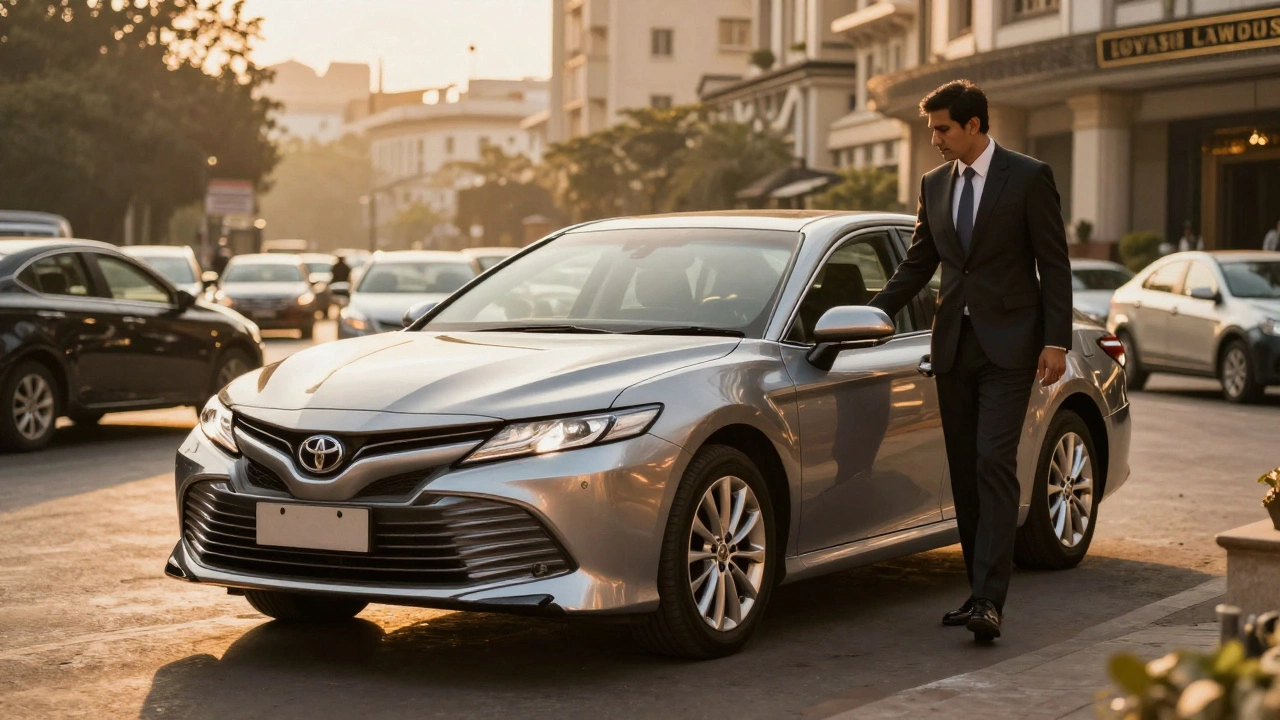
On any busy street in Mumbai, Delhi, or Bangalore, you’ll see a Toyota Camry parked outside a five-star hotel, a corporate office, or a luxury apartment complex. It’s not the flashiest car on the road. It doesn’t have the sporty design of a BMW or the prestige of a Mercedes. Yet, it’s one of the most common midsize sedans you’ll spot in India. Why? The answer isn’t about style. It’s about trust, practicality, and a long history of reliability that Indian buyers have come to depend on.
It’s Not About Being the Cheapest
Many assume Indians buy cars based on price alone. That’s true for entry-level models like the Maruti Suzuki Swift or Hyundai i10. But the Camry doesn’t compete in that space. It starts at around ₹35 lakh (about $42,000 USD) in India - more than double the cost of a popular hatchback. So why do people spend this much? Because they’re not buying a car. They’re buying peace of mind.The Camry’s resale value is among the highest in its class. After five years, it holds onto nearly 60% of its original price. Compare that to a Honda Accord, which might drop to 45%. For Indian buyers who often upgrade every 5-7 years, that difference adds up to lakhs of rupees. That’s not a small detail. It’s a major financial decision.
Toyota’s Reputation Was Built on Broken-down Rivals
In the early 2000s, many midsize sedans sold in India - like the Nissan Teana or the Ford Mondeo - were seen as high-maintenance. Breakdowns were common. Spare parts were expensive. Service centers were rare outside big cities. Toyota, on the other hand, had already built a reputation with the Innova and the Fortuner. These were workhorses that kept running even on bad roads, with minimal servicing.When the Camry arrived, it carried that same DNA. Indian buyers noticed. A 2018 survey by J.D. Power found Toyota ranked #1 in India for vehicle dependability - for the seventh year in a row. The Camry didn’t win because it had the best infotainment. It won because after 100,000 km, it still started on the first try, the brakes still worked, and the engine didn’t make strange noises.
Service Network That Actually Works
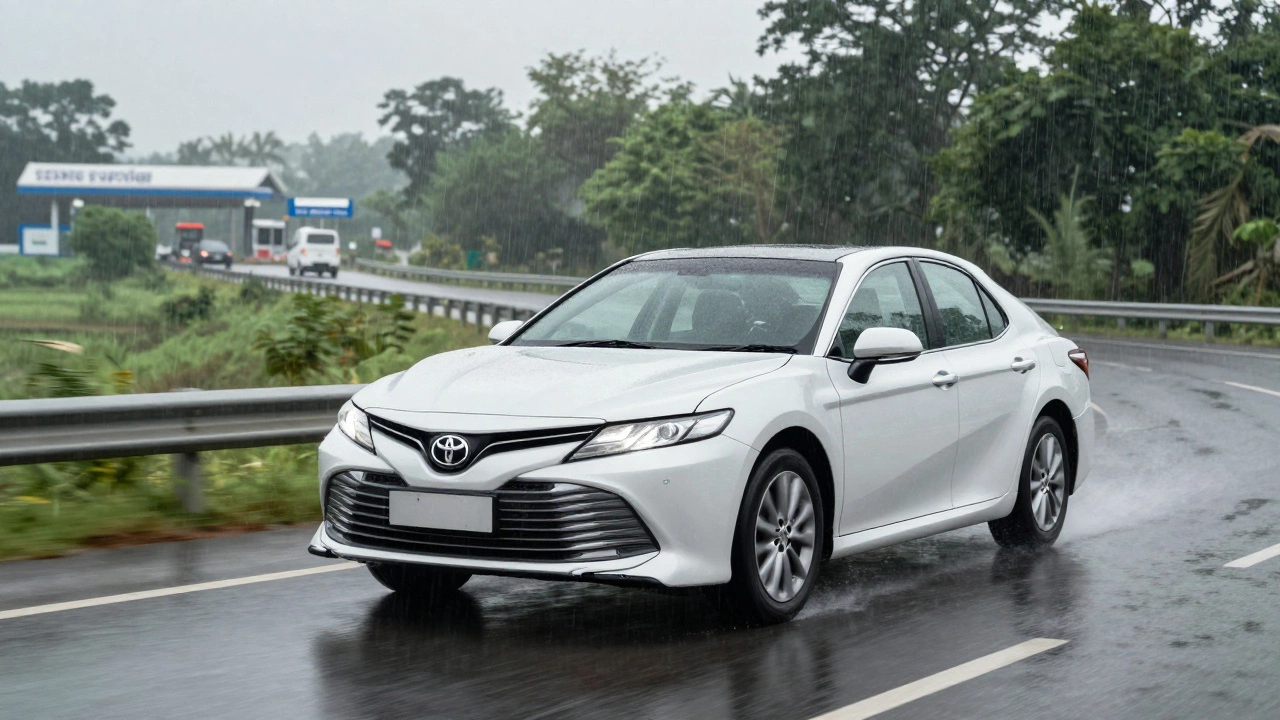
If your car breaks down in Jaipur or Patna, you want a service center nearby. Toyota has over 1,200 authorized service points across India - more than any other premium sedan brand. Honda has about 800. BMW and Mercedes combined have fewer than 600. That matters when you’re driving through rural highways or during monsoon season.Toyota’s service centers also train their mechanics to handle older models. A 2015 Camry can still get genuine parts and expert care. That’s rare. Most luxury brands stop supporting vehicles after 7-8 years. Toyota supports them for 12+ years. That’s why you see so many older Camrys still on the road - some with over 200,000 km.
It’s the Corporate Choice
If you’re a mid-level manager in a multinational company in India, your company car isn’t about status. It’s about comfort, safety, and low cost of ownership. The Camry fits perfectly. It has a quiet cabin, good suspension for rough roads, and advanced safety features like seven airbags and Toyota Safety Sense (standard since 2020).Many Indian firms have standardized their corporate fleets around the Camry. Why? Because HR departments don’t want to deal with repair bills or driver complaints. The Camry reduces downtime. It’s not flashy, but it’s dependable. And in a country where road accidents are among the highest in the world, safety isn’t optional - it’s expected.
Hybrid Powertrain: Fuel Savings That Add Up
The Camry Hybrid has been the top-selling variant in India since 2021. It gets around 22 km per liter in city driving - better than most compact SUVs. Fuel prices in India have hovered between ₹100-₹110 per liter since 2023. For someone driving 1,500 km a month, that’s a savings of ₹15,000-₹20,000 every year compared to a petrol-only sedan.And here’s the kicker: the hybrid battery is covered for 10 years or 150,000 km. Most other brands offer only 5 years. That means a buyer doesn’t have to worry about a $2,000 battery replacement down the line. That kind of warranty reassurance is huge in a market where people are wary of hidden costs.
It Doesn’t Try Too Hard
The Camry doesn’t have a panoramic sunroof, a 12.3-inch touchscreen, or a 14-speaker Bose system. It’s not trying to impress on Instagram. It’s designed for people who care about what happens after the first year of ownership. The seats don’t get squeaky. The dashboard doesn’t rattle. The air conditioning cools quickly, even in 45°C heat.Indian buyers are tired of cars that look great in brochures but fall apart in real life. The Camry doesn’t promise perfection. It delivers consistency. That’s why it’s not just popular - it’s preferred.
What About the Competition?
Honda Accord, Hyundai Sonata, and Skoda Superb are all strong alternatives. But each has a flaw. The Accord has higher service costs. The Sonata’s resale value drops faster. The Superb is harder to find parts for outside metro cities.Toyota doesn’t have the most powerful engine or the most tech. But it has the fewest complaints. In a 2024 consumer report by Autocar India, the Camry scored 9.2 out of 10 for reliability - the highest in the midsize sedan segment. The Accord scored 7.8. The Sonata, 7.1.
It’s Not a Trend. It’s a Habit.
People don’t buy Camrys because they’re trendy. They buy them because their father bought one. Or their boss drives one. Or their friend’s Camry ran for 12 years without a single major repair. It’s word-of-mouth that’s built this legacy - not ads.Toyota didn’t need to spend millions on celebrity endorsements. They just kept making a car that worked. And in a country where reliability is worth more than prestige, that’s all it took.