What Do Manufacturing Companies Contribute to Society?
Manufacturing Job Multiplier Calculator
How Manufacturing Jobs Create Community
Based on Australian industry data, each manufacturing job typically creates 3.2 additional jobs across the local economy through supply chains and community spending.
How this works: For every 1 manufacturing job, approximately 3.2 additional jobs are created through supply chains and local spending (based on Australian Manufacturing Value Added data).
Manufacturing companies don’t just make things. They build communities, power economies, and keep entire nations running. If you’ve ever used a smartphone, driven a car, taken medicine, or eaten packaged food, you’ve relied on manufacturing. But beyond the products, the real impact of manufacturing companies on society is deeper, wider, and often overlooked.
They Create Jobs - Real, Stable Jobs
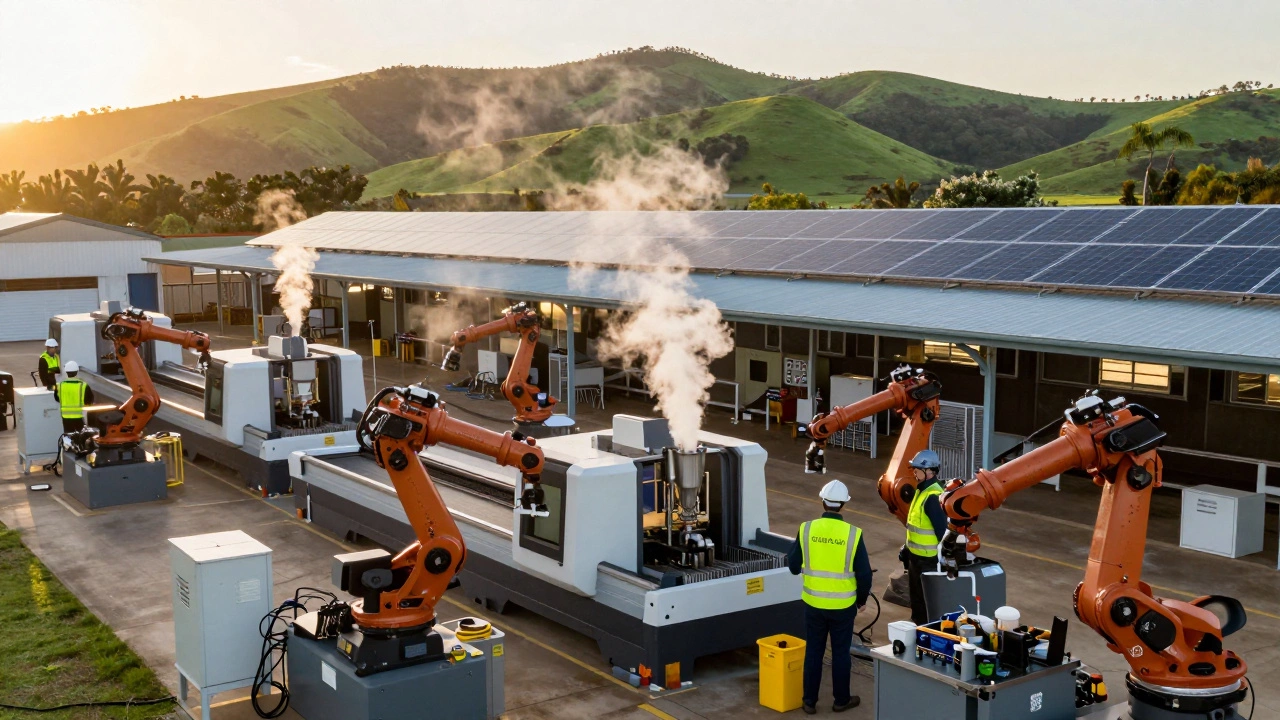
Manufacturing is one of the biggest employers in most countries. In Australia alone, over 900,000 people work directly in manufacturing. That’s not counting the jobs in logistics, maintenance, engineering, and supply chains that support factories. These aren’t gig jobs or contract roles. They’re full-time positions with benefits, pensions, and career paths. A factory worker in Melbourne might start as an operator, learn CNC programming, and become a team leader within five years. That kind of upward mobility doesn’t exist in many service sectors.
And it’s not just skilled labor. Factories hire people with no college degree, veterans returning from service, immigrants learning English, and people re-entering the workforce after long breaks. Manufacturing doesn’t just give people paychecks - it gives them purpose and stability.
They Drive Innovation and Technology
Every time your phone charges faster, your car gets better fuel efficiency, or your insulin pump becomes smaller and smarter, manufacturing made it possible. Behind every tech breakthrough is a factory that scaled it. Companies that make solar panels, electric vehicle batteries, or medical devices are the ones turning lab ideas into real-world tools.
Take Australia’s growing battery manufacturing sector. Companies like Redflow and CSIRO partners are building lithium-ion and zinc-bromine batteries right here in Queensland and South Australia. These aren’t just products - they’re solutions to renewable energy storage problems. Without manufacturing, clean energy stays theoretical. With it, it powers homes.
They Strengthen Local Supply Chains
When a company makes things locally, it keeps money circulating in the region. A food processor in regional New South Wales buys wheat from local farmers, packaging from nearby printers, and trucks from Sydney-based distributors. That’s dozens of small businesses thriving because one manufacturer chose to produce locally.
Global supply chains broke during the pandemic. Countries realized how dangerous it is to rely on overseas factories for medicines, masks, or electronics. Now, governments are pushing for reshoring - bringing production back home. Manufacturing companies are the ones making that shift possible. They’re investing in automation, training workers, and adapting to new rules - all to keep critical goods within national borders.
They Support Government Schemes and Public Goals
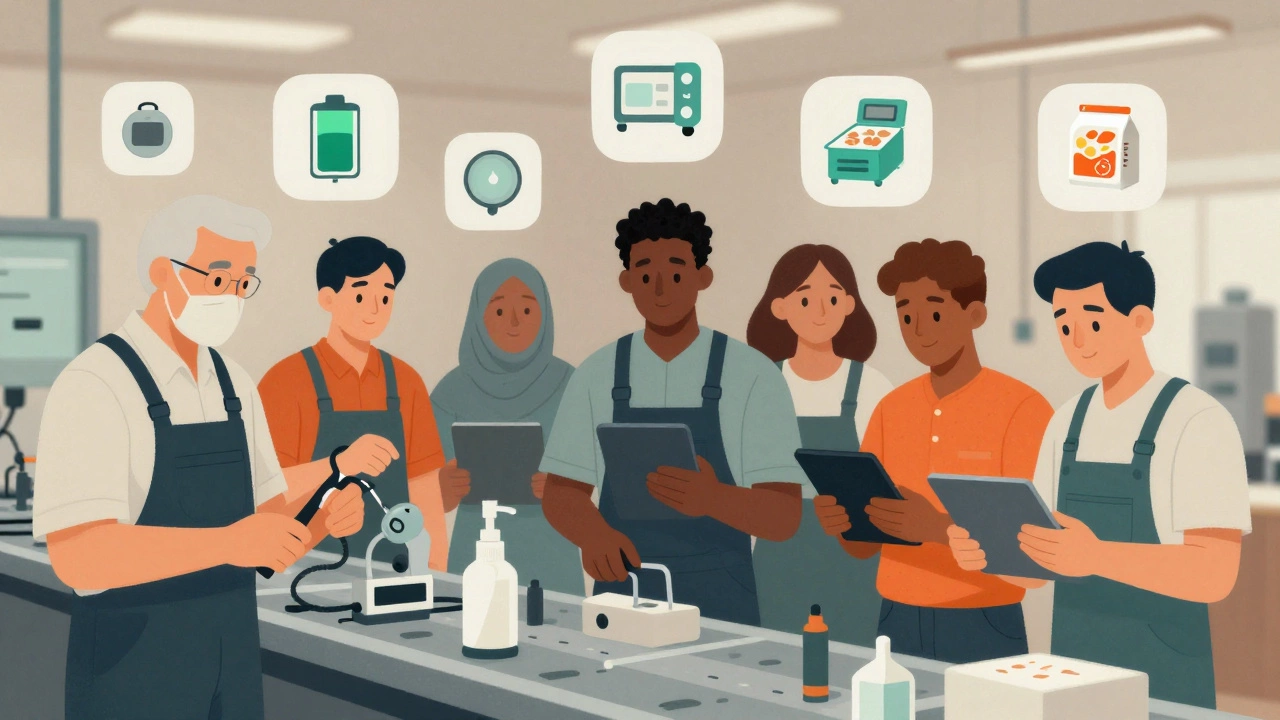
Government schemes don’t work without manufacturers. Australia’s Manufacturing Modernisation Fund, for example, gives grants to companies upgrading equipment, adopting AI, or reducing emissions. Companies that apply and win these funds don’t just get cash - they create new jobs, cut waste, and meet national climate targets.
Similar programs exist for apprenticeships, skills training, and regional development. In Victoria, the Advanced Manufacturing Growth Centre partners with factories to train young people in robotics and automation. These aren’t charity programs - they’re strategic investments. And manufacturers are the ones delivering the results.
When the government wants to boost exports, reduce imports, or improve national security, it turns to manufacturers. They’re the engine behind policies on critical minerals, defense production, and medical supply resilience.
They Build Infrastructure and Communities
Factories don’t appear out of nowhere. They need roads, power lines, water systems, and internet access. When a new plant opens in regional Tasmania or Western Australia, the government and private sector invest in infrastructure to support it. That means better internet for schools, upgraded hospitals nearby, and new public transport routes.
Manufacturing companies also sponsor local sports teams, fund school STEM programs, and donate equipment to technical colleges. In many towns, the factory is the heart of the community - not just economically, but socially. It’s where people meet, learn, and grow together.

They Help Solve Big Problems
Climate change? Manufacturing is part of the solution. Companies are cutting emissions by switching to electric forklifts, using recycled materials, and installing solar roofs. Some now produce biodegradable packaging, water-saving irrigation systems, and low-carbon cement.
Healthcare? Manufacturers make the syringes, ventilators, diagnostic machines, and even the pills that save lives. During the pandemic, Australian companies retooled lines to produce hand sanitiser and PPE when imports failed. That agility didn’t come from startups - it came from established manufacturers with skilled teams and flexible production lines.
Food security? Local food processors help reduce waste and ensure fresh produce reaches shelves quickly. A dairy in Gippsland doesn’t just make cheese - it supports 200 farming families and keeps milk from spoiling during long hauls.
They’re Not Perfect - But They’re Essential
Manufacturing has had its dark sides: pollution, unsafe conditions, exploitation. But those aren’t inherent to the industry - they’re failures of regulation and ethics. Today’s responsible manufacturers follow strict safety codes, invest in worker training, and report emissions transparently. Many now publish sustainability reports every year.
The truth is, society can’t function without manufacturing. You can’t have clean energy without batteries. You can’t have modern medicine without sterile packaging. You can’t have affordable housing without steel, glass, and insulation made in factories.
When politicians talk about ‘building back better,’ they’re talking about manufacturing. When communities fight to keep their local plant open, they’re not just protecting jobs - they’re protecting their future.
Do manufacturing companies still matter in a digital world?
Yes, more than ever. Digital tools like AI and automation are used inside factories to make things faster, safer, and smarter. But you still need physical products - phones, cars, medicines, solar panels. Digital services can’t replace that. Manufacturing is where the digital world meets the real world.
How do government schemes help manufacturing companies?
Government schemes offer grants, tax breaks, and training support to help manufacturers upgrade equipment, hire apprentices, and reduce emissions. Programs like Australia’s Manufacturing Modernisation Fund give companies money to buy new machines that cut waste and improve output. Without this help, many small and medium factories couldn’t afford to modernize.
Are manufacturing jobs disappearing because of automation?
No - they’re changing. Automation replaces repetitive tasks, not people. A robot might weld a car frame, but a human still programs it, checks quality, and maintains the system. Factories now need more technicians, data analysts, and engineers than ever. The jobs are higher-skilled and better-paid.
Can small manufacturing companies make a difference?
Absolutely. Small manufacturers make up over 80% of the sector in Australia. They produce custom parts, niche medical devices, artisanal food products, and specialized tools. These companies often lead in innovation because they’re agile. A small shop in Adelaide might design a new type of prosthetic limb that a big company later scales.
Why is local manufacturing better than importing?
Local manufacturing reduces supply chain risks, cuts carbon emissions from shipping, and keeps money in the local economy. During crises - like the pandemic or a global port strike - countries that make their own goods don’t run out. It also means faster repairs, better quality control, and more accountability.