Where Does India Import Electronics From? Top Sources & Supply Chain Shifts
India Electronics Import Source Analyzer
Select a country to view detailed import data, key advantages, and strategic insights.
Select a Country
-Click on a country from the list to analyze its role in India's electronics supply chain.
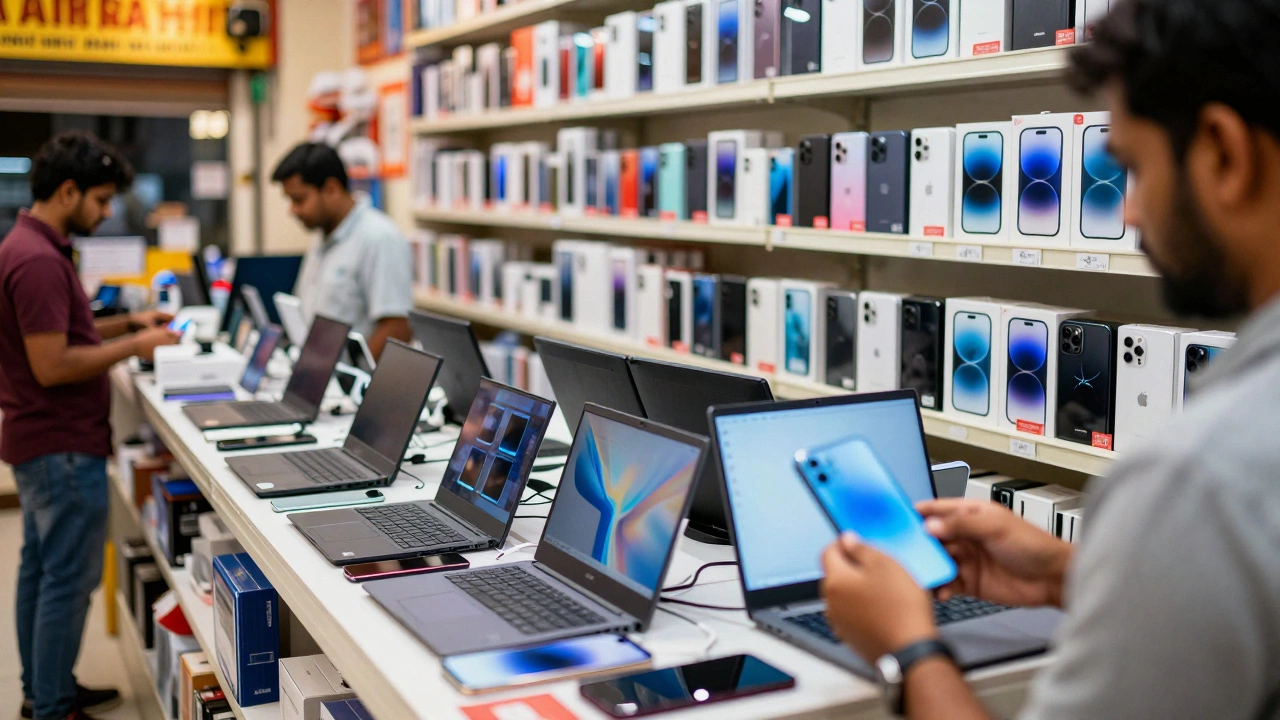
For years, the answer to where India gets its electronics was simple: China. You could walk into any retail store in Mumbai or Delhi, pick up a smartphone, a laptop, or even a pair of headphones, and chances were high that it came from Chinese factories. But if you look at the trade data from 2024 and 2025, that story is changing fast. The landscape of Indian electronics imports is undergoing a massive structural shift driven by government policy, global geopolitical tensions, and rising domestic manufacturing capabilities.
India remains one of the world’s largest importers of electronic components and finished goods. However, the source countries are diversifying. While China still holds a dominant share, nations like Vietnam, Malaysia, Singapore, and Thailand have surged into the top ranks. Understanding this shift isn’t just about trade statistics; it’s about seeing how India is trying to build its own self-reliant ecosystem under initiatives like Make in India and the Production Linked Incentive (PLI) scheme.
The Dominance of China: Still the Big Player
Despite the push for localization, China remains the single largest source of electronics imports for India. As of early 2025, China accounted for roughly 30-35% of India’s total electronics imports. This includes everything from basic printed circuit boards (PCBs) to complex integrated circuits (ICs) and display panels.
Why does this dependency persist? It comes down to scale and supply chain maturity. Chinese manufacturers benefit from decades of infrastructure development, cheap energy, and a dense network of component suppliers. For an Indian assembler building a smartphone, sourcing the battery, camera sensor, and display from Shenzhen is often faster and cheaper than finding alternatives elsewhere. Even as final assembly moves to India, the critical internal components-often called “chips” and “modules”-still largely come from across the Bay of Bengal.
However, the nature of these imports is changing. India is importing fewer finished consumer electronics from China and more intermediate components. This is a deliberate strategy. By importing parts rather than whole devices, India captures more value-added activity domestically. The goal is to move up the ladder from simple assembly to actual component manufacturing.
Vietnam: The New Rising Star
If China is the established giant, Vietnam is the fastest-growing challenger. Over the past three years, Vietnam has jumped to become the second-largest source of electronics imports for India. This surge is no accident. Many multinational companies, including Samsung and Apple suppliers, have diversified their manufacturing bases out of China due to rising labor costs and geopolitical risks-a trend known as “China Plus One.”
Vietnam has attracted significant foreign direct investment (FDI) in electronics manufacturing. It now produces a substantial amount of smartphones, laptops, and semiconductors. For India, Vietnam serves as a crucial alternative supply route. When tensions rise between India and China, or when shipping routes face disruptions, Indian importers pivot quickly to Vietnamese ports. The proximity also helps reduce logistics time compared to sourcing from further away.
Moreover, Vietnam’s export-oriented industrial zones are designed to handle large-scale production efficiently. Indian companies importing components from Vietnam often find competitive pricing and reliable quality standards that match global benchmarks. This makes Vietnam not just a backup option, but a primary partner in many supply chains.
Malaysia and Singapore: The Semiconductor Hubs
When we talk about high-value electronics, we must look at Malaysia and Singapore. These two nations are powerhouses in the semiconductor industry. They don’t necessarily manufacture the raw silicon wafers-that’s mostly done in Taiwan and South Korea-but they excel in packaging, testing, and assembly of chips.
India imports a significant volume of semiconductors and related components from Malaysia. The country hosts major facilities for global chip giants like Intel, AMD, and Infineon. These packaged chips are essential for everything from automotive systems to telecommunications equipment. As India pushes into electric vehicles (EVs) and 5G infrastructure, its reliance on Malaysian semiconductor exports will only grow.
Singapore plays a similar role but focuses more on high-end design and advanced packaging technologies. It acts as a regional hub for R&D and distribution. Indian tech firms often collaborate with Singaporean entities to access cutting-edge technology before integrating it into their products. The import flow here is less about bulk commodities and more about specialized, high-margin components that drive innovation.
Thailand: The Auto-Electronics Specialist
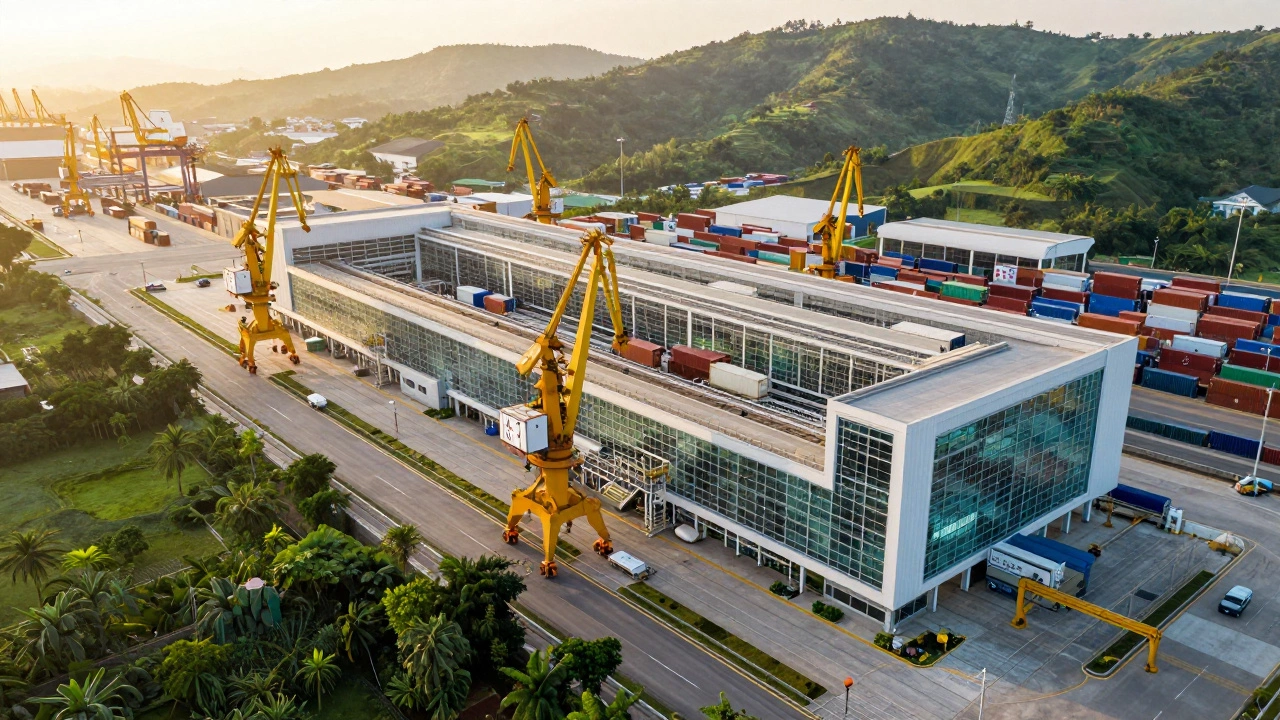
Thailand has carved out a niche in the Indian electronics market, particularly in auto-electronics and hard disk drives. Known as the “Detroit of Asia,” Thailand has a robust automotive industry that produces sophisticated electronic control units (ECUs), sensors, and infotainment systems.
As India’s automotive sector electrifies, the demand for these components spikes. Thai manufacturers offer cost-effective solutions with proven reliability. Additionally, Thailand remains a key player in storage technology. Companies like Western Digital and Seagate have major plants there, supplying hard drives that are imported into India for server farms and enterprise storage solutions.
The relationship between India and Thailand is also bolstered by strong diplomatic ties and free trade agreements. This reduces tariffs and simplifies customs procedures, making Thai electronics attractive to Indian importers looking for stable, long-term partnerships.
Japan and South Korea: Premium Components
For high-quality displays and memory chips, India looks to Japan and South Korea. Japanese companies like Sony and Panasonic dominate the image sensor market. Every smartphone camera module imported into India likely contains a sensor made in Japan. These components are critical for maintaining the premium segment of the Indian mobile market.
South Korea, led by giants like Samsung and LG, supplies advanced display panels (OLED and AMOLED) and dynamic random-access memory (DRAM). While India is starting to assemble TVs and phones locally, the core display technology still comes from Korean factories. The quality and performance metrics of these components set the standard for global electronics, forcing Indian manufacturers to rely on them until local alternatives mature.
How Government Policy Is Shifting the Map
You can’t understand India’s import patterns without looking at policy. The Production Linked Incentive (PLI) scheme has been a game-changer. Launched to boost domestic manufacturing, PLI offers financial incentives to companies that produce specific goods in India. Sectors covered include mobile phones, semiconductors, and advanced chemistry cell (ACC) batteries.
The results are visible. India has transformed from a net importer of smartphones to a major exporter. Brands like Xiaomi, Vivo, and Oppo now manufacture a large portion of their units in Tamil Nadu and Uttar Pradesh. This means fewer finished phones are being imported from China. Instead, the import bill is shifting towards components needed for local assembly.
Additionally, the Mobile Manufacturing Development Scheme (MMDS) and various duty structures have encouraged companies to set up local supply chains. The government is actively pushing for “Atmanirbhar Bharat” (Self-Reliant India), aiming to reduce dependence on foreign sources over time. While complete independence is unlikely in the near future, the trajectory is clear: imports will gradually decrease as local capacity increases.
| Country | Primary Export Categories | Key Advantage for India |
|---|---|---|
| China | Integrated Circuits, PCBs, Batteries | Scale, Cost Efficiency, Supply Chain Depth |
| Vietnam | Smartphones, Laptops, Semiconductors | Geopolitical Diversification, Proximity |
| Malaysia | Semiconductor Packaging, Testing | Specialized Chip Infrastructure |
| Singapore | High-End Components, R&D Tools | Innovation Hub, Quality Standards |
| Thailand | Auto-Electronics, Hard Drives | Automotive Integration, Storage Tech |
Challenges in Reducing Import Dependence
Despite progress, India faces hurdles. The biggest challenge is the lack of a deep component ecosystem. Building a phone requires hundreds of small parts-connectors, screws, capacitors. Currently, most of these are still imported. Developing local suppliers for these tiny components takes time and capital.
Another issue is skill gaps. Advanced manufacturing requires highly trained engineers and technicians. India is investing in education and vocational training, but bridging the gap between academic knowledge and industrial application remains difficult. Without skilled workers, local factories struggle to achieve the efficiency levels seen in China or Vietnam.
Infrastructure also plays a role. Reliable power supply, efficient logistics, and port connectivity are critical for competitive manufacturing. While improvements are being made, delays in shipping or power outages can disrupt production schedules, making importers hesitant to fully switch to local sources.
Future Outlook: Where Will India Import From?
Looking ahead to 2026 and beyond, the trend will continue toward diversification. China’s share will likely decline slowly as India builds capacity in semiconductors and displays. Vietnam and Malaysia will remain key partners, especially for mid-tier components. Japan and South Korea will hold their ground in premium segments.
We may also see increased imports from other Southeast Asian nations like Indonesia and the Philippines as they develop their own manufacturing bases. The key takeaway is that India is moving from a passive importer to an active participant in the global electronics supply chain. The goal isn’t just to buy electronics; it’s to understand, modify, and eventually create them.
For businesses operating in this space, staying informed about these shifts is crucial. Supply chain resilience depends on having multiple sources. Relying solely on one country is risky. By understanding where India imports from and why, companies can make smarter decisions about inventory, sourcing, and strategic planning.
Is India still dependent on China for electronics?
Yes, India still relies heavily on China for critical components like integrated circuits, batteries, and printed circuit boards. However, the dependency is decreasing as India boosts domestic manufacturing through schemes like PLI and diversifies its import sources to countries like Vietnam and Malaysia.
Which country is the second-largest supplier of electronics to India?
Vietnam is currently the second-largest source of electronics imports for India. It has gained significant market share due to its growing manufacturing base and favorable trade relations, offering alternatives for smartphones, laptops, and semiconductors.
What types of electronics does India import from Malaysia?
India primarily imports semiconductor components from Malaysia, including packaged chips, testing services, and related electronic parts. Malaysia is a global hub for semiconductor packaging and testing, making it a vital partner for India’s tech industry.
How is the PLI scheme affecting electronics imports?
The Production Linked Incentive (PLI) scheme encourages companies to manufacture electronics locally in India. This has reduced the import of finished goods like smartphones and televisions, shifting the import focus towards raw materials and components needed for local assembly.
Why does India import semiconductors from Singapore?
Singapore is a leader in high-end semiconductor design, advanced packaging, and R&D. India imports specialized components and technologies from Singapore to support its growing needs in telecommunications, automotive, and consumer electronics sectors.

Recent Posts
-
Who is the Largest Steel Fabricator in the United States?
-

What is the Textile Capital of the World? Surat vs. Tirupur vs. Global Hubs
-

Which Indian Wood is Strongest? A Guide for Furniture Makers
-

What is the Biggest Steel Mill in the United States? US Steel Gary Works
-

Why Did Chevrolet Leave India? The GM Exit Explained